
Fighting for safe access zones
What happens when the right to protest is pitted against the right to abortion?
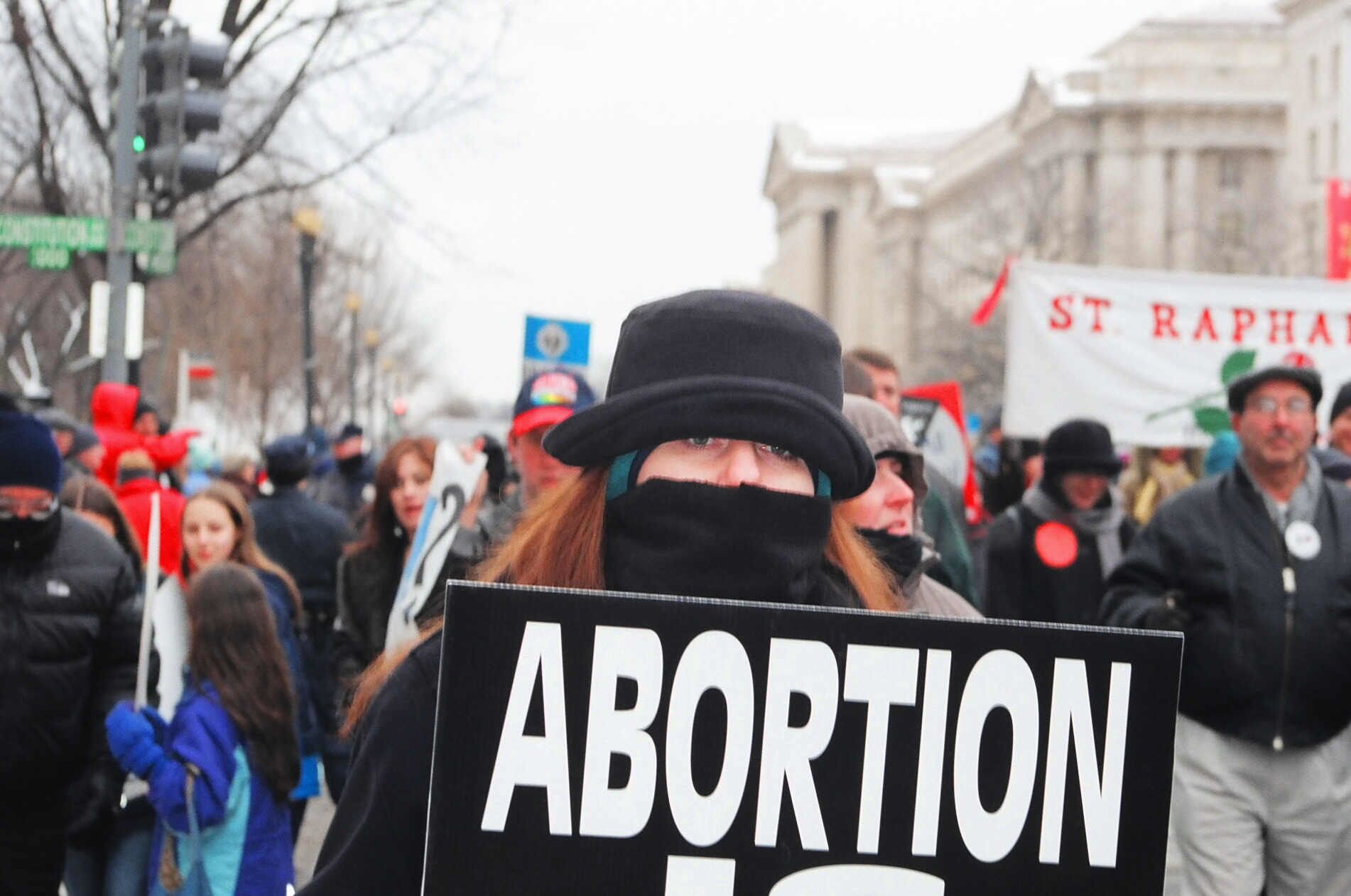

It’s 8:30 on a grey Saturday morning in mid-June, and a small, middle-aged woman is standing on the pavement in front of a long driveway, a rosary clutched in one hand, a stack of pamphlets in the other.
Her eyes dart up and down the streets to either side, watching for approaching women—generally young, nervous, and alone—to pause, look around them, and turn up the drive.
Marta is here, outside of Brixton’s MSI Reproductive Choices clinic, to deter these women, she tells me, from ruining their lives. Abortion is a tragedy—the murder of innocent babies. And she, Marta, is here to save them, baby and mother both.
Marta doesn’t shout—she has no graphic posters, no body camera strapped to her chest. But her presence, I can see, is disarming to those arriving at the clinic—already anxious, upset, or simply exhausted from their early rise that morning.
She holds out glossy pink pamphlets as they pass, the image of a smiling woman cradling a pregnancy test just about visible through her fingers, but none are taken. In fact, Marta is largely ignored entirely. She takes no notice.
She’s been protesting, or praying, as she calls it, outside abortion clinics for years—first in Twickenham, and then, after the council introduced a buffer zone, here in Brixton.
And soon, once the national safe access zones outlined in the 2023 Public Order Act are implemented, Marta will be evicted from this new weekly outpost as well.
The legislation, which makes it an offence to influence, obstruct or harass those accessing or providing abortion care within 150 metres of a clinic, has been a hard-fought win for activists across the country.
Reproductive rights in the UK are not as openly politicised as they are in the United States. And yet, pushback to abortion is still present. It’s just less normalised as a part of public discourse—whether on the soapbox or in the broadsheets.
Rather, it’s here, on the physical fringes of the clinics themselves, that the war is waged; anti-abortion intimidation and harassment experienced and internalised by those seeking the procedure, but not shared—shrouded, much like abortion itself, in secrecy and shame.
The fight to institute safe access zones around clinics—to allow those accessing abortion care to do so “safely, confidentially, and with dignity,” as MSI Reproductive Choice’s UK Head of External Affairs Louise McCuddin put it—is just another step, therefore, in a wider mission to expand and protect reproductive rights in Britain.
It’s taken almost ten years for the campaign to be taken seriously in Parliament. Even today, having successfully passed through both the House of Commons and Lords, many are still unsure of what buffer zones are—or perhaps more crucially, what they are intended to prohibit.
That is, unless you are amongst the one in three women in the UK who will have an abortion during her lifetime.
Around 200,000 procedures are performed each year—around half of these in a clinic targeted by anti-abortion protesters.

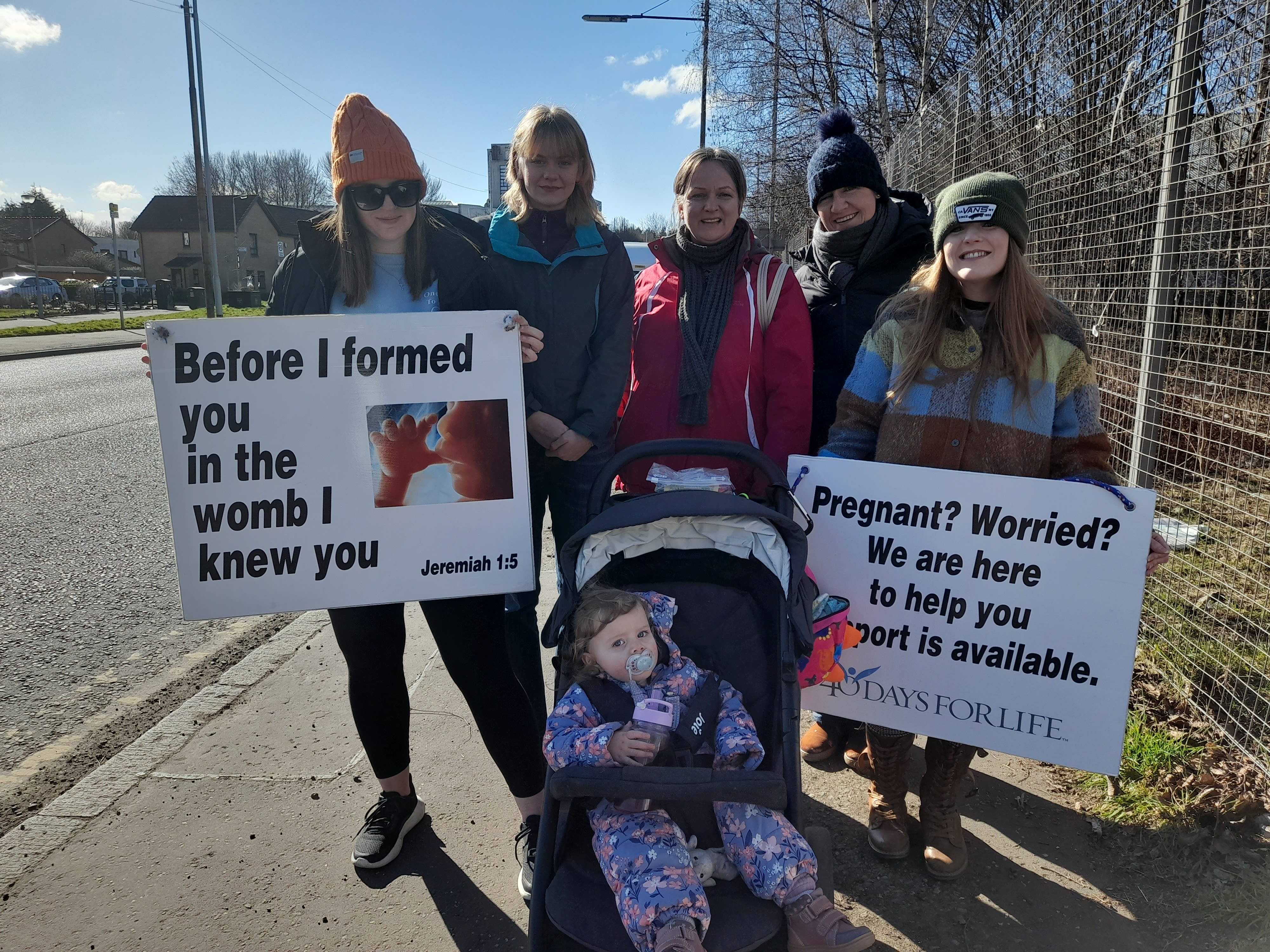
Clinics in the London area that have been impacted by anti-abortion protests
The impact of the harassment is dire.
In a testimony given to the British Pregnancy Advisory Service (BPAS) this year, one woman described taking her 16-year-old daughter and her boyfriend to the clinic only to be met by protesters gathered outside.
“They are both young, confused, and found the praying extremely upsetting. Decisions to take this route are not made lightly... this makes an upsetting situation so much worse.”
Another, from 2019, described:
“This morning the men outside asked me if I work here – I did not respond. As I walked away, he started shouting ‘Shame on you, madam, killing little babies, you should be ashamed of yourself...’ I’m usually a bit tougher than this but it really got to me this morning.”
A client in 2021 reported:
“They were hurling abuse as I came out of the clinic, saying I’m a disgrace, that I’m a horrible person and what I’m doing is an abomination.”
Abuse is not just verbal. Protests have included huge, graphic images of dismembered foetuses—often pictured at a far more developed stage than the 10 weeks gestation that 98% of UK abortions take place before—the throwing of holy water on clinic sites, empty baby carriages pushed back and forth, and the following of women down the street as they exit.
Research shows that protesting outside abortion clinics rarely makes a woman regret or go back on her decision.
Rather, it adds further trauma to an already highly emotionally-fraught and physically-invasive procedure. In some cases, women are even filmed as they enter and leave clinics in a sort of public-shaming intimidation exercise.
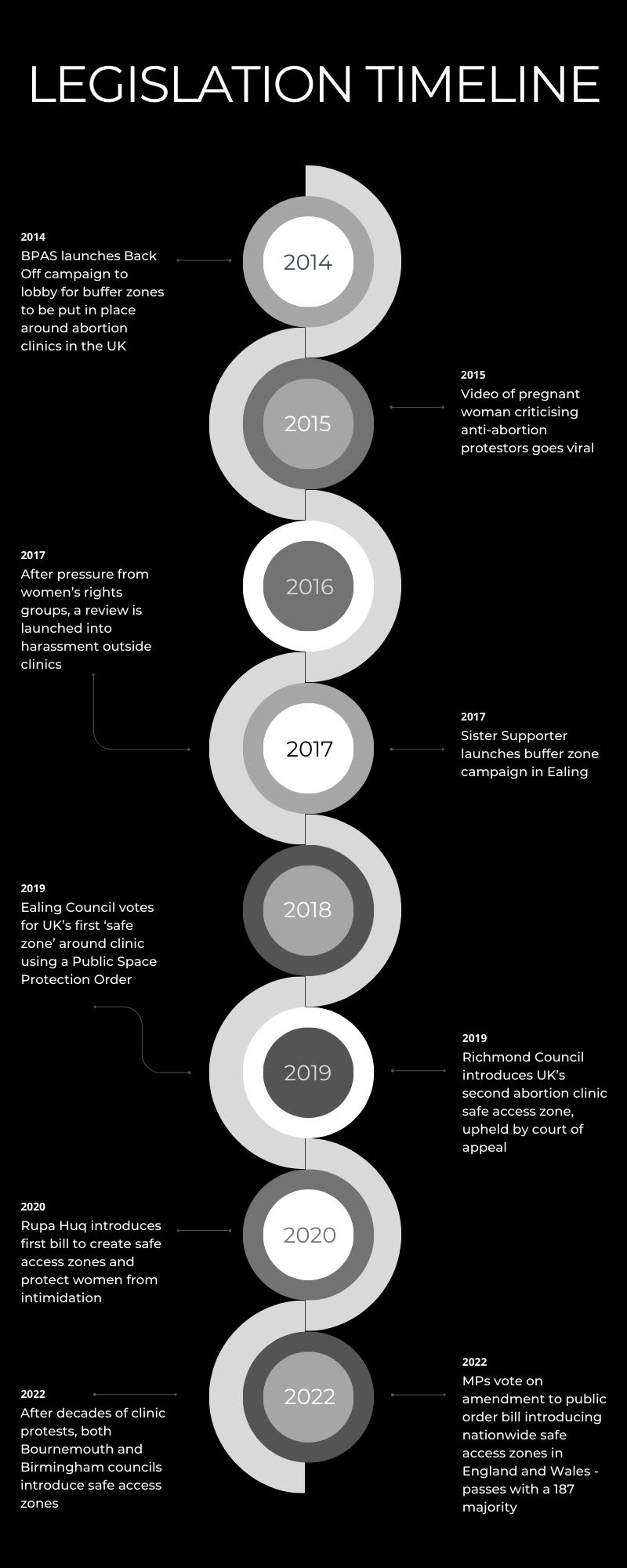
BPAS first launched its Back Off campaign, aiming to raise awareness to the harassment and pressure the government into mandating buffer zones outside clinics, in 2014, to relatively little fanfare.
And then, a year later, a video went viral.
[Trigger warning: graphic imagery, descriptions of violence]
The clip, showing an interaction between protesters from the controversial Abort 67 group and a pregnant passerby, amassed over six million views on YouTube.
For those previously unaware of the type of harassment taking place outside clinics, the video revealed a stark and graphic reality. The same year, a petition calling on then Home Secretary Theresa May to create safe distances between women seeking abortions and protestors reached 160,000 signatures and was delivered to Downing Street.
The government maintained that “adequate” laws protecting women were already in place.
So, in 2017, pro-choice organisation Sister Supporter took matters into its own hands.
Maya Coomarasamy was still in school when she started attending the counter-protests outside of her local Ealing clinic.
A couple of girls in her year lived on the same road as the clinic, and had witnessed firsthand the anti-abortion demonstrations lead by volunteers from the nearby Catholic Church.
So, one Saturday, they got a group together to make signs, don the neon pink Sister Supporter hi-vis vests, and more generally, as Maya puts it, “change the ominous horrible vibe there.”
The two groups largely ignored each other.
On one side, anti-abortion protesters handed out rosary beads and held large displays of embryos and foetuses captioned with their weeks of gestation—calculations that Sister Supporter organisers said were often vastly exaggerated for effect.
On Maya’s side, the mission was “to distract from their methods of intimidation."
“We would play music so that it was louder than them chanting and praying," she explained, "and we would escort anyone who wanted someone to come in with them if they were alone, or just to create a wall between them and the other protesters.”
The rest of their time was spent collecting signatures for a buffer zone—a mission that, after two years of steady campaigning, finally succeeded.
In 2019, Ealing Council finally passed the UK’s first 150m ‘safe zone’ around its abortion clinic, using a Public Space Protection Order (PSPO).
Richmond quickly followed Ealing’s lead.
PSPOs were only a temporary solution, however, explained Karen Wright, UK Public Affairs Manager of Humanists UK—a charitable organisation that has been working to secure abortion rights for years.
“The problem with Public Space Protection Orders is that while they are obviously useful for those clinics and hospitals that they are protecting, it creates a postcode lottery,” Karen explained.
“Someone seeking their right to have an abortion, say, in Ealing, would be covered, but in other places they wouldn’t be.
“They can be challenged in law as well. So that means if councils want to introduce them it could lead to a costly case for them.
“That’s why need national legislation to protect them, so it isn’t that postcode lottery, so that everyone has the same rights.”
Furthermore, of the 50 sites targeted by protesters in the last three years, only five are protected by PSPOs.

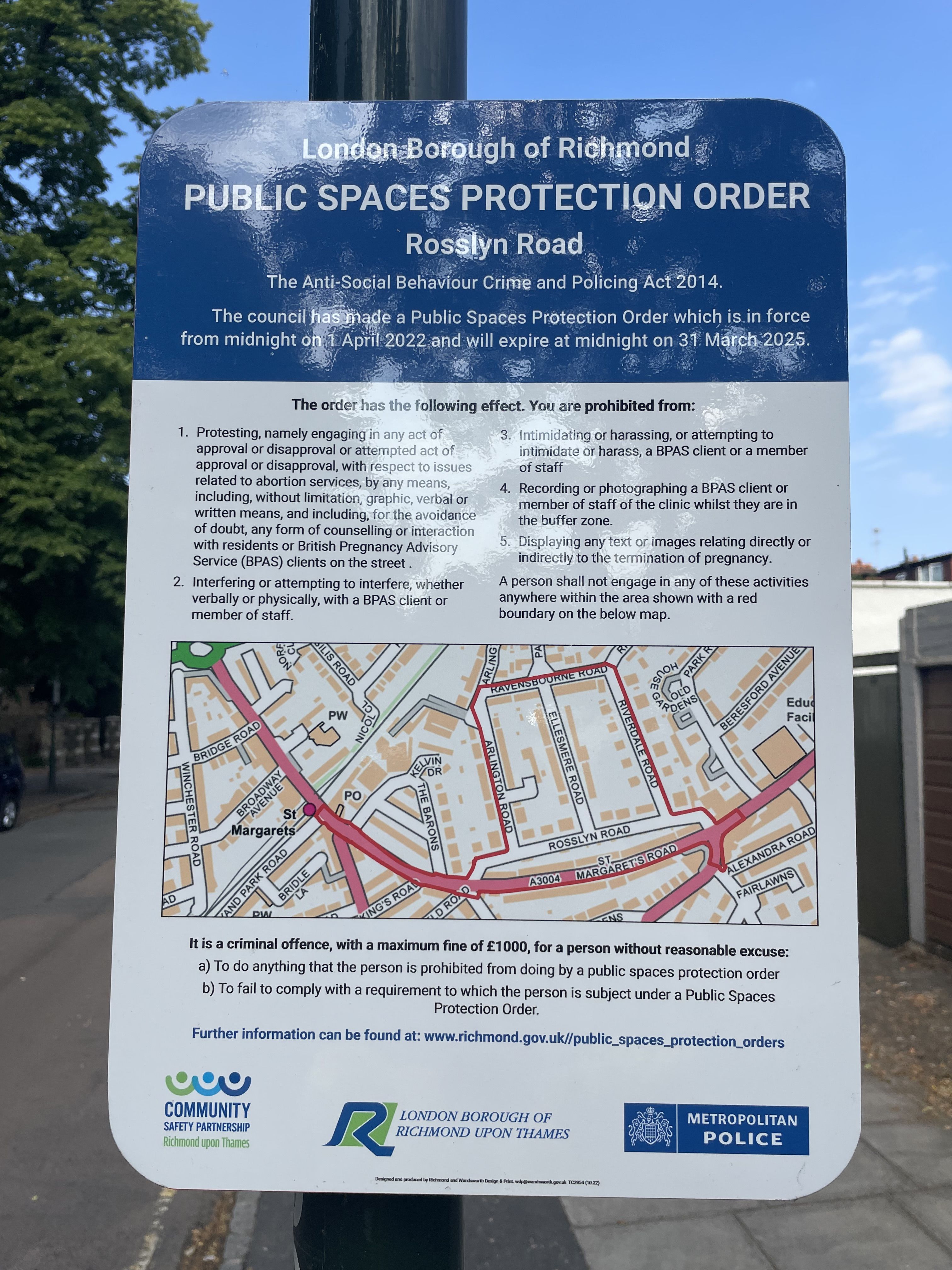
150m from a clinic is actually farther than you think
Finally, in 2022, buffer zones made it to Parliament—and were voted into the Government’s Public Order Bill 297 to 110 in favour.
After a rewording in the House of Lords in early 2023, and an unsuccessful attempt—backed by Suella Braverman—to introduce weakening amendments, the final hurdle was passed in March.
Safe access zones will now apply unilaterally to clinics across England and Wales—with those found guilty of breaching them liable to a fine or even imprisonment.
Yet, while the zones are legal, it’s not yet known when and how they’ll be fully implemented.
Anti-abortion activists, like Marta, aren’t pleased.
Robert Colquhoun, full-time anti-abortion activist for the international pro-life organisation 40 Days for Life, says that safe access zones—intended to protect the privacy of those seeking abortions—are in fact infringing on the freedoms of the protesters themselves.
“Obviously its a very emotional topic, it's controversial, there’s strong opinions on either side," he explained.
"But, you know, we believe in freedom of speech, and buffer zones are a clear obliteration of freedom of speech and also freedom of thought as well. It violates human rights in that regard."
Preventing protesters from gathering near the entrance of clinics “bans help where it’s needed most,” he added.
But will the buffer zones mean the end of his protests and vigils?
No, he tells me.
“Everyone will still be organising them, so they’ll basically just move down the road.”

The right to choose in Britain is still not a certainty.
While abortion is protected by the 1967 Abortion Act, its legality still rests on certain requirements—a sign-off by two doctors, acting on ‘good faith’, and only so long as continuing the pregnancy would further damage the mental or physical health of the mother.
The procedure is not, therefore, entirely decriminalised—as the recent case of a 44 year-old woman jailed for procuring a late-term abortion starkly demonstrates.
So, for those seeking to shore up protections for reproductive rights in the UK, nationally enforced safe access zones are a major win.
And, to anti-abortion campaigners' complaints that the legislation is infringing on their own rights, the response is simple.
"The right to protest can happen in other places," explained Karen Wright.
"It doesn’t have to happen in a space where people are desperately seeking healthcare.
"The right to have an abortion has been in place in law for over fifty years, and yet some people are being intimidated from seeking or performing a legal NHS treatment is absurd.
"We have to make sure that our society works for everyone."

 Built with Shorthand