
Identity in a Foreign Land
The importance of immigrant communities in fostering cultural identity abroad

"There is no place like home," says Dorothy Gale in The Wizard of Oz.
Having lived in England for four years, I cannot deny the wealth of experience that I have gained in my time here. I left my home city of Hong Kong to pursue higher education and better opportunities in my desired line of work, and along the way, I found happiness and friends for life. But I think part of me will always yearn for the times I spent growing up in a place that my heart has labelled safe.
As the East and South East Asian population in London has blossomed, so have fads of bubble tea, Labubu blind boxes, and pick-your-own malatang. But underneath the rise and fall of these trends are people who want to build a more permanent home to find community and share their culture.
What does food identity mean to immigrants?
Jenny Lau published An A-Z of Chinese Food in January, a set of 26 essays that dive into the history of Chinese cuisine, its cultural impact, and issues like appropriation and fetishisation in a satirical tone.
Lau said: "Cultural identity is shared; it is not just a singular, personal identity. It is about finding a way to connect with another Chinese person beyond politics, language, religion or class. You can be ethnic Chinese from Peru or Pakistan, and hopefully find a point of solidarity. It is the reason we have this term 華人 (ethnic Chinese) to describe anyone of Chinese descent, not necessarily 中國人 (person from China).
"In a foreign country, such as the UK, it is even more important - because people of colour are still othered. We are bound by the way we are perceived at first glance."
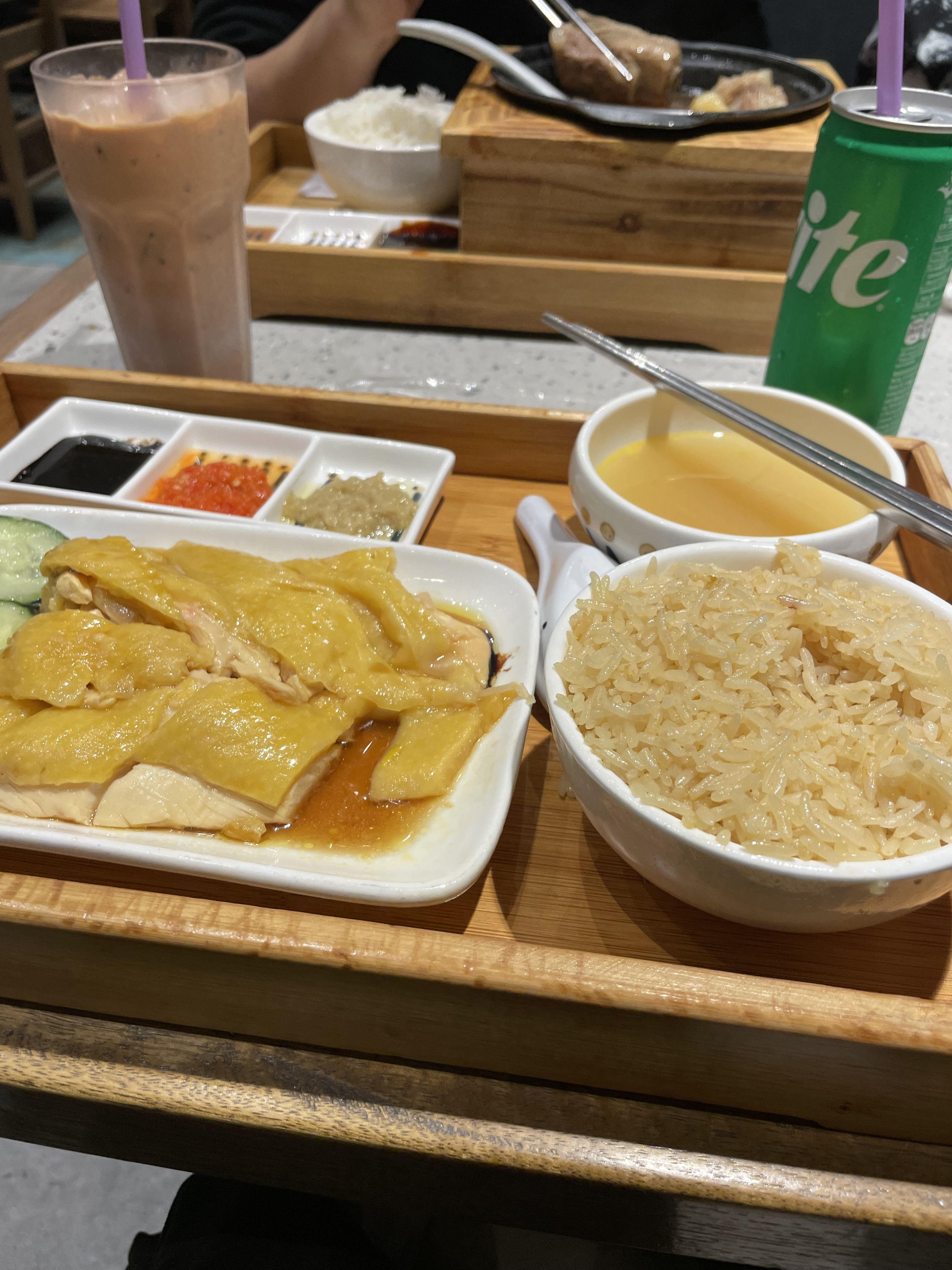
She is also a community cook for a lunch club at the Dalston-based East and Southeast Asian Community Centre (ESEACC), which serves home-cooked meals like 白切雞 (poached chicken), 醬油蒸蛋(steamed eggs), and 蒸肉餅 (steamed pork patty) reminiscent of the tables of many Chinese households.
She continued: "As for our lunch club, perhaps they are looking for a taste of home, but more importantly, they are searching for a feeling of home. When a lot of people sit down for lunch with us - even if it is their first time - they immediately feel this sense of comfort and homecoming."
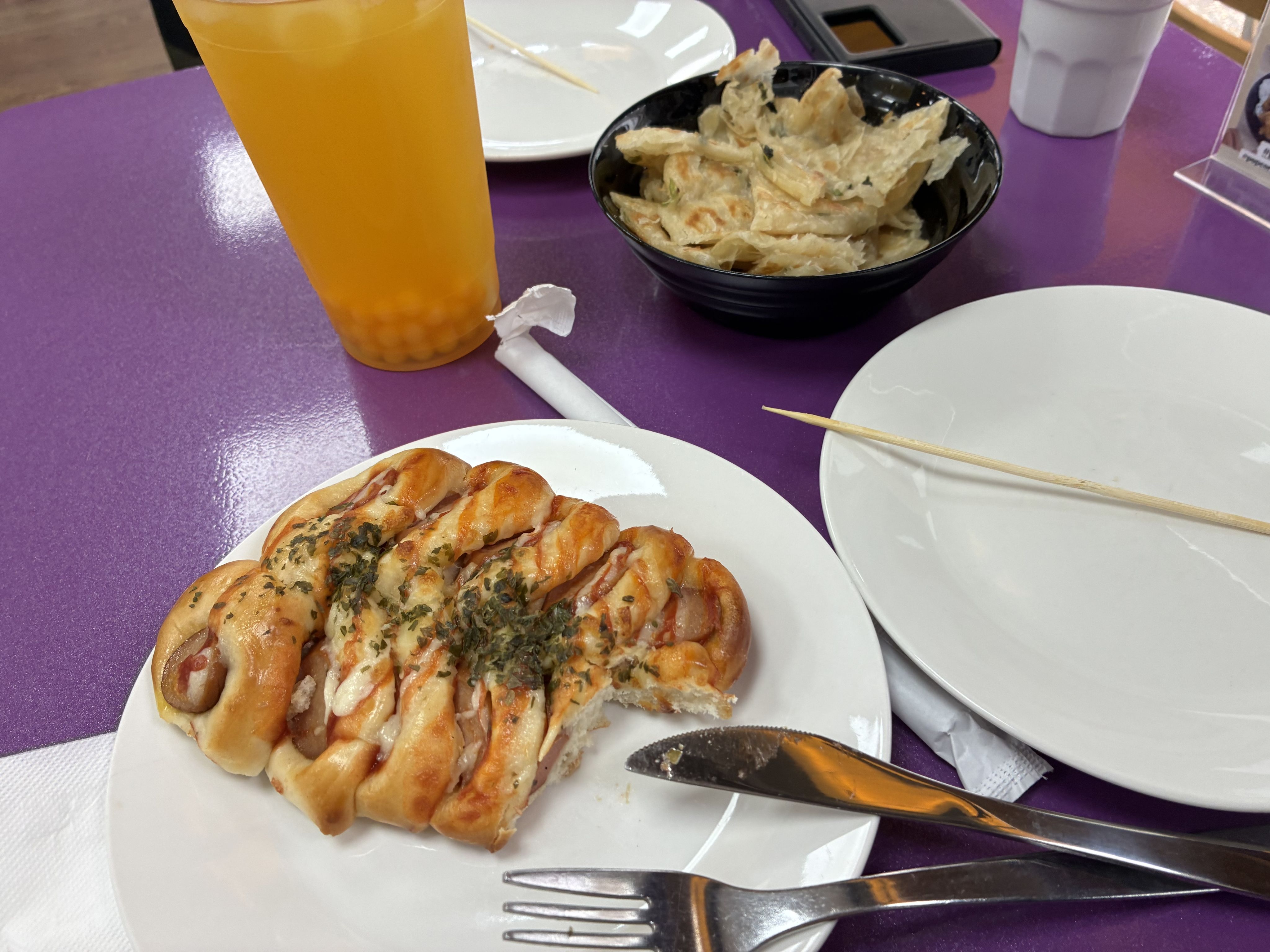
South of the Thames in Bromley, Rita's Bakery Cafe sits just off High Street and specialises in Taiwanese fare. It opened in January to become a sister store to their Charlton counterpart that opened in 2017. Co-owner and chef Rita Chang is the mastermind in the kitchen, creating staples from buns and fresh cream cakes to dumplings.
Benjamin Ng, co-owner and Bromley local, said: "The most important thing about Rita's is that the taste is different.
"London is a multicultural area. We see a lot of Chinese and Hong Kong food, and there is the super popular and upcoming Szechuan food. But there was no Taiwanese food that we could see."
The café is a hit in Bromley, which has seen a rising number of Asian residents in recent years. Even on a rainy and windy Monday afternoon, the café entertained a steady stream of diners, not all of whom were Asian.
Ng said: "The education about food culture has gotten better, and we see a lot of people from different nations here. In this day, people travel far and wide.
"They like to go to Asian countries, like China, Thailand, Malaysia, etc, and when they are out there, they try the local food. So when they come back to the UK, they're very happy to see that they can find food here which is just as good as what they had overseas."


"When I get to sit down around the mahjong table to play and use my head, I'm good." "
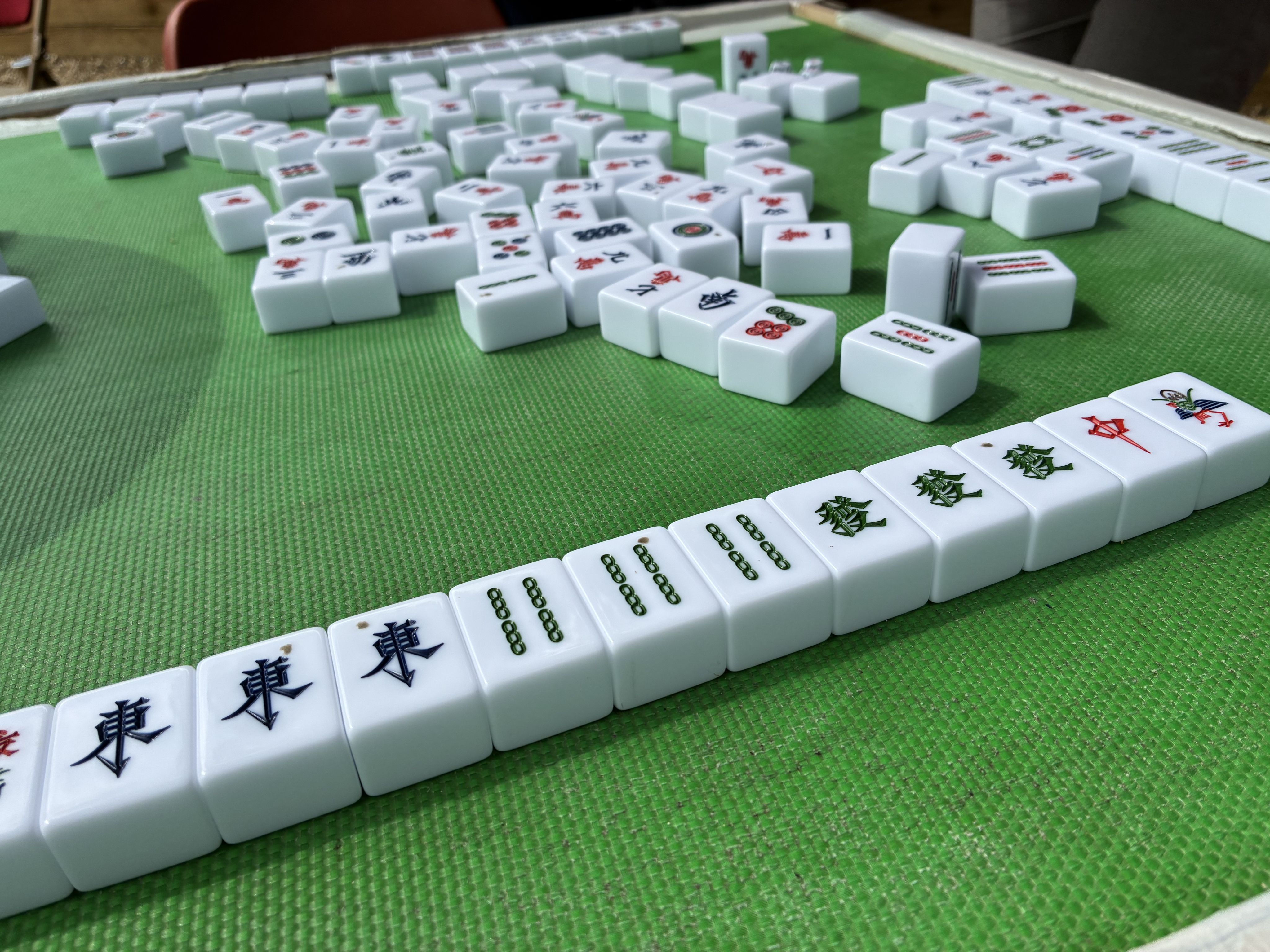
The ESEACC is also home to Four Winds Mahjong on Saturday mornings, where dozens of people gather to meet, chat, and play a few rounds of mahjong.
Mahjong has a deep history in Chinese culture, and its name 「麻雀」comes from the idea that the clacking sound made when the tiles are shuffled is similar to the chatter of sparrows. It stems from old card games popular in the 18th and 19th century, and was actually banned during the Cultural Revolution as it is a gambling game.
Four Winds plays Hong Kong-style mahjong, often deemed the simplest variation, with all 144 tiles used in the game. There are three suits - circles, bamboo, and characters respectively from top to bottom - and dragon tiles, four of each tile type on the fourth row. The flower tiles are optional depending on house rules, and serve as potential bonus points.
Players compete to build a hand of 14 tiles in combinations of four trios and one pair, with each combo being consecutive numbers or identical tiles. Points are given for the complexity of patterns and if dragons (which also offer bonus points) and flowers are involved. An extra point is also added if the player draws their last tile instead of winning by another player's discard.
In a game of mahjong, you will call 「食餬!」 or "sik6 wu4!" to indicate a winning hand. It loosely translates to 'eat paste', another hint as to how food is often intertwined within different aspects of the wider Chinese culture.

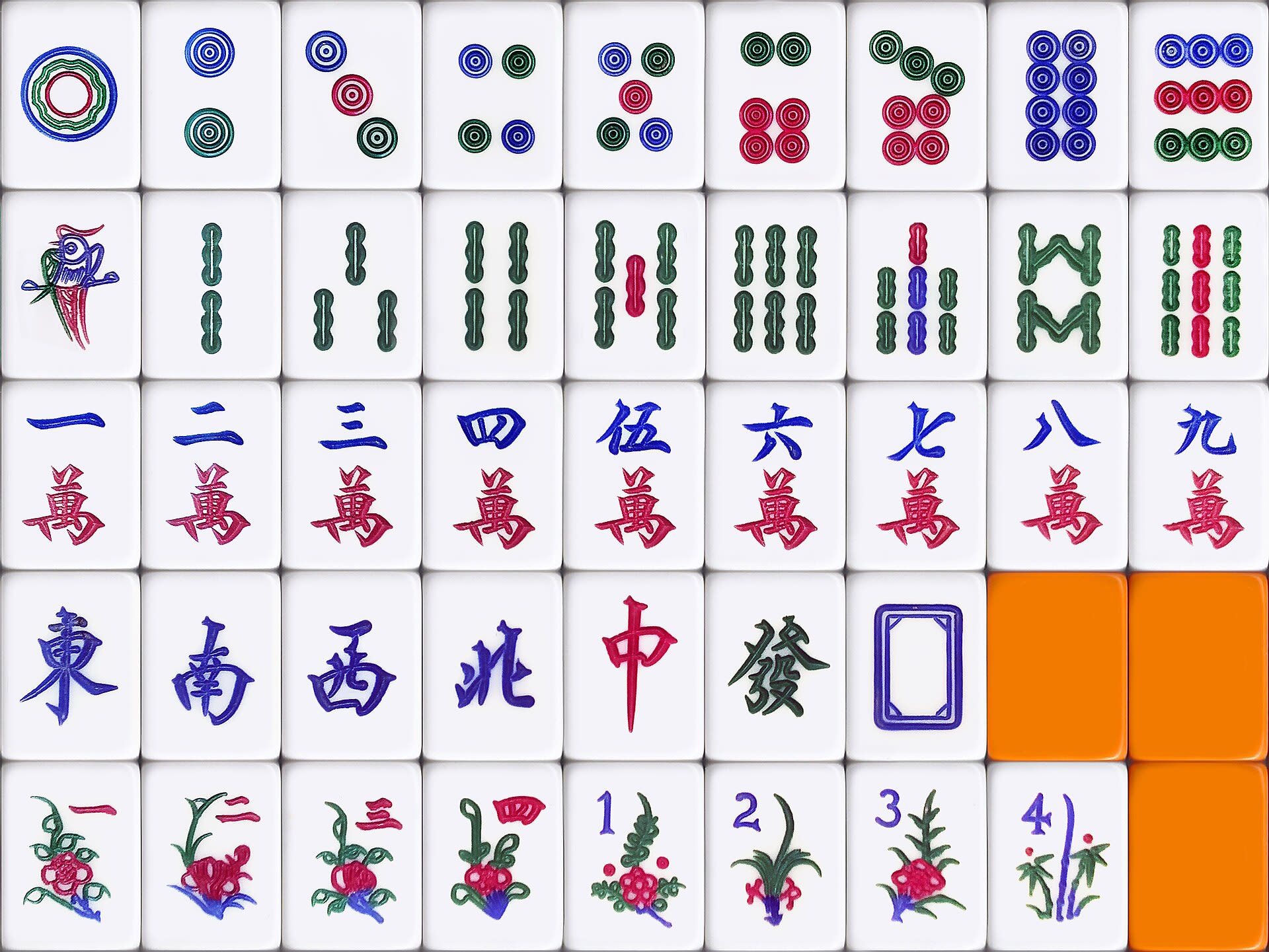
Image credit: cangjie6 on Wikimedia Commons
Image credit: cangjie6 on Wikimedia Commons
At Four Winds, each table sits a different mix of people - four friends that come weekly, strangers that find common ground over the tiles, and beginners that start their journey under the expert eyes of volunteers. A mix of languages can also be heard across the courtyard among the sound of tiles clacking.
Audio of atmosphere at Four Winds, credit: Castor Chan on Soundcloud
One of the volunteers there is Ming, who helps coordinate the sessions. He told us what it's like to have a club like Four Winds, and the significance of a space like the ESEACC for both the East and Southeast Asian community, and those of other ethnicities who also visit.
Sik Faan is a small restaurant in the middle of Kentish Town, run by David Chu. It serves 'wholesome Cantonese' with a twist of Vietnamese fare as well, and their offerings include crispy belly pork, bao buns, and pho.
He isn't a first-time restaurateur, having run Carrots and Daikon for eight years prior to Sik Faan. But after taking a break to travel, he realised he missed the community he and his family had built.
Chu said: "'Sik Faan' is a way of saying, 'time to eat together'. We still do it to this day, we eat around the table and the food links us together. I wanted to bring people together in a community, and that's also really important for mental wellbeing.
"When I went to Asia for two months, I saw friends visiting each other, family having meals with their kids - it brings me a lot of joy when I see people connect with each other."
It is common to see Chinese families eat with a bowl of rice each and a variety of dishes set out in the middle of the table. After a chorus of 「食飯!」 (sik faan), people will pick up food throughout the meal from the centre.

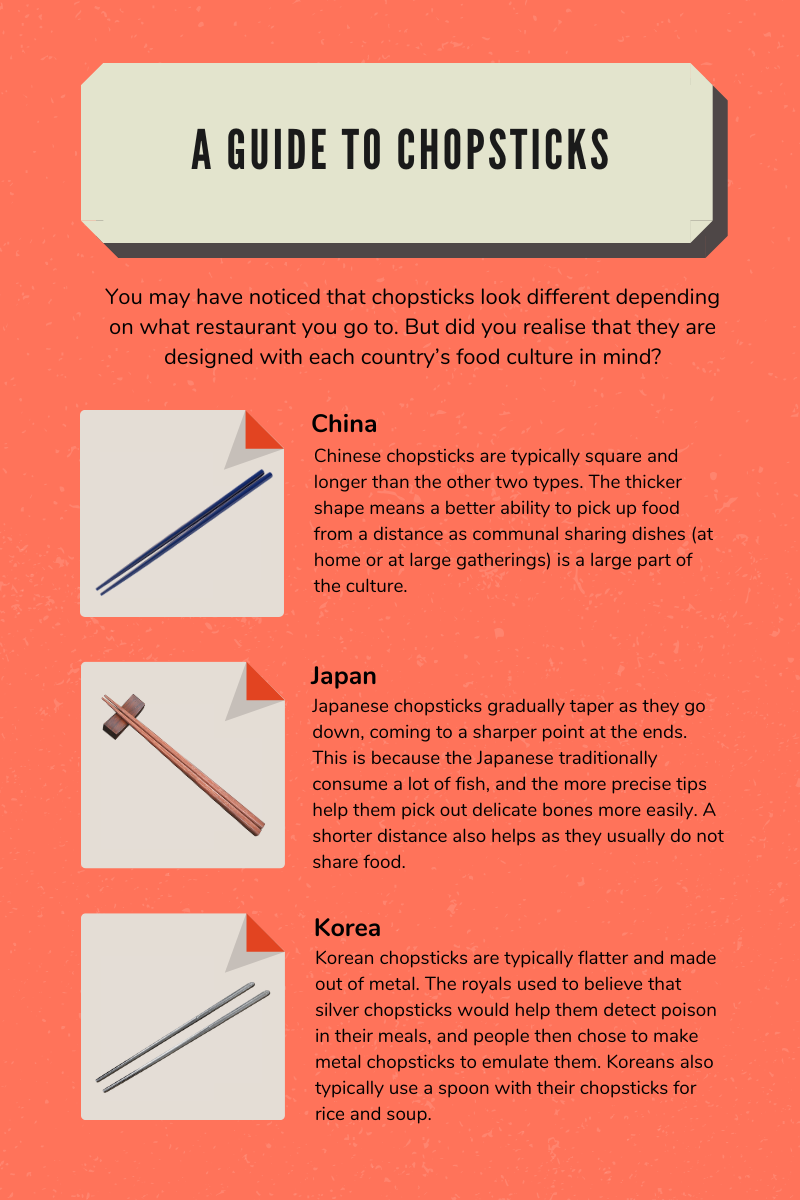
Image credits: vecteezy, pngegg Infographic credit: Castor Chan
At Sik Faan, Chu also hosts his own mahjong gatherings, Sik Wu, at the restaurant on weekends.
Chu said: "I only started playing mahjong two years ago, and I learnt it from Ming at Four Winds. I really loved it, so when I opened Sik Faan I knew I wanted to bring an element of mahjong into it.
"When you play mahjong, you connect with your friends and family, and it doesn't feel awkward talking at the table. And when you teach someone you see them light up when they finally understand the concept and how to play.
His enthusiasm for mahjong and community stems from growing up in London with his sister and mother, who is from Hanoi.
He continued: "Inside London, it sometimes feels like you're by yourself. For a long time, I did feel like it was just me, my sister, and my mum. But there is a wider community if you choose to seek it out.
"I think sometimes this is a little lacking in the UK, especially in big cities. It feels like everyone is clustered around, but there isn't a sense of belonging until you join something like a run club."
Many people think that although one may have friends of different nationalities, there is a different bond created only through shared experiences and cultural values, and that rings especially true for diaspora communities.
Chu said: "With similar upbringings and backgrounds, it's easier to relate a bit more to each other. It's a bit harder when you're grown up and you have a job and have to pay the bills.
"Community and belonging has brought me so much joy and happiness that I've never felt before, and I think that's the best way to enjoy life and be happy."
Background image credit: Unsplash
We all have a different perspective on what home means. Perhaps it is with found family, a location that brings forward a coveted memory, or even just a plate of your grandmother's cooking. For many migrants and immigrants, that grasp of home is ever harder when circumstances may mean a life in or even a return trip to their country is difficult.
It is true I left Hong Kong for university. But I also did so knowing I might never be a permanent resident there again. The fraught political landscape means that journalism in the city has changed drastically, and my proficiency with the English language over my fading mother tongue of Chinese promises an easier career overseas.
So to have businesses and community clubs like Rita's, Sik Faan and Four Winds soothes that ache for home, and allows me to wrap myself in the familiarity of winning losing a hand of Mahjong among shouts of Cantonese. All that's missing now is a golden bowl of my mother's soup, and that is irreplaceable.
Survey made on Common Ninja
 Built with Shorthand