Livestreaming
self-destruction
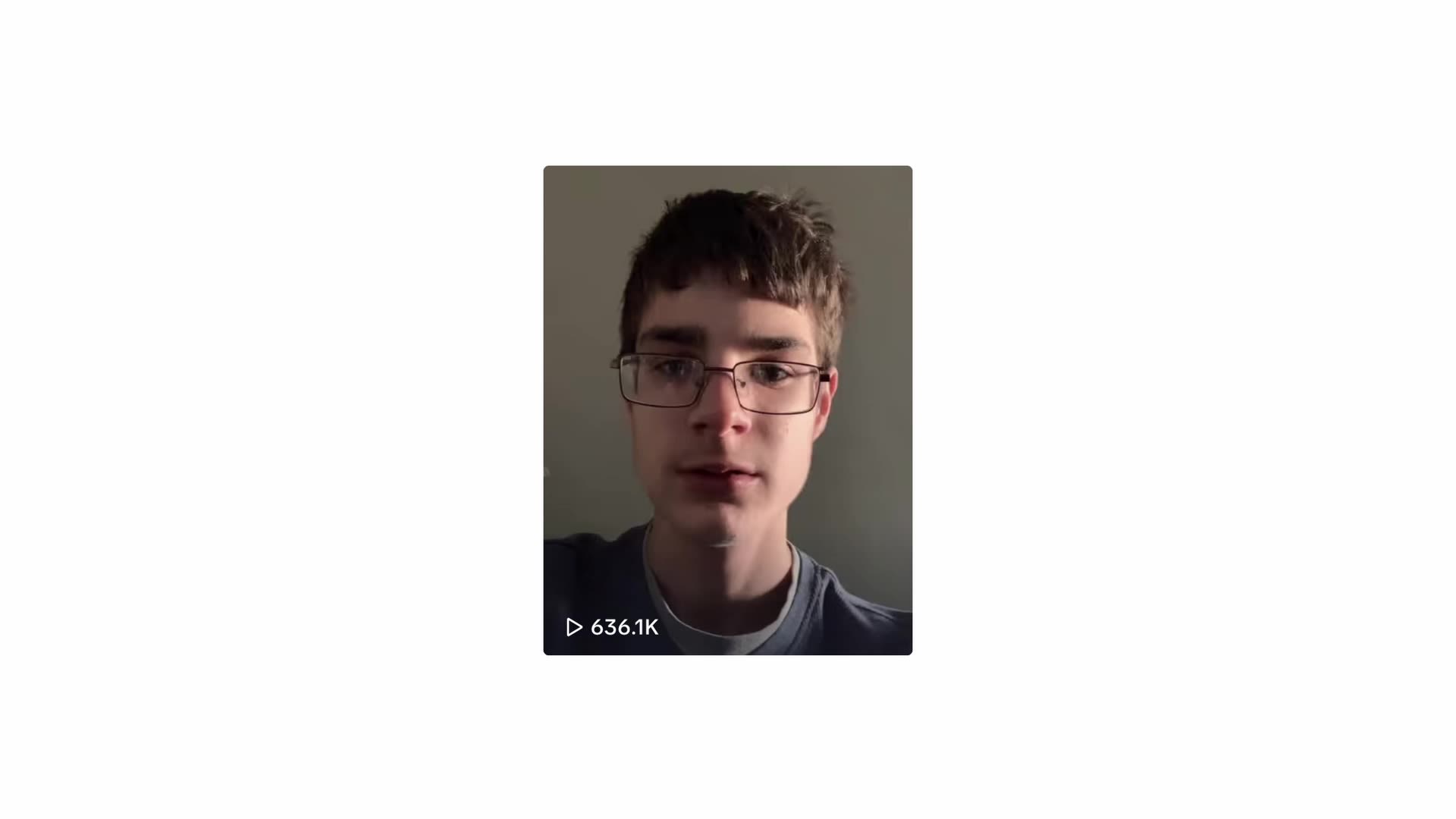


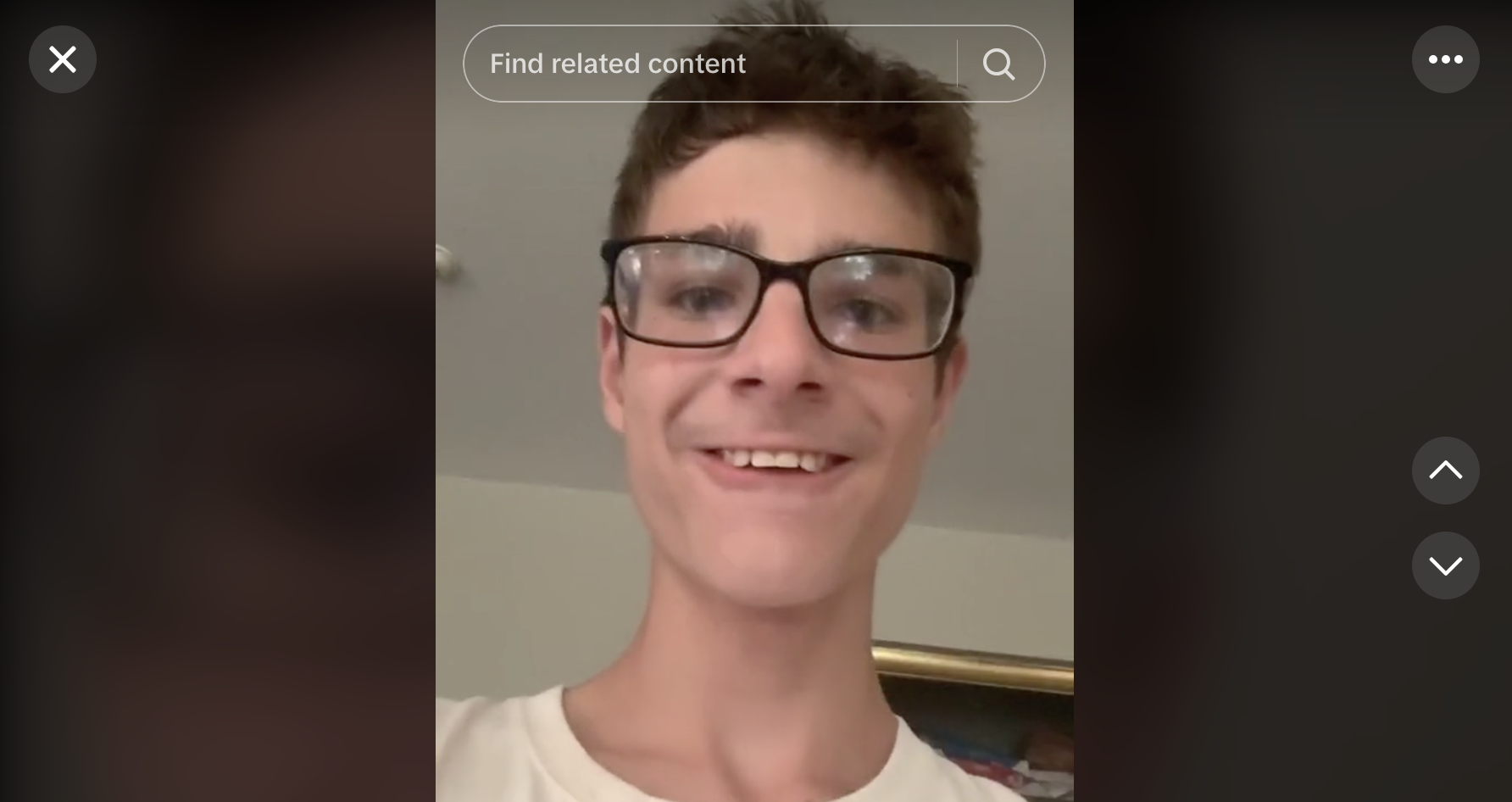

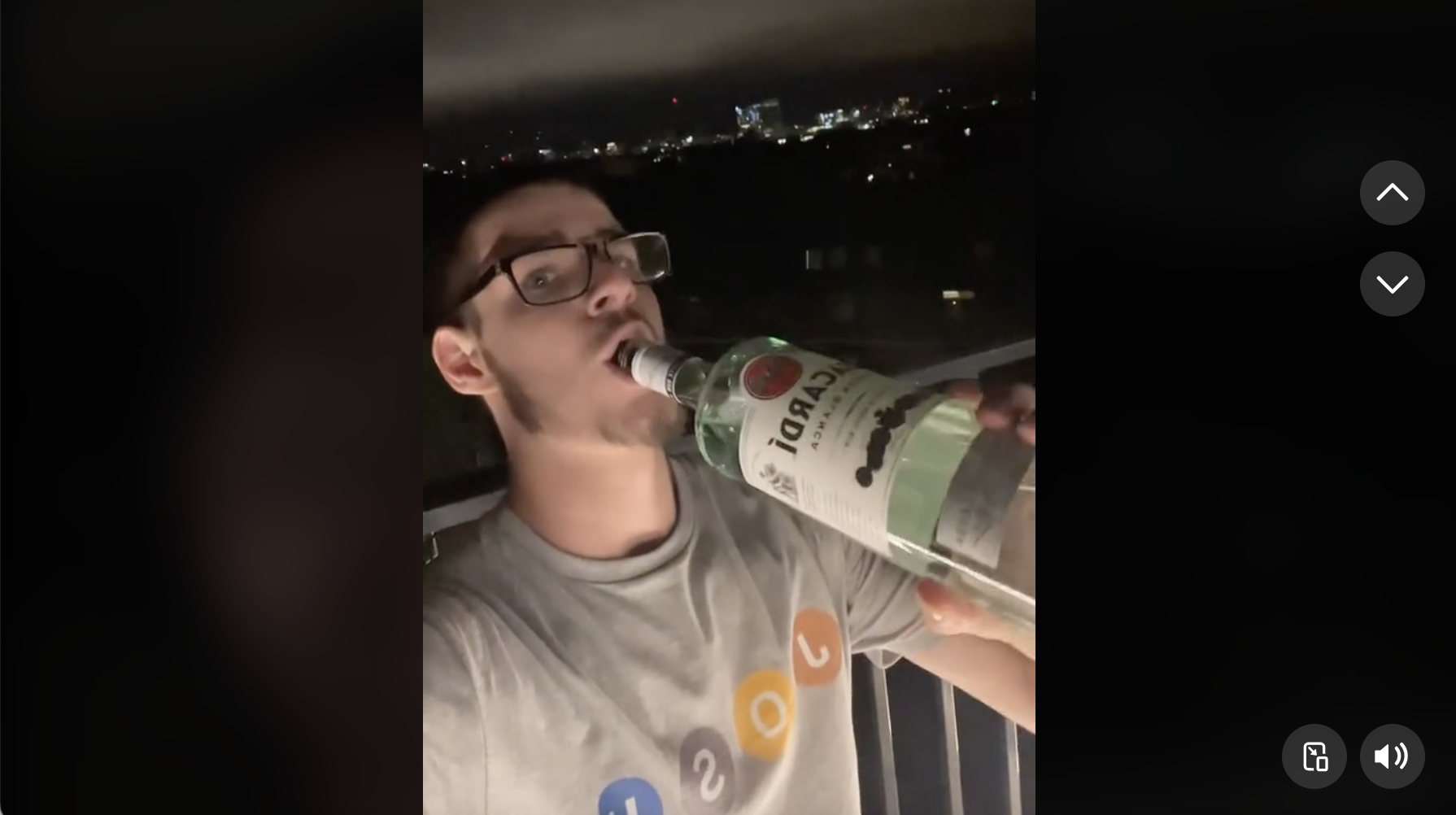

A common opinion among fans, industry insiders, and those who know him personally is that Joshua Block is going to die. When he started his TikTok account in 2019, jumping on online trends and singing songs, few predicted the drinking, the delirium tremens, or the violence that would follow.
Five years ago, Joshua was filming videos under the name WorldOfTshirts in his kitchen. Now he spends his days in front of a camera and a global audience, more often than not visibly drunk.
Half a decade later, a corner of the internet sees Joshua as their star. He tours the globe, entertains legions of fans, and rubs shoulders with the rich and famous. He also visibly shakes before drinking, gets arrested and hospitalised, and streaks through the streets fleeing imaginary assailants.
Comments on almost every video Joshua posts now beg him to escape his spiral. Others urge him on.
This started with a young man using his phone and an internet connection to chase a dream. Now there is a vulnerable person potentially at risk of death. Who got Joshua Block to this point?
Joshua’s first three posts on TikTok are 5 second mistakes, filming walls and/or his feet. Eventually though, he hit his stride. His method was simple: he filmed himself, to camera, talking and singing.
Joshua’s selling point was his quirkiness. Joshua is diagnosed with autism and acts uniquely. He harnessed this to charming effect and quickly developed a following of people who loved his content. Some may have been laughing at him, but most comments were gentle.
Things changed in late 2021 after Joshua took a trip to Cancun. Almost overnight, heavy drinking became a central pillar of his content. Judging by the changing comments under his videos, the gentler people started to leave, but a new, more loyal fanbase started to develop.
They could be depended on for views, and for money, but their demands seemed different. Joshua videos featured more and more drinking, and increasingly outlandish behaviour. Violence, incoherence, and breakdowns became regular features.
It wasn’t long before Joshua found older men taking him under their wings. Most came and went, but one man has stayed: another influencer who goes by the name Mr Based.
Jason Itzler

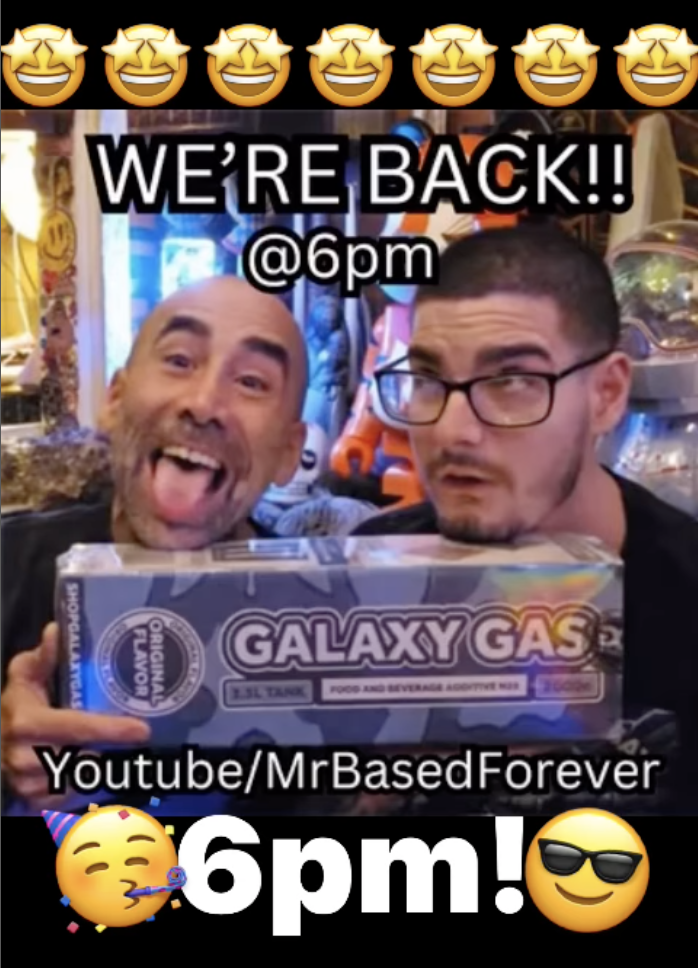
Based changed the video formula. With Based, instead of first-person TikToks, Joshua sits at the centre of a livestream and talks to Mr Based and occasionally a guest. Two differences separate this from a standard podcast: Mr Based will steadily supply Joshua with drink, and audiences will pay to have their message read out by AI characters to Joshua.
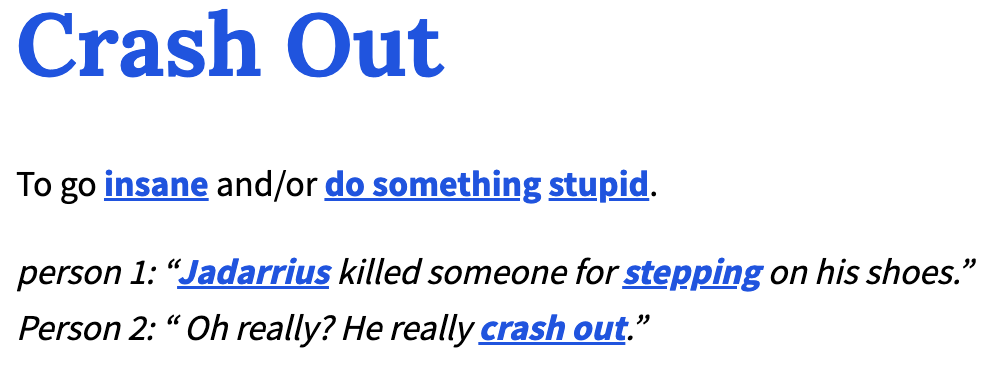
Many of Joshua's fans are open that the goal of this cocktail is to elicit a “crash out” and send abusive messages to that end.

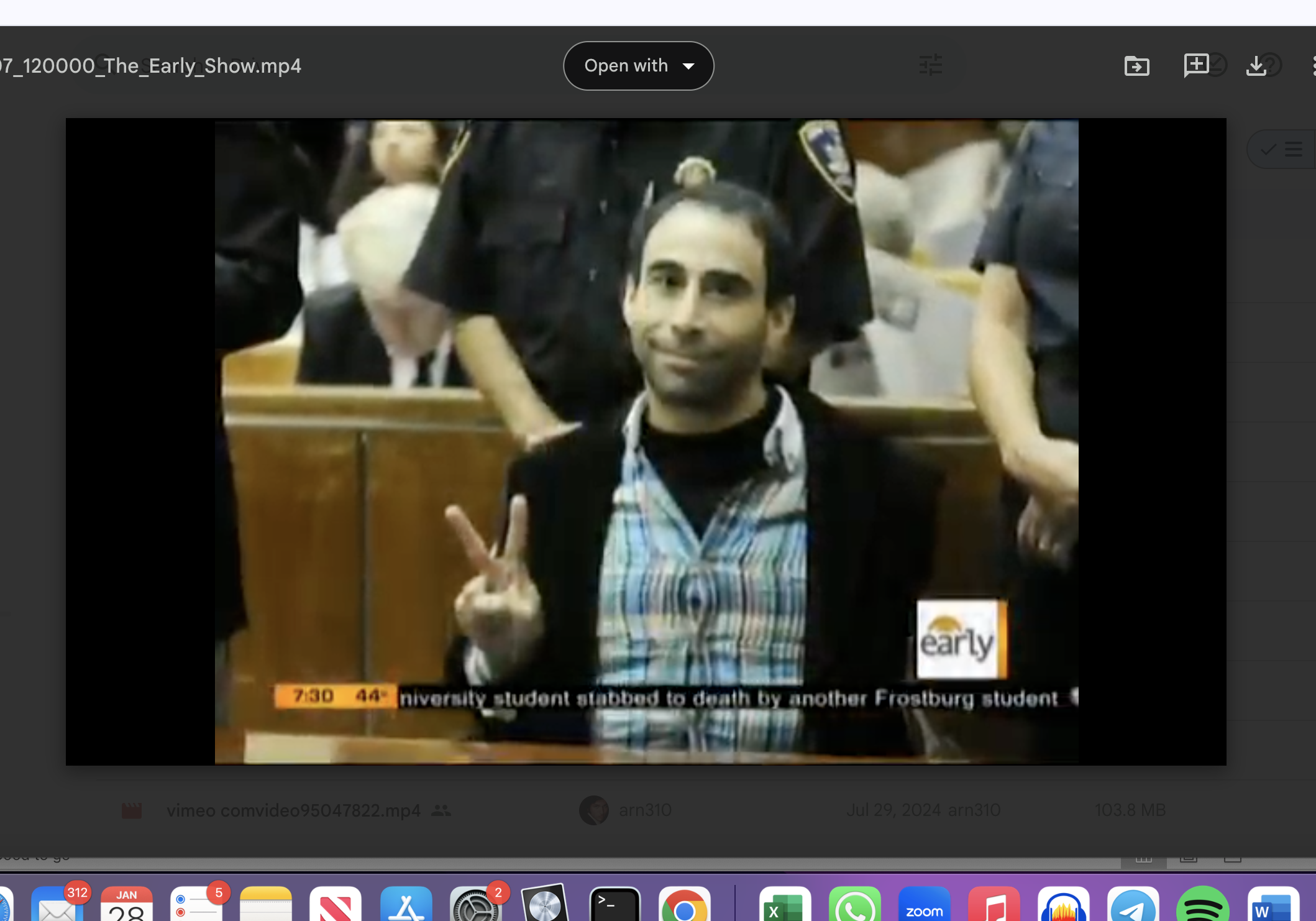
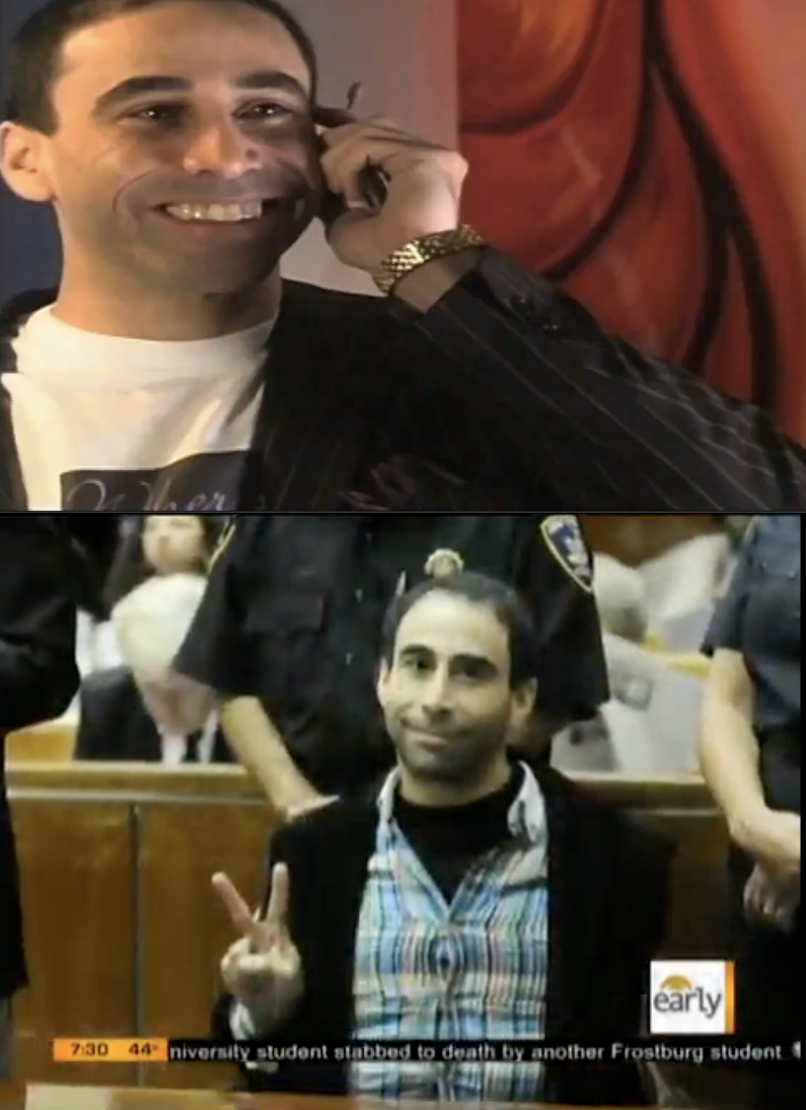
Mr Based, however, was better known by another name: Jason Itzler, or, in his own words: “King of All Pimps.” Itzler hit the headlines in the early 2000s when a never-finished documentary detailed the day-to-day of his prostitution ring, New York Confidential, which reportedly made him $55,000 a night and implicated celebrities and politicians. In 2012, Itzler was sentenced to four years in prison for prostitution, money laundering, and drug charges. In 2011, police investigated the fatal date-rape drug overdose of an aspiring model called Julia Sumnicht, who had left Itzler apartment hours before she died. Itzler was never charged.

Credit: Mr Based/Jason Itzler
Credit: Mr Based/Jason Itzler

Credit: Ron Sperling
Credit: Ron Sperling
Who is Jason Itzler?
Ron Sperling: Producer/Director
Ron Sperling has known Itzler for 20 years. Before Itzler's spell in prison, Sperling put together the first documentary on Itzler's escort agency, New York Confidential. The subsequent legal uproar meant the documentary never aired. He knew Itzler during his time as a pimp and has drawn parallels with his new content with Block.
Alex Novell: Journalist and YouTuber
Alex Novell, a Journalist, Youtuber and Filmmaker worked with Itzler for months pulling together a full compendium of his relationship with Block and the unresolved death of Julia Sumnicht. For his trouble, Novell has a new scar on his face allegedly courtesy of Itzler and his first screening was allegedly derailed by paid saboteurs shouting slurs.
Many online have blamed Itzler entirely for Joshua's decline. But several other factors have shaped his online life.
The fandom

Ron Sperling, who has been in the TV industry for decades, said he doesn’t understand why Joshua became famous in the first place. Joshua made his name on TikTok and continues to post several times a day. Most TikTok creators produce polished content, perform, or educate. Joshua’s style is different: he will sing songs off key, ramble, or simply just show snippets his day-to-day life, which increasingly involves drinking on camera.
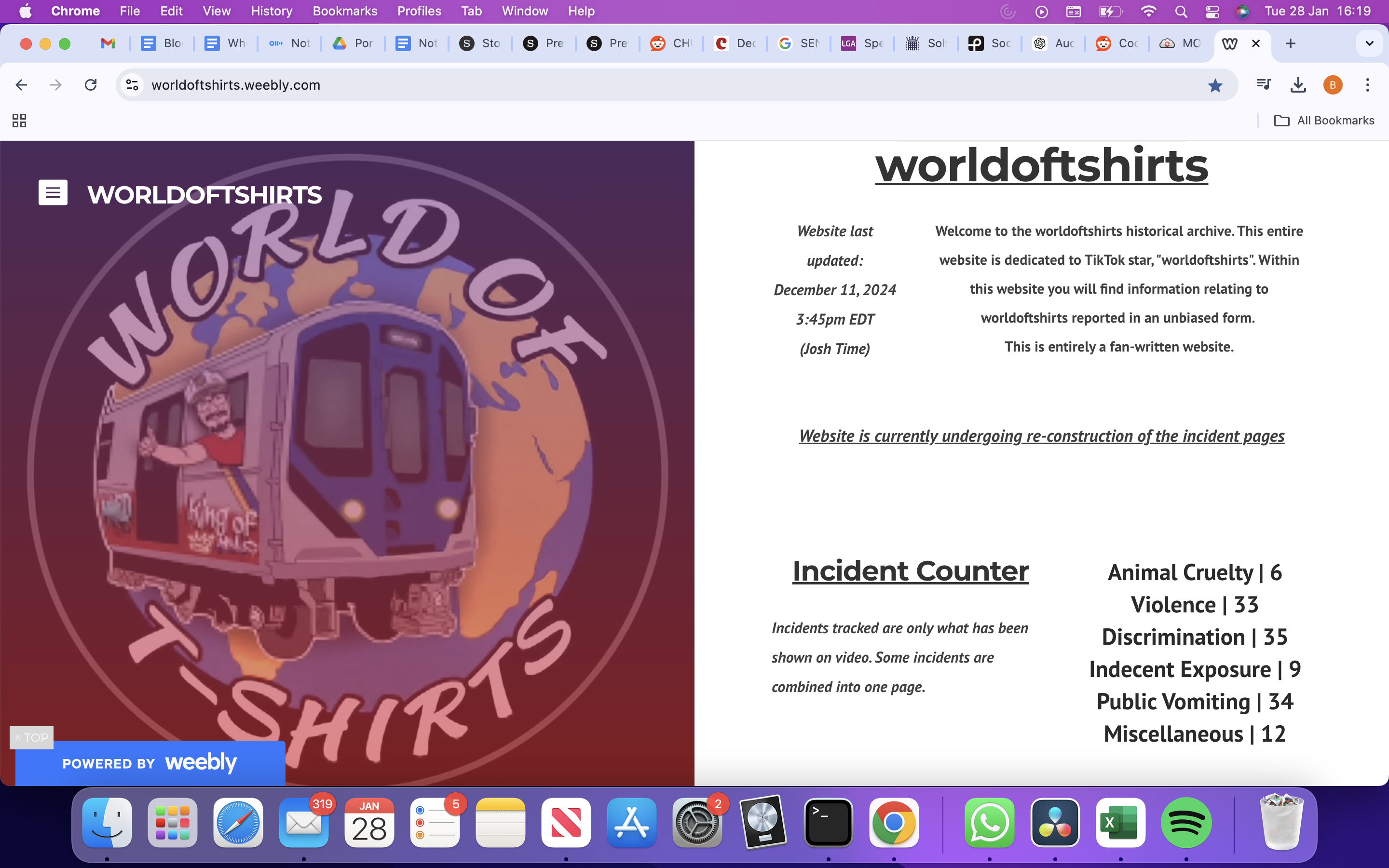
Sperling finds this at odds with the breadth and incredible fervour of Joshua's fans. Terabytes of reactive content, whole websites dedicated to every move and video, and a 60,000 strong Reddit community exist solely to discuss Joshua Block daily activities.
Dr Mark Carrigan, a Senior Lecturer at the University of Manchester, and a Doctor of Sociology specialising in social media might have one answer. He suggests that this particular phenomenon may be an evolution of parasocial relationships.
Parasocial
uk/ˌpær.əˈsəʊ.ʃəl/us/ˌper.əˈsoʊ.ʃəl/
Involving or relating to a connection between a person and someone they do not know personally, for example a famous person or a character in a book:
Parasocial Relationship: Psychologists have long known that people can engage in parasocial relationships with fictional characters.
For many fans it is the strong parasocial association with the star which acts as the incentive to seek out like-minded people.



Usually, these relationships play out as unrequited affection or unheard rage. But, Dr Carrigan argues that this has developed into a new phenomenon: parasocial bullying.
Usually the audience in the parasocial relationship barely registers with the famous subject; despite his obsession, Mark David Chapman only entered John Lennon’s mind when he pulled the trigger. Joshua’s audience, on the other hand, can break the fourth wall. Joshua is no longer the only influencer in the parasocial relationship.
His audience has two means of influence.
The first is during the livestreams with Mr Based. For just a few dollars into what looks like Jason Itzler’s bank account, audiences can praise, mock, or needle Joshua into a reaction. These messages, his vulnerability, gentle nudging from Jason Itzler, and the alcohol, often conspire to turn him into the grotesque caricature the audience seemingly wants him to be.
Credit: Mr Based/Jason Itzler
Credit: Mr Based/Jason Itzler
The second is less obvious but more insidious: they watch him. The viewing figures suggest that few switch off when Joshua’s at his worst. That’s when they are most likely to tune in. They watch, like, share, and comment on his videos in a constant feedback loop. Novell noted that, when Joshua stopped drinking on TikTok for a couple of months before meeting Based, his follower count drastically decreased.
How can people in good conscience contribute to someone’s decline like this? One answer may be found in the way Joshua’s audience talks about him. They consistently use a vast network of memes to talk about Joshua, mostly discussing him as if he were a character in a TV show or game.
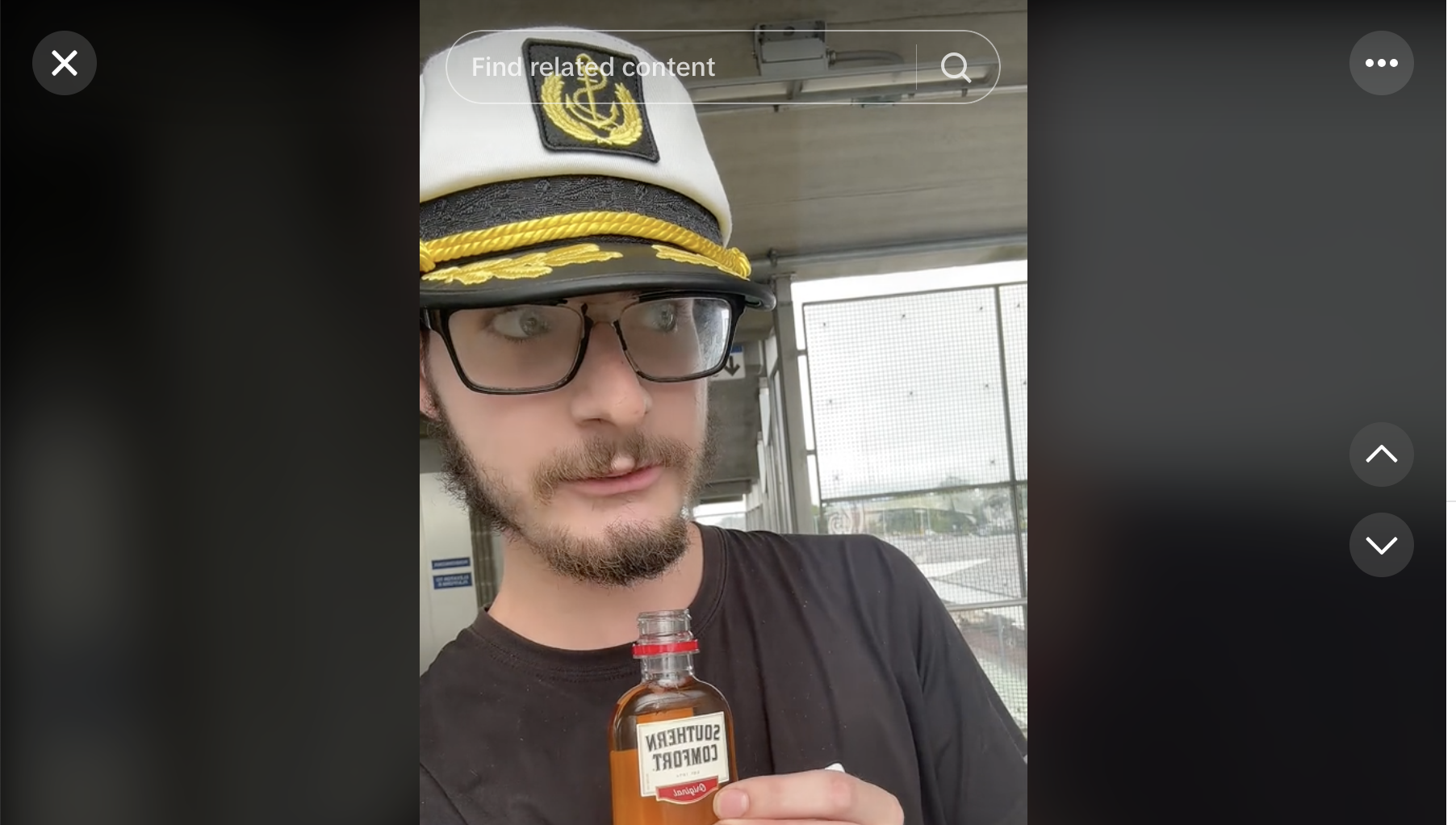
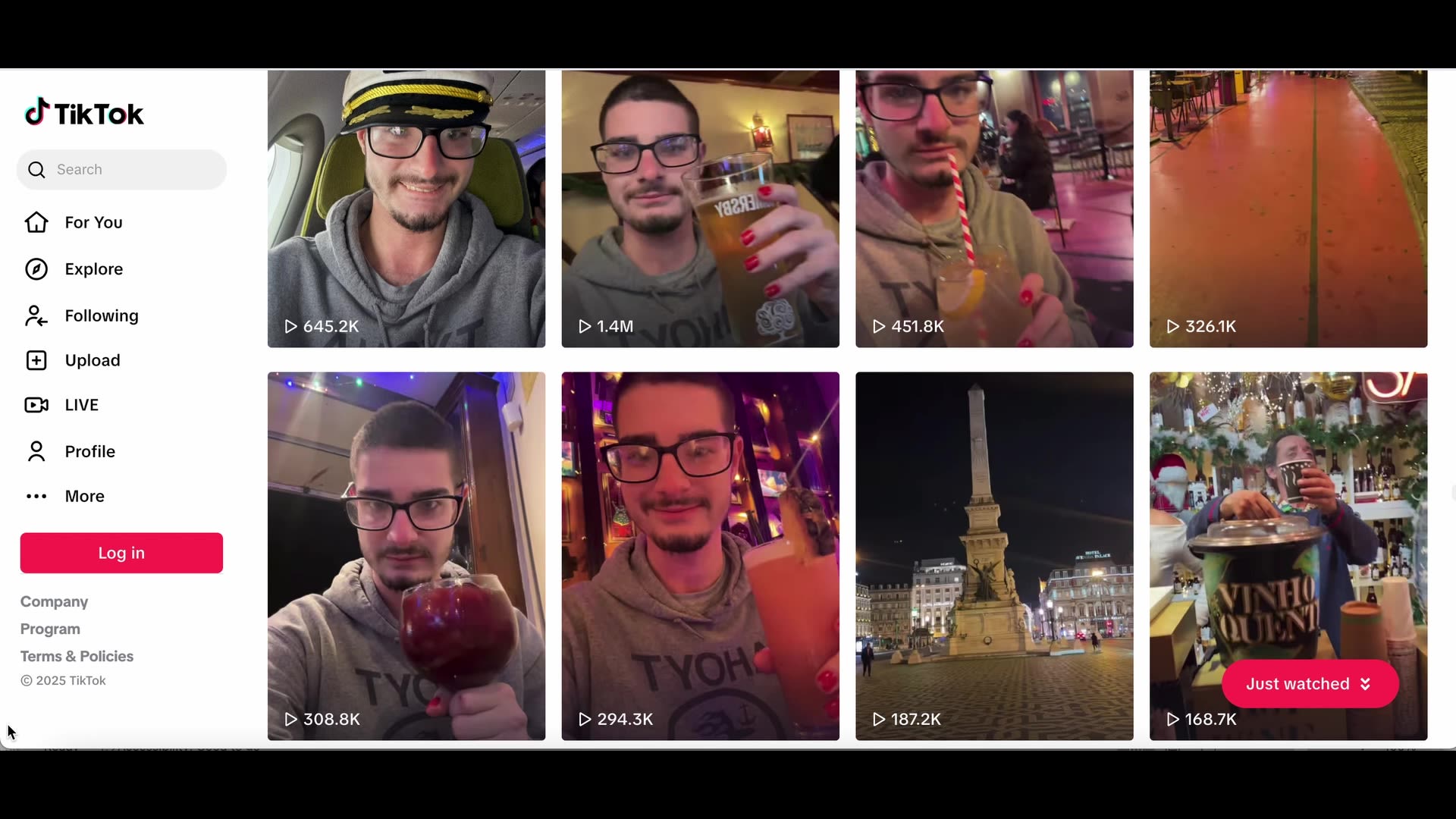
When Joshua posted in a TikTok that he had overdrank, ran out of the bar, and vomited on the street, he was wearing a sailor’s hat. The top comments, with thousands of likes, were “rough seas captain, keep drinking” and “liver just blew a piston”. Even the comments concerned for his safety played on the captain theme, and the 'joke' has persisted to this day.
When Joshua’s audience talks about his past, they use the word “lore”, like he’s a fantasy novel; the fact that he’s still alive is evidence of “plot armour”; and when I asked Joshua’s subreddit who was responsible for his decline, the top comment was “Place the chips in the bag bruv!” - a meme popular among his fans that essentially means “stay in your lane”.
Swathes of Joshua’s viewers use the language of a story and refer to him as a character in it. Novell suggested that this served to distance them from Joshua Block as a person, as opposed to the internet personality. Many are predicting a tragic end to this story, but not all the commentary is sympathetic.
There is one post, on Joshua’s subreddit that reads: “Anyways, even if Josh's drinking gets even worse he'll die at the soonest like 2 years from now.”

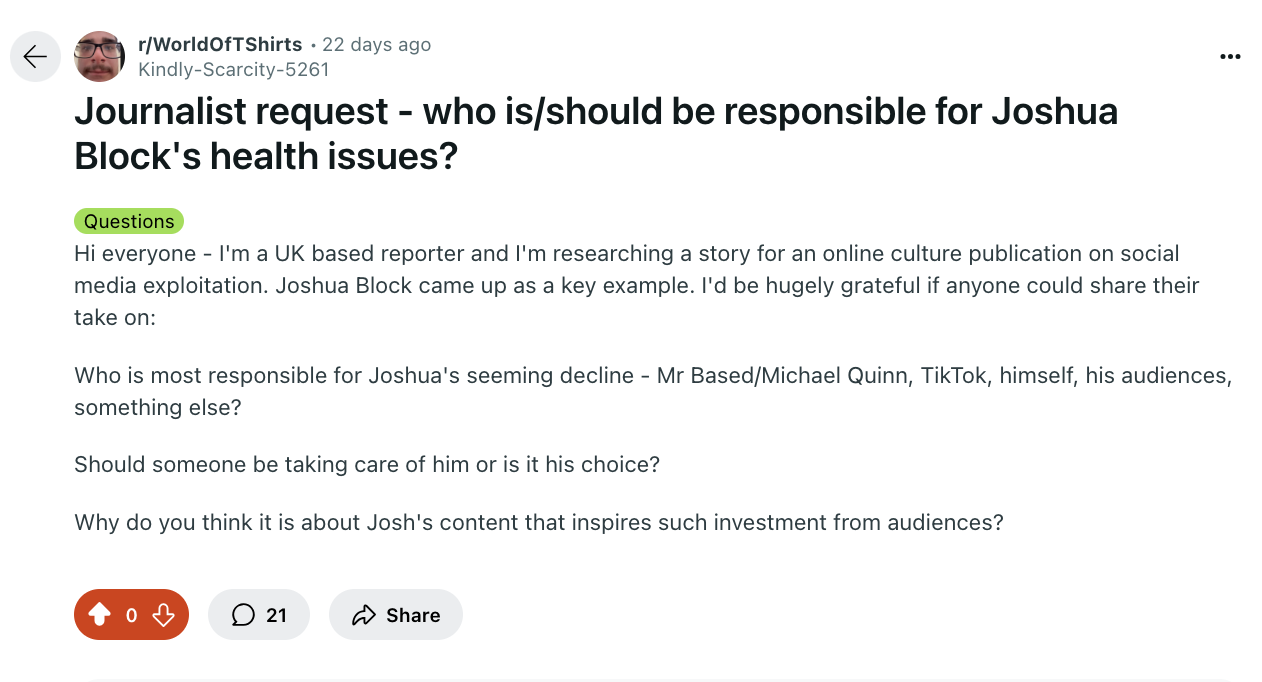
I asked the subreddit dedicated to Joshua Block who was responsible for his health issues
I asked the subreddit dedicated to Joshua Block who was responsible for his health issues

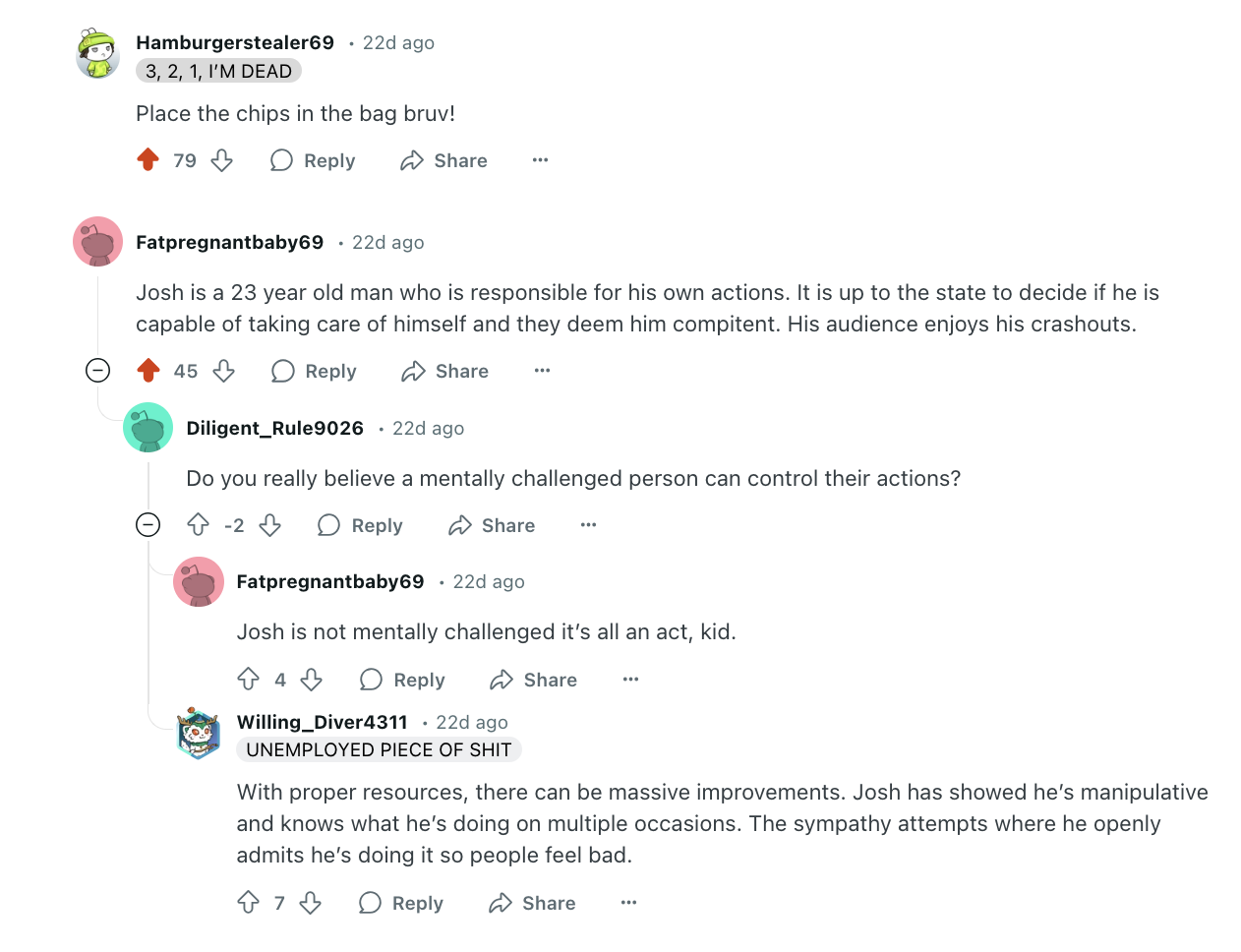
I asked the subreddit dedicated to Joshua Block who was responsible for his health issues
I asked the subreddit dedicated to Joshua Block who was responsible for his health issues

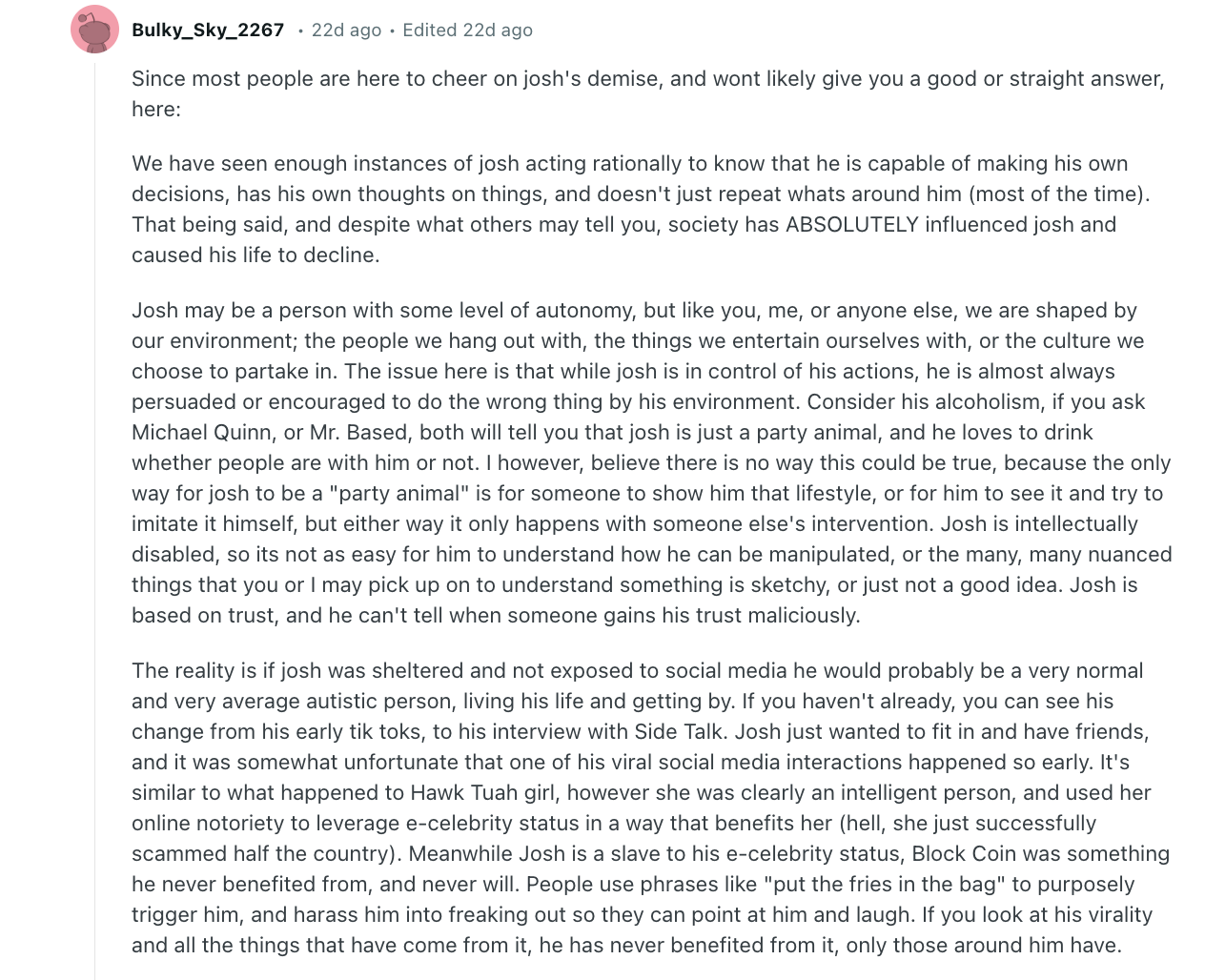
I asked the subreddit dedicated to Joshua Block who was responsible for his health issues
I asked the subreddit dedicated to Joshua Block who was responsible for his health issues

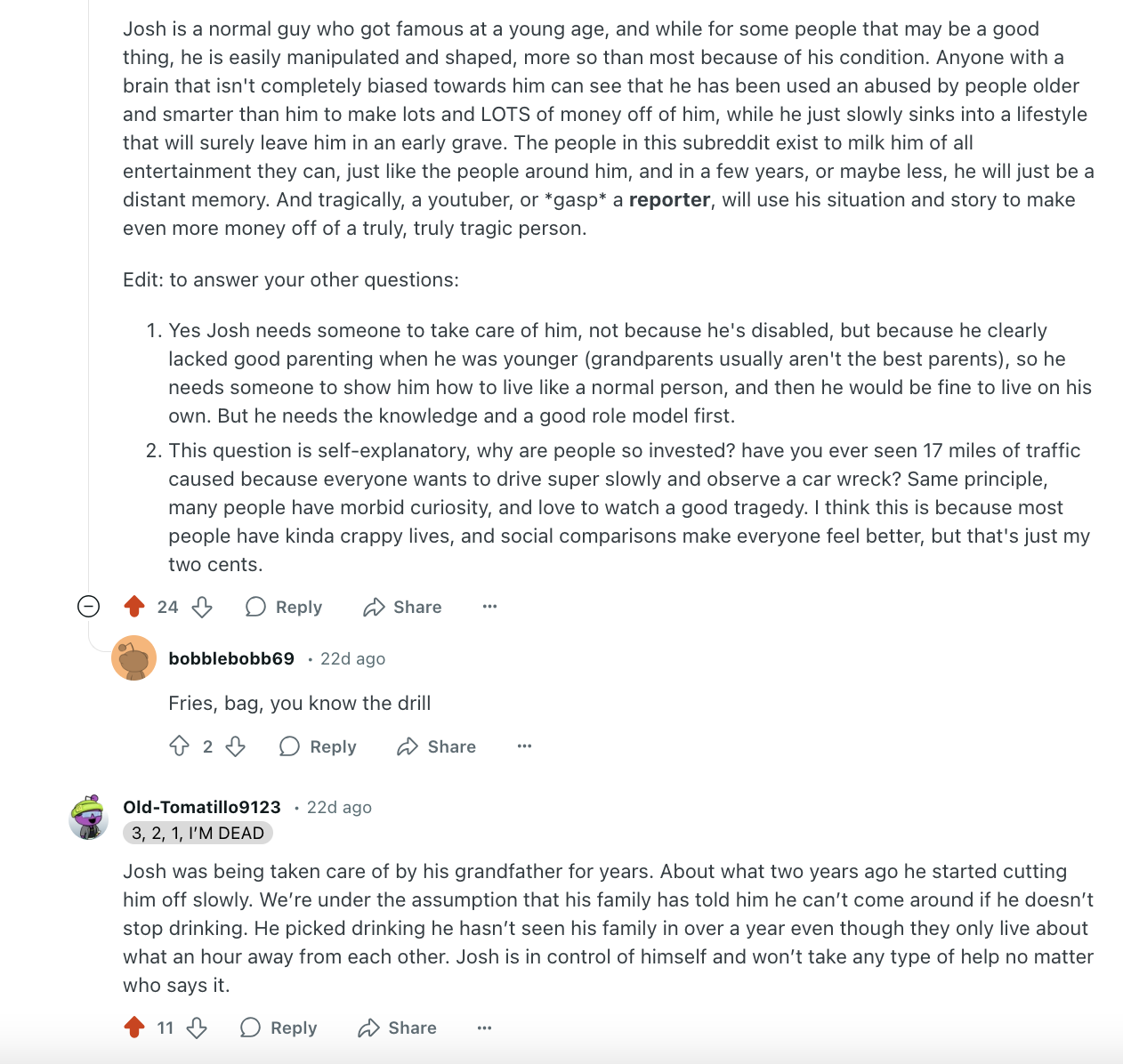
I asked the subreddit dedicated to Joshua Block who was responsible for his health issues
I asked the subreddit dedicated to Joshua Block who was responsible for his health issues

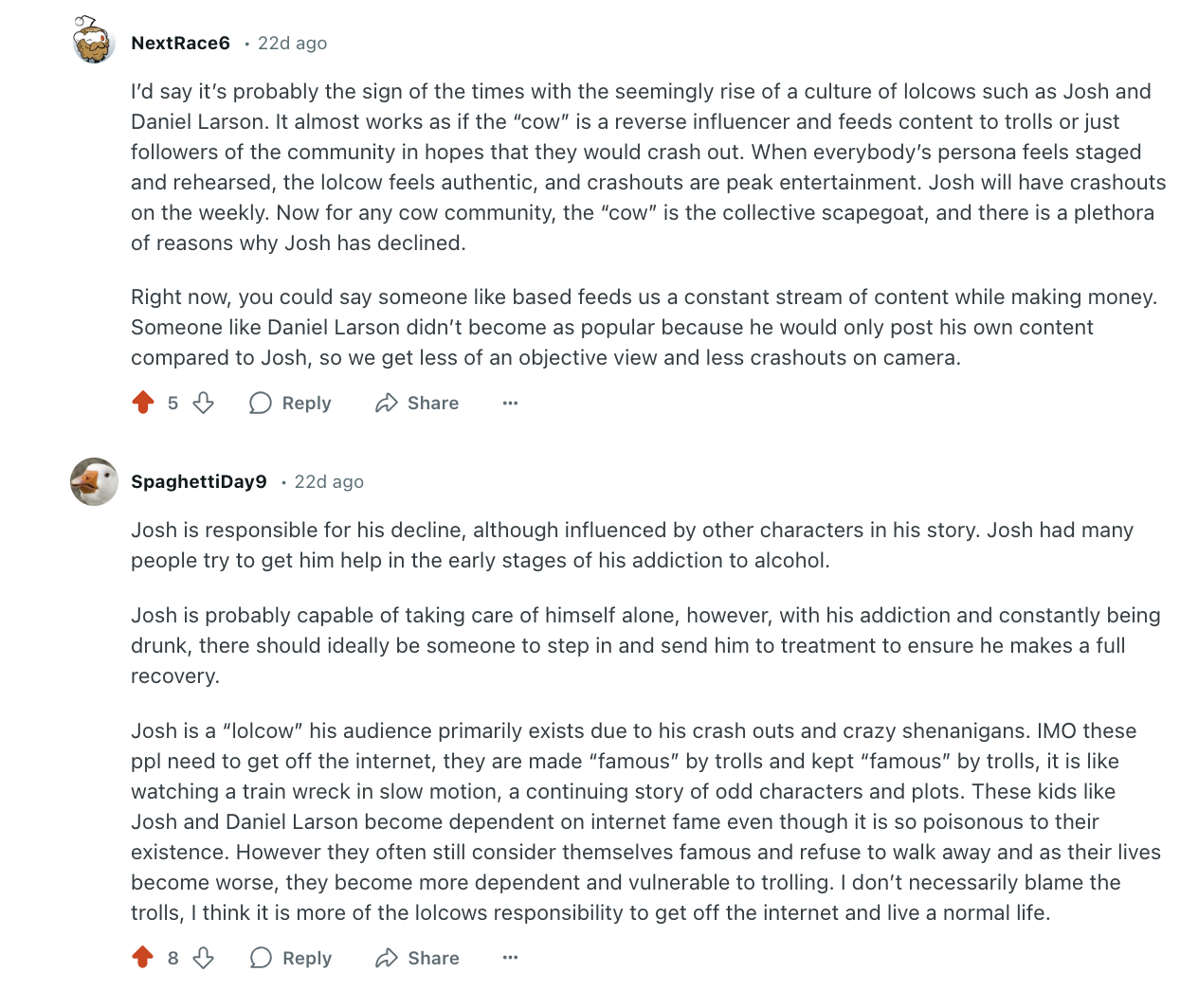
I asked the subreddit dedicated to Joshua Block who was responsible for his health issues
I asked the subreddit dedicated to Joshua Block who was responsible for his health issues

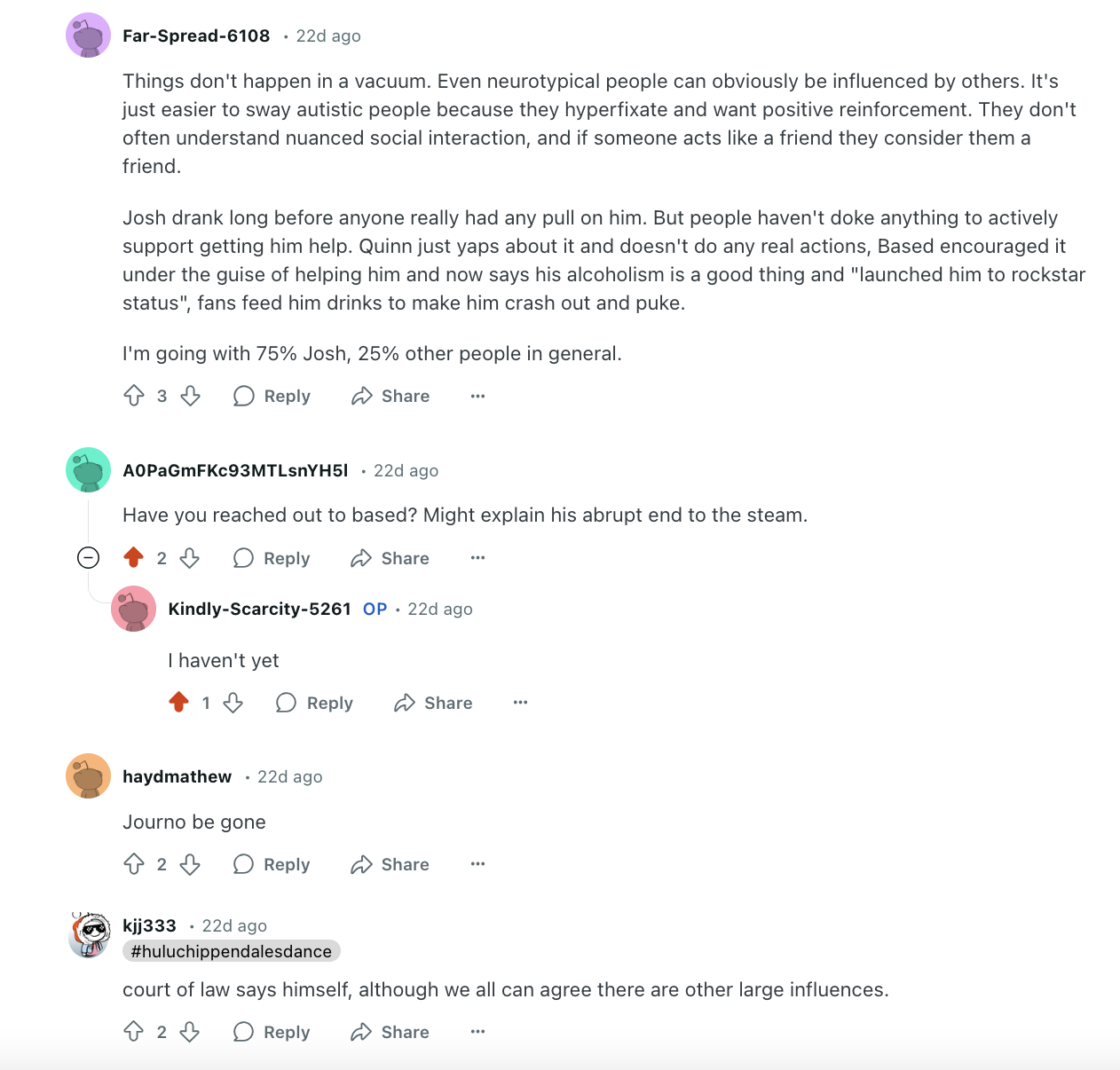
I asked the subreddit dedicated to Joshua Block who was responsible for his health issues
I asked the subreddit dedicated to Joshua Block who was responsible for his health issues

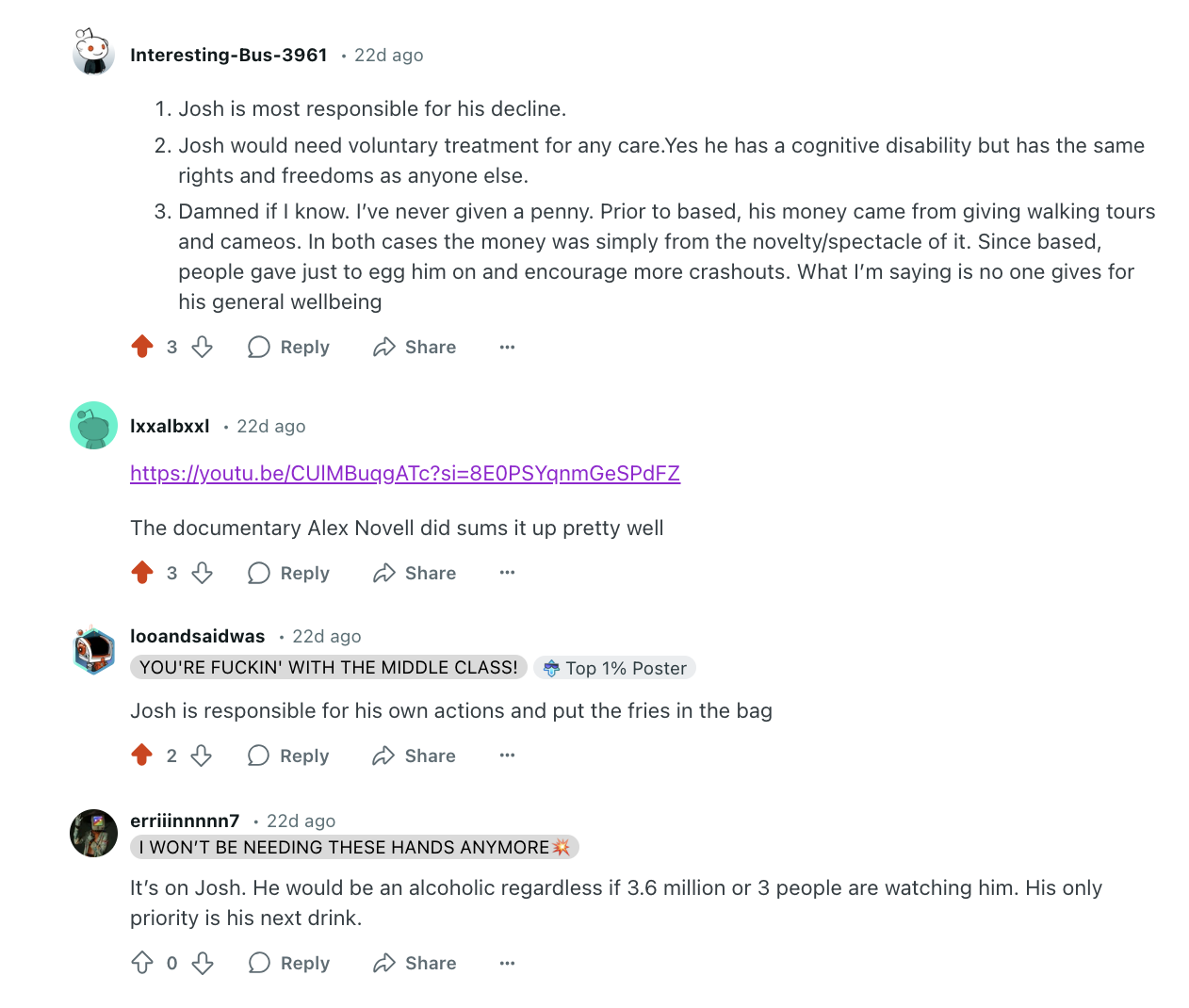
I asked the subreddit dedicated to Joshua Block who was responsible for his health issues
I asked the subreddit dedicated to Joshua Block who was responsible for his health issues
The platforms


Jason Itzler isn’t the only one allegedly making money off Josh. For every $1 earned from adverts, YouTube keeps $0.45, and the creator receives $0.55. Both Alex Novell and Ron Sperling allege that YouTube’s rules get looser the more money an influencer brings in.
Take YouTube’s Super Chats, a feature which lets audiences pay to pin messages to live streams. In Joshua’s case, these are often abusive. However, Novell and Sperling argue that YouTube turns a blind eye to harmful content that's making them money.
Credit: YouTube
Credit: YouTube
Since Donald Trump’s election, social media moguls have changed their tune on fact checking and moderation. Or as Meta puts it: “More Speech and Fewer Mistakes”.
24 hour rolling coverage, audience participation, and a strong base all make media companies money and so are incentivised. And, as the numbers show, Joshua is compelling content.


Joshua Block

While Sperling and Novell argue that Joshua is being exploited, a significant portion of his fans on Reddit argue that he chases the limelight.
Even before the drinking, and the livestreams, and Jason Itzler, some would argue that Joshua's content did commodify his own vulnerability. In a 2019 video, he posted on TikTok that, if the video received enough likes, he would livestream himself going to sleep that night. He got the likes in the end, but it’s not clear whether he followed through on his promise.
Fans also point out that Joshua has shouted slurs on air, seemingly sexually harassed a female guest, and abused and attacked friends and strangers. However, at the same time he posts happy birthdays to his dead mother and has spoken openly about his struggles with alcoholism.
Despite its obvious toll, Joshua himself has not discarded his brand of fame. Even when he looks physically and mentally tattered, after he has been hospitalised, and faced online and in-person abuse, he continues to post - often hours of a content a day. Despite Itzler allegedly taking the lion’s share of the income and a fraction of the harm.
Like Itzler, TikTok, and the fans, Joshua often takes part in the narrative his audience creates. He contributes to the in-jokes, and has emphasised some of the characteristics his fans caricature. Novell said that fans fly Joshua round the world to go out partying with him.
Many of his fans say that this behaviour shows he should be free to continue this lifestyle. Dr Carrigan disagrees, he said: "The categories we use to think about these issues are not adequate for the complexity of social media."
Joshua Block's case, he said, seems an extreme example of the way "online community, peer pressure, and search for influence and visibility" subtly shape our own lives. There are currently few rules on social media differentiating between autonomy, influence, and exploitation.
The impact of these narratives, however, is clear. In a recent TikTok, Joshua wears a captain’s hat and sings a Hozier cover. His hand shakes as he raises a bottle of Captain Morgan’s to his mouth. A comment with 69,000 likes reads: “Yea, this is the final season for sure”.
 Built with Shorthand