
How London fell in love with hi-fi listening bars
Click here to immerse yourself in an evening at Spiritland, one of London's longest running listening bars. (Audio recorded by Katie Bevan)
Careful research ought to be undertaken before you embark upon a listening bar crawl in London. How well do you know your friends? How well do your friends know you? How well do you even know yourself?
See, some places are meditative. Sitting in between a bespoke sound system, martini in hand, whilst esoteric jazz washes over you like a sound bath is one kind of evening. It’s the relaxing, mind-expanding kind, that isn’t really for talking. Others are restaurants with record collections, where backlit vinyls line the walls like books do the Bodleian. Then, there are the sweaty ones; when the clock strikes 10, tables are swept away to reveal a dancefloor. Choose wisely – in London, the possibilities are endless.
From Hackney to Islington, Deptford to Shoreditch, these stylish venues are the latest iteration of trendy nightlife in the city. With playlists even more carefully curated than their wine lists, and hi-fi speakers that cost a hi-fo (high fortune), listening bars are making music the main course, offering Londoners an alternative, more intentional night out in the process.
The story, however, doesn’t begin in London; inspired by Japanese jazz kissa, a tradition designed to centre collective listening, listening bars have come a long way from their small and smoky origins.
At Spiritland, the handmade Living Voice speakers are the main event. (Image: Katie Bevan)
At Spiritland, the handmade Living Voice speakers are the main event. (Image: Katie Bevan)
Hidden Grooves' late night rotations come from an extensive vinyl collection. (Image: Katie Bevan)
Hidden Grooves' late night rotations come from an extensive vinyl collection. (Image: Katie Bevan)
Studio 54 or Café 1001? Dancing is a priority at this Brick Lane institution. (Image: Katie Bevan)
Studio 54 or Café 1001? Dancing is a priority at this Brick Lane institution. (Image: Katie Bevan)
A history of kissa culture
1929. Tokyo. Blackbird. The world’s first jazz kissa, or café, and the beginning of their boom across the nation.
Inspired by the American jazz that was slowly trickling into the country, first from port cities like Yokohoma and then from the wider American occupation following the Second World War, kissas served a practical purpose for locals.
“The average person couldn’t buy records, and they certainly couldn’t have hi-fi systems in their house,” said photographer and author of the book Tokyo Jazz Joints, Phillip Arneill.
“Japan was quite a poor country, and it had been levelled by the allies, so people set up these cafés. You could pay a couple of quid for a coffee and sit there for hours just to listen to the music.”
For culture-hungry jazz lovers, kissa became a refuge and a place where rituals could run deep. Some masters, like Hozumi Nakadaira, established strict no-talking rules. The lights would be lowered, the music turned up, and customers’ heads would bow monkishly towards the speakers. Around the wood-trimmed bars, with posters and record sleeves peeling away from overuse, an owner’s personality could peek through – do they reach for Alice Coltrane more than Miles Davis – but the individual was never the point. These were places where a population could be inducted into a whole genre of music.
Listening to music became an intimate, transformative experience. For modern audiences, so used to Frankenstein listening, with our playlists stealing genre and album parts to be distractedly listened to on the commute, jazz kissa is strange.
“Sitting in a kissa for four hours somewhere in Japan is a very different experience to sitting in a listening bar in London,” said Arneill. “You’ll never be able to recreate it outside of Japan.”
For DJ's, the set up at Spiritland is the gift that keeps on giving. (Image: Charlie McKay)
For DJ's, the set up at Spiritland is the gift that keeps on giving. (Image: Charlie McKay)
An extensive record collection runs next to the bar. (Image: Charlie McKay)
An extensive record collection runs next to the bar. (Image: Charlie McKay)
London calling
Paul Noble wasn’t going to let that stop him. A former BBC radio producer, Noble knows a thing or two about music, and in his last job, he got to spend a lot of time in Japan and a lot of time getting to know kissa culture.
“I completely fell in love with it. There’s a reverence for the music that is just only expressed in Japan, and I was really inspired by it. I came back from my trips thinking, why does this not exist here?"
Spiritland, a blink or you’ll miss it spot in Kings Cross, opened its doors in 2016. Founded by Noble and his business partner Sophie Uddin, it is one of the first bars in London to devote itself to the listening cause. With jumbo Living Voice speakers, handmade in Nottinghamshire, and vacuum tube amplifiers from Italian Atelier du Triode, the musical menu of the day – whether that’s the morning’s mellow country or the evening’s album playback – can truly be savoured.
“It’s a world class sound system – one of one. We had it built just for this space, and it completely brings the music to life. It’s almost like stepping into the music.”
At 6pm, the laptops and phones disappear, and the volume is turned up. An album is played from start to finish. There’s a DJ every night.
The little book of cocktails at Spiritland. (Image: Katie Bevan)
The little book of cocktails at Spiritland. (Image: Katie Bevan)
“We’ve been doing this here in Kings Cross for ten years, so we’re known as a stop off for music lovers who are coming to London and want to play here," said Noble. "A lot of people aren’t even DJs. Maybe they’re journalists, maybe they’re in the equipment side of things, but they’ve got amazing record collections they want to share.”
On the night I visit – a Monday – only three tables are empty. And I’m early. It’s 7pm and there are still four hours before close. I’m sitting next to the speakers, in all their retro-futuristic glory, and Daft Punk is making my negroni bounce. A DJ flicks through the vinyl collection, eventually settling on the last record.
There’s no dancefloor, and it's table service only. But toes are tapping and audiophiles keep lining up to marvel at the sound system. It’s as close to kissa as I’ve ever been; solo drinkers are completely absorbed in their soundtracked daydreams, and the first dates look less awkward with music filling their silences. I've been introduced to more music in the last hour than I have in the last month on Spotify.
And still, it’s not kissa. Listening bars like Spiritland might be masterclasses in imitation, but exporting the tradition has its limitations. “It’s impossible to copy in London,” said Noble. “There’s an energy level which you can’t suppress, and we don’t try to.” The city is almost too polyphonic for kissa. What with the sirens and the buskers and the Northern Line and the street shows, and of course, everybody’s inability to sit still for more than an hour – shamefully, including my own – kissa doesn’t quite fit.
But listening bars, of the kind and variety on offer in the city, are working successfully to deliver tasters of this tradition, albeit with a twist.
London’s listening bars are all about the multimodal experience. Your ears might be the primary target, but these spots want you dancing and talking, eating and drinking. Take Brilliant Corners, a pioneer of the London scene. Founded in 2013, this bar serves a Japanese-style dinner with a DJ set. So too does Bambi, a 2023 opening that invites you to enjoy European small plates before dancing the night away on a ‘Soul Saturday.’ Café 1001, meanwhile, self-identifies as a café-bar-lounge-disco.
If you want to hear a DJ set during dinner, Brilliant Corners is the spot. (Image: Katie Bevan)
If you want to hear a DJ set during dinner, Brilliant Corners is the spot. (Image: Katie Bevan)
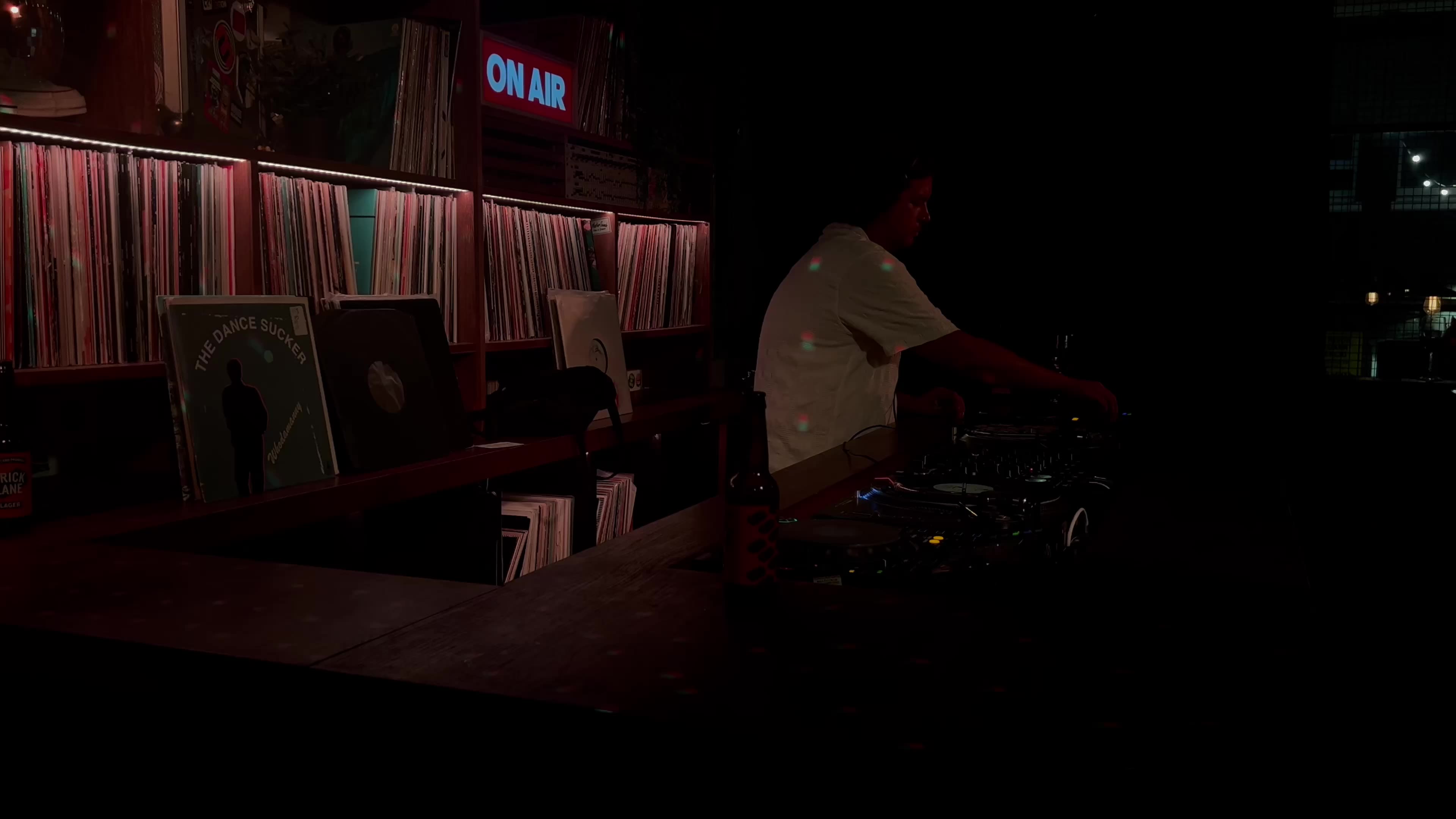
At Café 1001, a DJ has a wall of records to draw from. (Video: Katie Bevan)
At Café 1001, a DJ has a wall of records to draw from. (Video: Katie Bevan)
Vinyl revival
According to data from the Office for National Statistics, acquired by the New Statesman, between 2015 and 2025, the UK lost around 1,940 licensed nightclubs – a 26% decline. On social media, I can’t find a single nightclub recommendation; London appears to be the city that sleeps.
And yet we are witnessing the stratospheric rise of listening bars. Most of the city’s venues opened between 2023 and 2026; Noble tells me he is looking to open another Spiritland. On Instagram, my feed is littered with dimly lit, record-heavy, aesthetic images of these bars, whilst the captions encourage people to embrace intentional nights out. It would seem that these are the spots to see and be seen at.
“Twenty years ago, people said, ‘records? Get rid of them, they’re dead.’ Now, you can’t move for records"
“The interest in kissa culture is partly to do with the kind of backlash against digital culture,” said Arneill.
“People are saturated with streaming and playlists and algorithms, and so I think the interest in vinyl and hi-fi audio goes hand-in-hand with people wanting something singular and concentrated.”
In the hyper-tech era, Gen-Z want a break. They want retro tech and an analogue lifestyle: wired headphones, point-and-shoot film cameras, vinyl records. On TikTok, #nostalgia has 19.9 million posts. In 2025, the UK’s vinyl market rose by 19.9% year-on-year, reaching its highest level in more than three decades, according to the British Phonographic Industry.
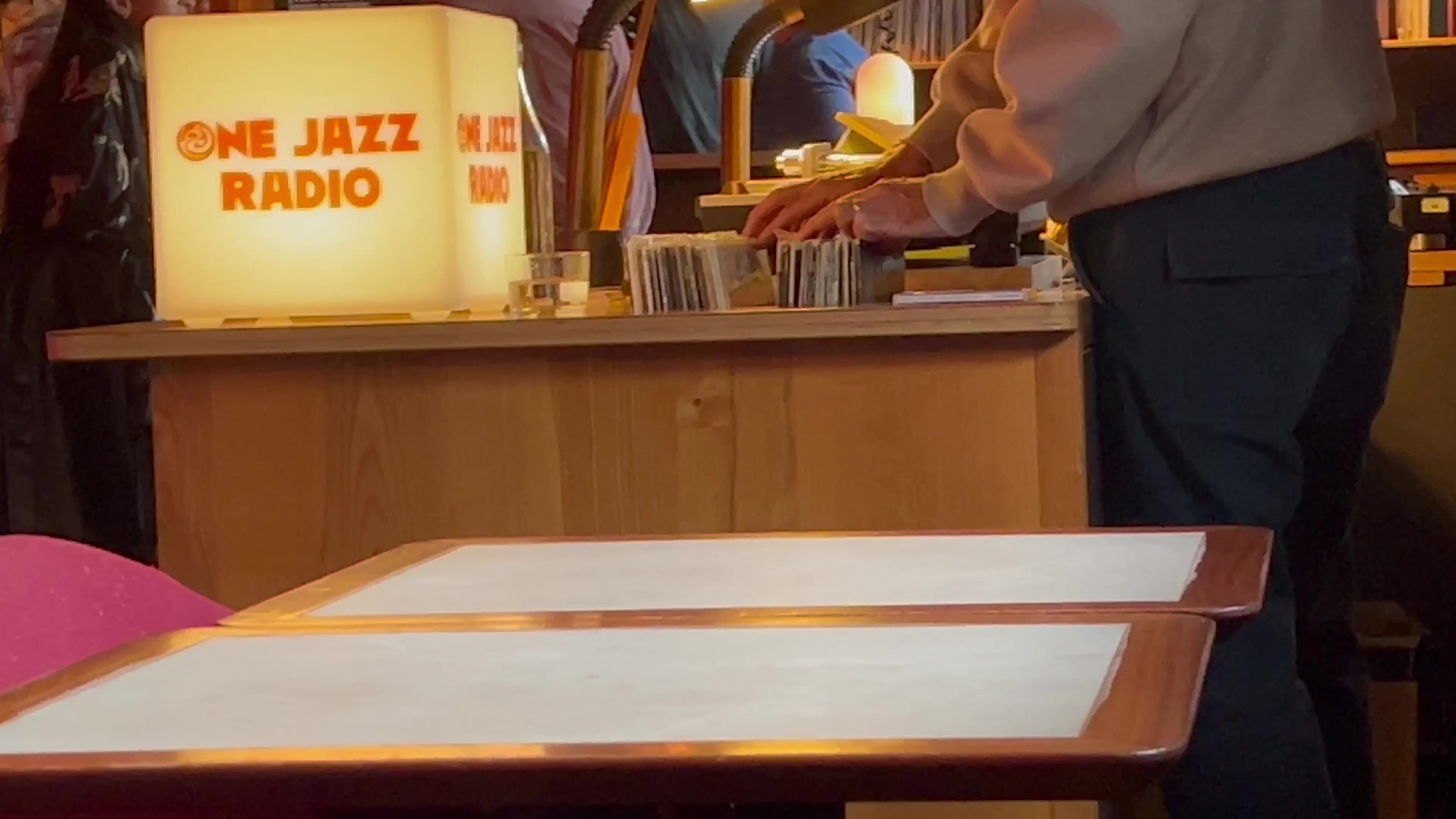
A DJ at Spiritland flicks through a collection of vinyl records. (Video: Katie Bevan)
A DJ at Spiritland flicks through a collection of vinyl records. (Video: Katie Bevan)
“Twenty years ago, people said, ‘records? Get rid of them, they’re dead.’ Now, you can’t move for records,” said Arneill.
“I hear these stories of Gen-Z buying records and they don’t even have a record player. They just want to have this object, and I think this desire inspires the listening bar.”
During my ‘research’ at Café 1001, I bump into three fellow Zoomers; two master’s and a medicine student. They’re dressed in their Friday night finest, and they are vibing. Hard. Having graduated out of their sticky student union clubs, Kioku, a sake and listening bar in Whitehall, is their new haunt. Why? Good music, good drinks, and something more from their nights out.
“There’s a nice element to listening bars that allows people to engage with them as they like,” said Ishara, 22. “You can have a cheeky boogie, sit and chat, or just sit and listen. It’s so much more flexible than the clubbing experience.”
Jesse, 21, who studies urban planning at University College London, agreed. “I just want to make the most of my money, even if that means spending a little more on a well-made cocktail and a curated atmosphere. Effort goes a long way, and it can make the night feel more special.”
“The idea of spinning vinyl in a dimly lit room just elevates the music.”
Yusra, 23, who studies English literature at Oxford University, added: “Good music can completely make or break the mood.”
Kioku is a sophisticated sake bar modelled on kissa. (Image: Jesse Hitt)
Kioku is a sophisticated sake bar modelled on kissa. (Image: Jesse Hitt)
An oasis in the city’s arid nightlife, jazz kissa, or rather, London’s quirky interpretation of it, has found a new rhythm. By offering something uniquely suited to the city, listening bars have cut through the neuroses of modern life, creating spaces for people to find relief – whether they do that through dancing or drinking, or simply by listening. If music be the food of love, London, play on.
 Built with Shorthand