
Poptimism and Politics
Is silliness serious? Is pop political? The question that increasingly follows is, why has poptimism become so popular again so quickly?
Following a start to the decade that was punctuated by the irony-poisoned, hyperpop sarcasm of 100gecs' money machine and Doja Cat's stint as a cow, people seem to hope for sincerity in their musicians again. Sabrina Carpenter has spent the last few years combining Grace Kelly colour schemes with Bugs Bunny antics, while Chappell Roan asks concertgoers to dress up as everything from cowgirls to slumber party guests to attend her concerts. Even smaller artists like bimbo-core's Chrissy Chlapecka thrive in playful, but fundamentally heartfelt high art performance. What's changed?
In search of an answer I spoke to a smaller artist who champions this silliness, with gigs replete with dolphin balloons and clown inspired antics, Gelli Haha. We chatted at her sold-out London show, following a triumphant performance at Primavera Sound 2026 and features in Pitchfork and NME about what this return to earnestness means to her:
"It's funny, because I present everything in this silly, non-serious way, but the risk is whether people think I'm actually working hard at what I'm doing,"
"The main line of one of my favorite Bjork songs is, "it takes courage to enjoy it", and that stays with me a lot. I think it's nice to share a truth with someone by being silly. I'm always trying to dig deeper in myself and undo myself constantly. I'm just trying to unlock little caverns of things that I hid away and am trying to be as free as possible. Through that process like I'm able to connect to people better, and they're able to connect with themselves better too. I think that's what I'm always searching for. Why are other people searching for that? I don't know."
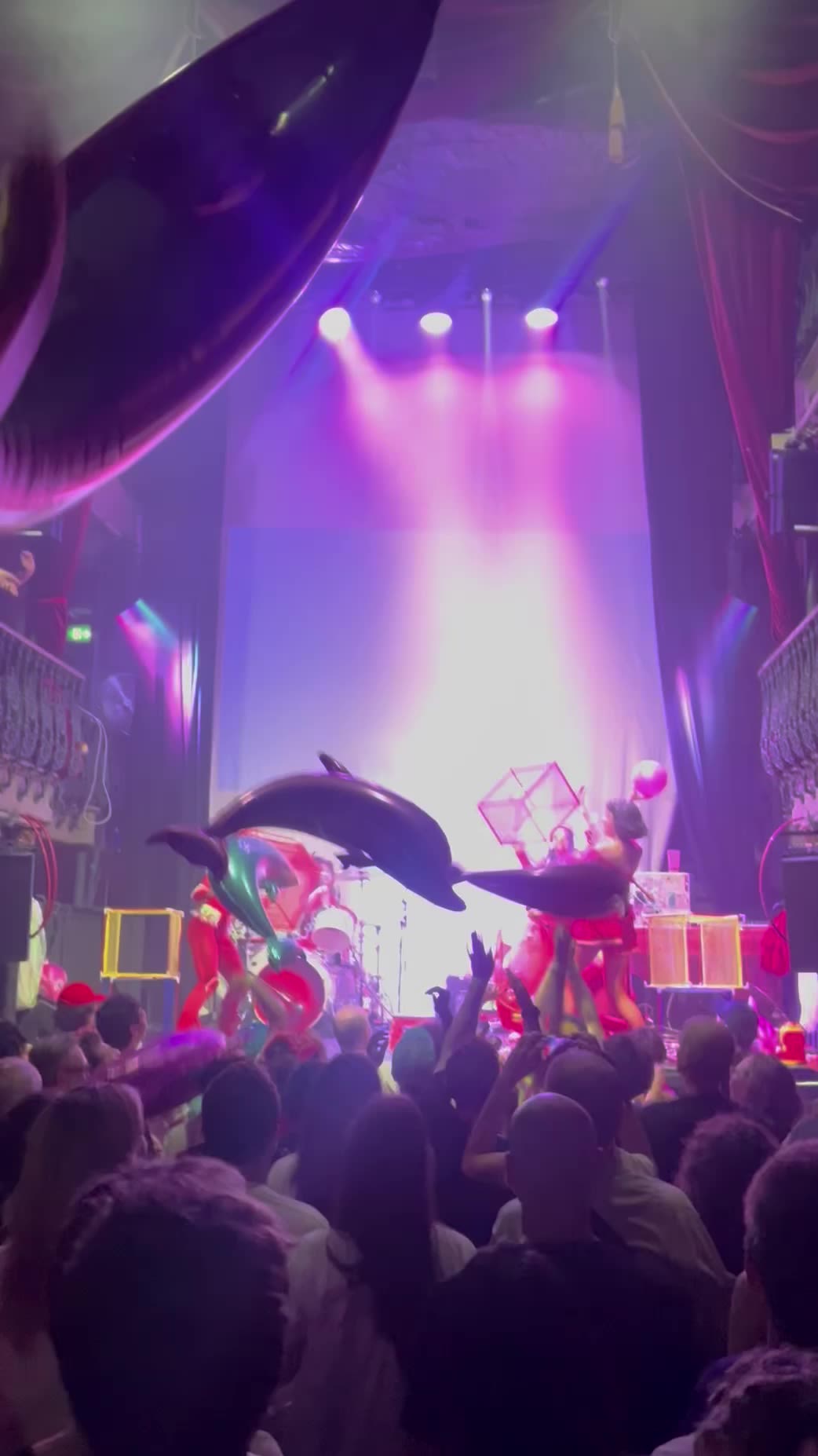
Gelli Haha | Video Credit: Holly Wyche
Gelli's work, and the work of artists like her, has a lot of links to art-pop, a genre popularised by Lady Gaga and characterised by stage dramatics. But the specific tint of optimism that Gelli ascribes to her music feels less genre specific and can be instead traced back to artists like The Go! Team, an early naughties "cheerleader-pop" band.
Poptimist artists are thus connected by ethos rather than aesthetics and genre. Australian dance music sensation, Ninajirachi, cites Skrillex as one of her main inspirations and has been lauded for returning to a style of electronic music largely deemed corny a little over a decade ago. As a result, the nebulous, hard to pin down thing that feels 'new' in this recent wave of poptimism is a celebratory approach to popular music that doesn't lean on a mote of cynicism for its appeal. This is particularly interesting at a time when people are seemingly getting more negative. Why are musicians like Gelli and Chappell getting so popular at a time when everything is miserable? Why is positivity considered counter-cultural?
Seth Pereira, a London-based music journalist had this to say:
"People start to crave something that's real and relatable. That's when you see the rise in new genres that people start gravitating towards because they realize that what's being pushed by major labels no longer has an essence.
I think people like when people like them succeed. It restores a bit of faith in the industry for me because sometimes it's not a meritocracy. Sometimes the right people don't end up at the top, very rarely does that happen.
I do think there is a huge commercial element that you can't disregard that plays a big part in what is pushed and what is consumed. There’s always an agenda behind what the machine pushes, and usually that is to generate revenue regardless of what's going on in the outside world. But would they push something that they didn't think people resonate with? Is what they push reflective of the temperature of the people, what's going on in society? I don't know."
It's peculiar then that people are moving towards optimism in their music, but this certainly isn't universal. Cameron Winter's sullen shouts that "there's a bomb in my car", along with The Femcel's plea of "Please Don't Stab Yourself (Like Elliott Smith)" do show some resistance to un-criticial pop becoming popular again.
Gelli Haha | Photo Credit: Louis Greaves
In this way, it isn't all sunshine and dolphin balloons. Pop music once again being taken seriously as a form of artistic expression has led to a lot of very critical discourse. Particularly, questioning why a genre that's previously been dismissed as vapid is now central in discussions of both music's art value and its political value. As conversations around pop-stars' obligation to politics swirl, why has the most mainstream genre possible become a counter-cultural statement? I spoke to music journalist Hannah Lovejoy about why she thought this was:
Hannah: "Record labels had more control of the mainstream music space, whereas now it fluctuates because people are just making the music they want to make. I think music consumption has gone a similar way. People are listening to what they want to listen to, and as a result what was once unpopular is now popular, and what was once deemed uncool is now cool. A huge part of that is the nostalgia culture, but people are going back to a childishness in a way that has become important. There's this thing where we feel we need to grow up sooner than we have to and now I feel like, if anything, people are yearning for their 'groovy chick', their 'camp rock', and all of those things."
Holly: "As someone who was very much 'not-like-other-girls', by not getting involved in pop at the 'right' age there's a sense that I missed out on something that seemed like so much fun and made so many people happy. It's interesting that it has now become this big, almost counter-cultural, thing."
Hannah: "It's a second chance to live that childhood dream out! But without the embarrassment of caring so much about what people think. You can listen to Queen, then Miley Cyrus, then Zara Larson, and it doesn’t matter anymore."
It's notable then that this pop-sincerity is almost exclusively a 'femininomenon'. Most of the musicians associated with this slightly DIY, effortful music also champion 'girlyness' as a central tenet of their act. This focus on women is most likely the reason that conversations surrounding them are considered 'political'. Questions of why traditional femininity is now considered subversive, discourse about whether popstars should also be activists, and intense arguments about whether visibility as woman is enough of a statement to absolve you from further activism are all foisted at artists like Roan and Carpenter partially because their 'silliness' is perceived as a statement. They are told they must stand for something, even if that is for the right to be care-free. It’s an impossible question to answer.
But time and again, femininity and performance do become these incredibly effective political tools. Looking back over the last century, 100 years ago, Josephine Baker performed to an audience of Pre-World War Two Frenchmen in a banana skirt in an intensely divisive act of showmanship. Decades later, Liza Minelli, one of the greatest performers of the last century who's famed for her all-singing, all-dancing work as Cabaret’s Sally Bowles, became a gay icon at a time when homosexuality was hugely demonized. Even at the beginning of this century, the Dixie Chicks and their public criticism of the Iraq war led to them being blacklisted by most radio stations.
Visible femininity in performers has often been the precursor to people expecting them to be 'political'. When modern popstars are lauded for championing femininity and girliness, they follow a long lineage of performers who've made 'political statements' just by being themselves. Sincerity and silliness will always be dismissed, but the only reason it's become such a topic of conversation is because it is evidently provocative.
Gelli quoted the controversial philosopher Osho who said "seriousness is a disease", and I would go one step further and say silliness is an obligation.
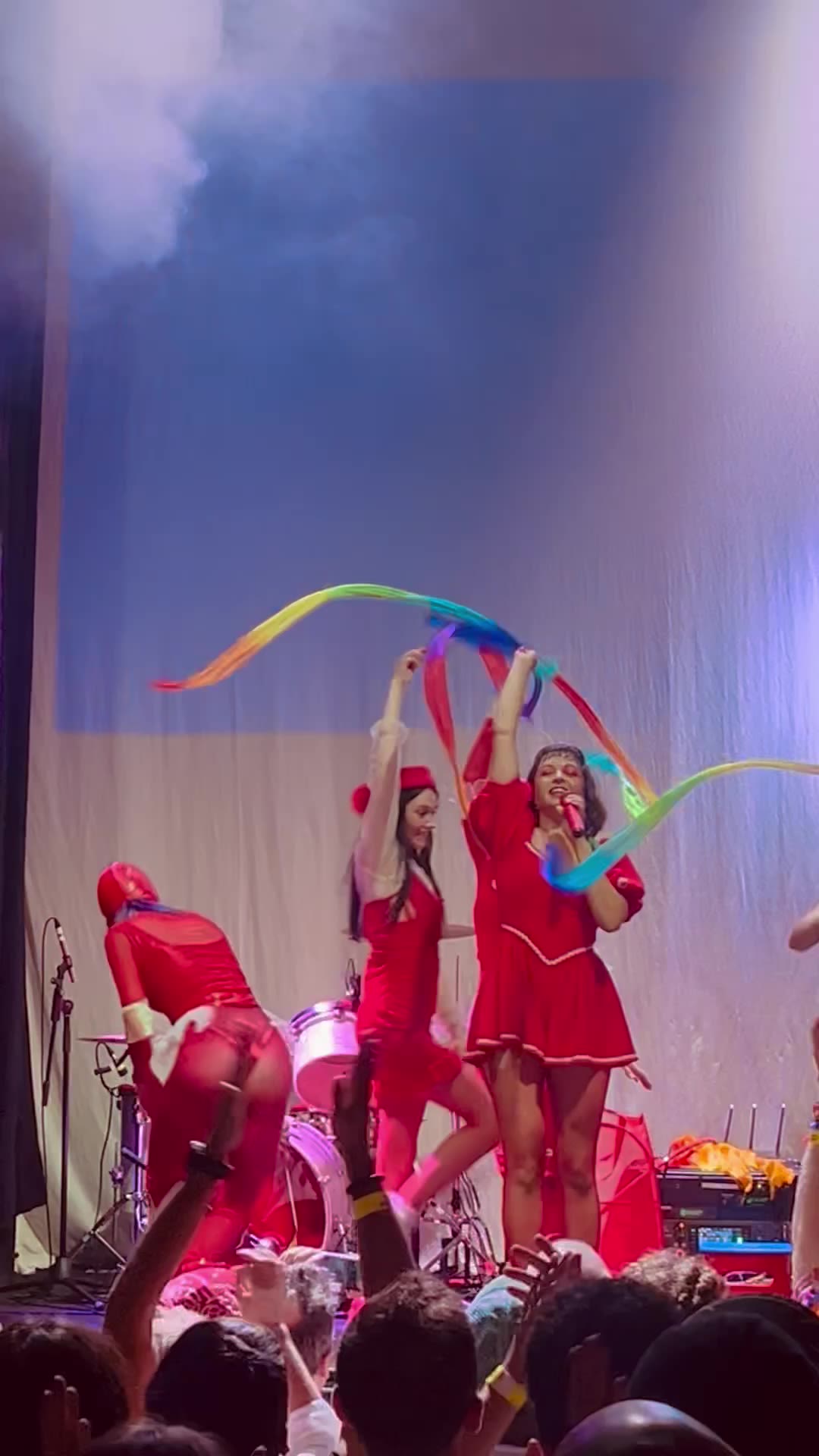
Gelli Haha | Video Credit: Holly Wyche
Photo credit: Addison Rae: Raph_PH | CC4.0
Chappel Roan: Raph_PH | CC4.0
PinkPanthress: vivianaq |CC4.0
Ninajirachi: Public Domain
Magdelena Bay: Bruce Baker |CC2.0
Sabrina Carpenter: Raph_PH |CC2.0
KKB:Cole Yarbrough | CC4.0
Caroline Polachek: Matthew-Wordell | CC2.0
All Gelli Haha photos: Louis Greaves
 Built with Shorthand
