
Reimagining calisthenics
Body weight training has experienced a revival, but what does the future hold?
Calisthenics ’ popularity soared during COVID; with gyms closed, people experimented with other ways to keep fit.
Mix that with the cost-of-living crisis, which has seen low-cost gym memberships rise to £30.10 a month on average in London, with the average price of all memberships across the city a staggering £76.26, and it is easy to see why people have turned to a cheaper form of strength training.
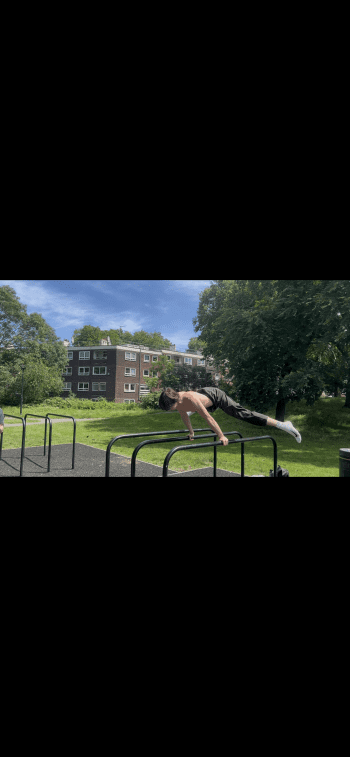
Online, videos of eye-catching handstands, gymnastics-like acrobatics and other feats of superhuman strength have garnered billions of views.
Despite this, calisthenics has not seen the same level of organised participation or commercial success as other trending fitness activities, like run clubs and CrossFit.
Professional calisthenics coaches, brothers Demi and Nic Alvanis, both 23, are concerned that, despite bringing attention to the sport, the viral videos can also be intimidating for beginners.
“Unfortunately, it has got a reputation that it is for young people, it is urban, it is very centred around acrobatic movement, and this couldn’t be further from the truth. Our mission is to try and redefine that in a way that is softer and appeals to a wider audience,” said Demi.
“Whether it’s a child in terms of physical literacy and developmental strength or it's somebody over the age of 50 training for longevity, even if it's just trying to reach the top shelf, we want to be able to position calisthenics in a way that is applicable.”
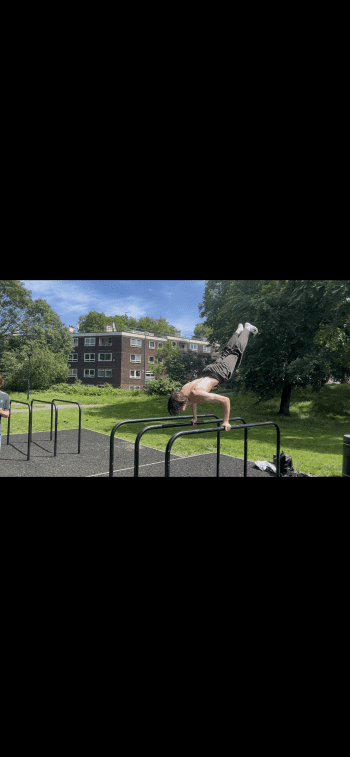
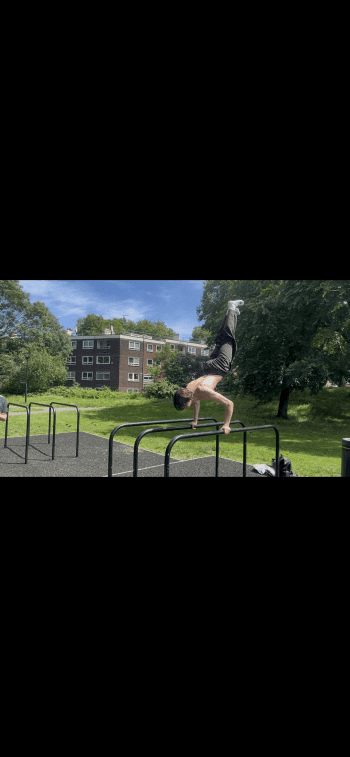
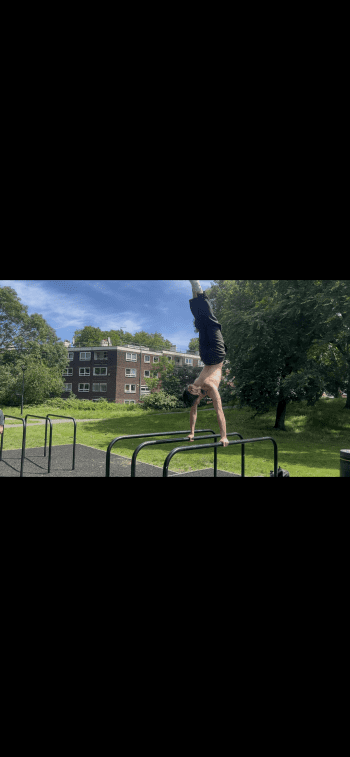
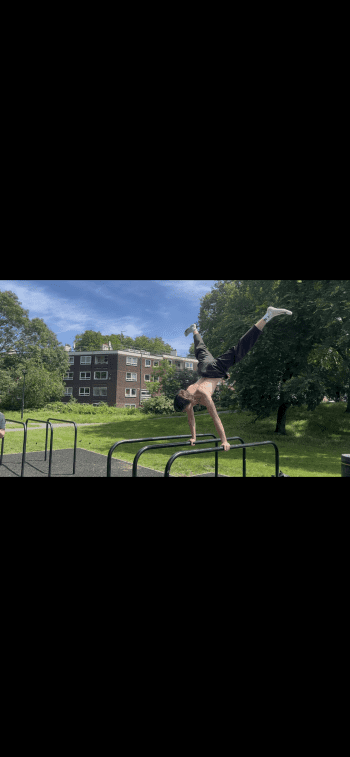
Watch to find out more. Video: Alex Heath
Watch to find out more. Video: Alex Heath
Demi has almost 300,000 followers on social media, having gone viral for posting videos of his calisthenics skills during the Covid lockdown in 2020.
Him and Nic are now a big part of London’s calisthenics community, hosting free classes and partnering with charities, such as Steel Warriors, who melt down confiscated knives and use them to build calisthenics parks around London.
Through the Cali Academy, the brothers coach body weight training classes in schools, universities and workplaces. Their other company Strengthflow, draws from the wellness space, offering more polished, studio style classes which develop expression of movement and bodily control through calisthenics and Latin dance.
“There’s been media coverage of calisthenics from the youth-centred angle, which is great, don’t get me wrong,” Demi said.
“But what that has led to it being misconceived as, and the reason calisthenics has not gone mass-market like run clubs, for example, is because the audience it is attracting is very niche in terms of demographic and physical level.”
He continued: “What you see in calisthenics on social media; you see the handstands, you see the flips, you see the cool tricks.
“Unfortunately, this can scare a lot of people away, because it makes people think this is the only part of calisthenics.”
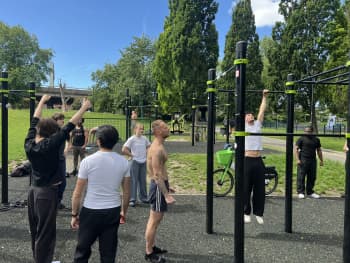
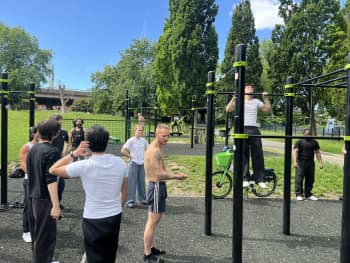
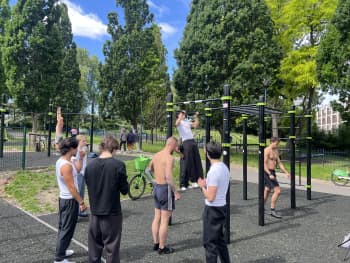
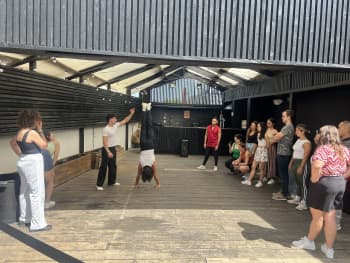
With this in mind, Demi and Nic are conscious of making the sessions and classes they run as welcoming as possible. At a free community session in Westbourne Green Open Space, near Paddington, where a state-of-the-art calisthenics gym was built in 2018, Nic outlined different push-up variations that beginners can work through, starting with band-supported knee push-ups.
“You’ll see beginners come today, and you’ll see exercises that you’ve never even thought of before, most of the time we spend is reframing things in an accessible way,” he said.
Cassie Struc, 20, has been training with the brothers for just over a year, she said: “Both Nic and Demi are super welcoming to anyone who wants to join.
“There are usually probably five or six girls at these sessions. People think you need to be strong to start, whereas in reality body weight training is better than weight training to start getting strong, because if you can’t lift your own weight, how can you expect to lift more than that.
“One thing about the calisthenics community, more so than any other sport, is people want you to succeed, it's not like running where you are competing against someone, you are on your own journey.”
“What you see in calisthenics on social media; you see the handstands, you see the flips, you see the cool tricks. Unfortunately, this can scare a lot of people away, because it makes people think this is the only part of calisthenics”
With this in mind, Demi and Nic are conscious of making the sessions and classes they run as welcoming as possible. At a free community session in Westbourne Green Open Space, near Paddington, where a state-of-the-art calisthenics gym was built in 2018, Nic outlined different push-up variations that beginners can work through, starting with band-supported knee push-ups.
“You’ll see beginners come today, and you’ll see exercises that you’ve never even thought of before, most of the time we spend is reframing things in an accessible way,” he said.
Cassie Struc, 20, has been training with the brothers for just over a year, she said: “Both Nic and Demi are super welcoming to anyone who wants to join.
“There are usually probably five or six girls at these sessions. People think you need to be strong to start, whereas in reality body weight training is better than weight training to start getting strong, because if you can’t lift your own weight, how can you expect to lift more than that.
“One thing about the calisthenics community, more so than any other sport, is people want you to succeed, it's not like running where you are competing against someone, you are on your own journey.”
“What you see in calisthenics on social media; you see the handstands, you see the flips, you see the cool tricks. Unfortunately, this can scare a lot of people away, because it makes people think this is the only part of calisthenics”
The informal nature, along with the lack of a national governing body, makes it hard to quantify exactly how many people practice some form of calisthenics training. However, data from Sport England’s Active Lives study found a 27% increase in informal exercise in public spaces between 2018 and 2024.
On TikTok alone, there are over 18.5 billion views on videos that tag calisthenics, and in 2024, it was named as one of the app's most popular trends of the year. Online searches for calisthenics have grown at a significant month-on-month rate of 4.24% over the past five years.
Having also seen run clubs and events like Hyrox take-off in the last couple of years, along with the likes of yoga, breakdancing and skateboarding previously, the brothers are excited by what the future may hold, saying that similar success is inevitable.
Calisthenic-parks.com now lists 192 locations in London with outdoor equipment for calisthenics, a 65% increase from 2022. Meanwhile, the global bodyweight training market is anticipated to be worth $5.6 billion by 2033, with the industry already being worth $2.7 billion in 2025.
“We believe calisthenics should be free for all under-18s, not just as a fitness discipline, but as a public health policy"
But for Demi and Nic, a successful future for calisthenics is broader than corporate revenue and market share. They see the discipline more as a foundation, something that everyone should be doing to look after their bodies.
“I don’t want it to be an Olympic sport,” Nic added.
“We believe calisthenics should be free for all under-18s, not just as a fitness discipline, but as a public health policy.
“The biggest things that we are fighting against in public health, like obesity; calisthenics is a direct, evidence-based solution.”
With Sport England's national governing body recognition process currently closed, calisthenics will continue to rely on community organisation and private investment for growth.
Regardless, it is unlikely a discipline first practiced in Ancient Greece 2,500 years ago will be disappearing any time soon.
 Built with Shorthand