Speaking with an accent: some like it, some like it not
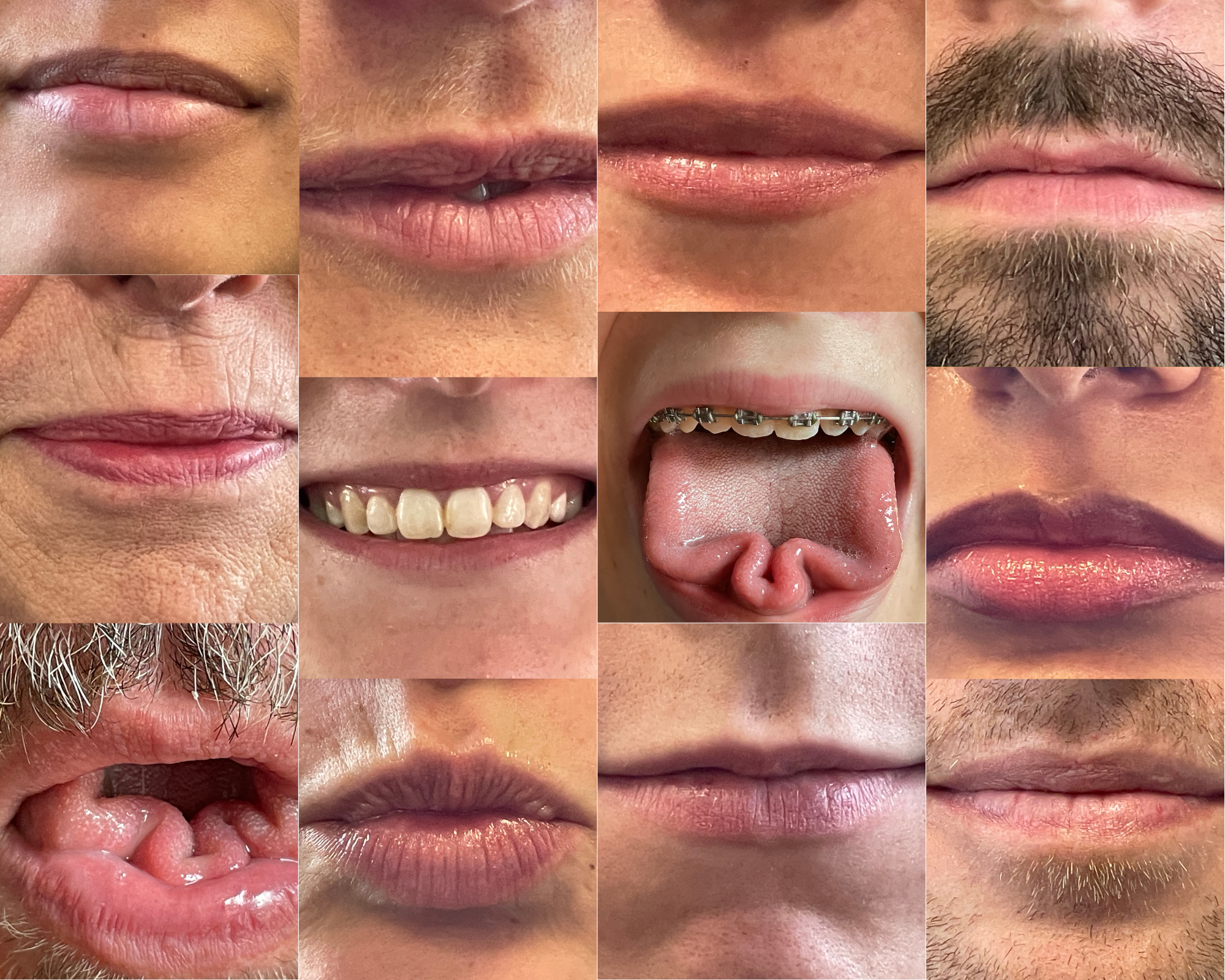

As a French citizen who has lived in the UK for 20 years, I have never been able to get rid of a very thick (and disgraceful to my ears) French accent.
This has always been a great shame for me and a joke for family and friends back in France. How could I not speak with a proper BBC accent yet after two decades? Ridiculous. Shall I seriously consider voice coaching or embrace this phonetic feature of mine?
But I have come to realise that I am not the only person to instantly roll out my identity as soon as I open my mouth.
From traditional accents like Cockney, Brummie, or Scouse, to newer ones such as British Asian English or Estuary English, the UK has one of the most diverse ranges of accents in the English-speaking world.
And this is not to mention all foreign accents, some of which have also influenced the way people speak in some main urban areas like London.
In a society where an accent is often a clear indicator of social and ethnic background, for better or for worse, your accent impacts how you are perceived.



Accent hierarchy


There is often a perceived hierarchy of accents, with Received Pronunciation (RP, also called the Queen’s English) being the most highly rated, according to many studies including those of Accent Bias Britain, a project that analyses people’s attitude towards accent and its effects on employment opportunities.
Accent Bias Britain has even highlighted that accent labels have stayed the same over the last 50 years. In addition to RP, some regional accents like ‘Edinburgh’, ‘New Zealand’, ‘Australia’ and ‘Estuary’ made it to the top 10 preferred accents while ‘Afro-Caribbean’, ‘Indian’, ‘Liverpool’ and ‘Cockney’ remained in the bottom 10, with ‘Birmingham’ being the least regarded of all.
Jane Setter, Professor of phonetics at the University of Reading and author of Your Voice Speaks Volumes, said : “It is very difficult to know exactly why this is.
"It could be because of stereotyping in the media, it could be because Birmingham is a very urban area, and urban areas are considered to be unattractive.
"Therefore, if you speak with an accent from that sort of area, then it could have an effect on how people perceive you.”
What is received pronunciation (RP)
“Received Pronunciation”, also called “Queen’s English”, “BBC English” or “Southern Standard British English” refers to the accent of English in England that is associated with people from the upper- and upper-middle-classes. It is regarded as the standard accent and is associated with educated speakers. Typical example: the word “order” is pronounced “awdah”.
Origins, sounding and meaning of received pronunciation - Video Credit @engvidBenjamin
As far as foreign accents are concerned, French and American are doing well according to the Sutton Trust, a UK social mobility charity.
“It is what people associate the accent with, " explained Jane Setter.
“So if people believe that French people are stylish and romantic and have wonderful food and the wine's wonderful, and the culture's great, then that seems to have a bearing.
"We do tend to see that French does quite well on these sorts of lists, as does Edinburgh type Scottish in particular.”


Photo by Tom Paolini on Unsplash
Photo by Tom Paolini on Unsplash
🚨 Accent prestige in the UK 🚨
— The Sutton Trust (@suttontrust) April 29, 2024
Our research has found that a hierarchy of accent prestige remains in Britain 🗣️
Accents associated with industrial cities and ethnic minority accents are considered the least prestigious.
Received Pronunciation is ranked the highest. pic.twitter.com/i8lpujZ1lo
A hierarchy that can impact lives


The Sutton Trust report (2022), which looks at accent impact on someone’s educational and professional journey found out that over a quarter of senior professionals from working-class backgrounds have been singled out for their accent in the workplace. A situation that was especially true for senior managers from working class families.
English journalist and television presenter Steph McGovern, who speaks with a Middlesbrough accent, was even offered £20 to get “correction therapy” by a viewer who called her accent a “terrible affliction” when she was presenting BBC Breakfast.
In addition, accent bias can even influence the jury as shown by Alice Paver. The PhD researcher in Forensic Phonetics explained that defendants with a Scouse, Geordie or Cockney accent are more likely to be found guilty of a crime by a jury. And those with a posh sounding accent might make someone more likely to be thought guilty of a sexual offense.
Alice Paver on bias towards certain accents - Credit Alice Paver
Jane Setter, Professor of Phonetics, University of Reading, on how British accents are used in series. Credit Marie de Montigny
Accent softening


With the potential impact of their accent on their future success, some people choose to take action. Voice therapist Victoria Carpenter said that most of her clients who come for accent softening do so for clarity purposes or to gain a more polished speech.
The voice coach would use various techniques involving isolating the vowels, later added to consonants, and intonation, using a lot of poetry, as rhythm is important. She said her clients would also use accent softening to fit in a space where they might feel as strangers. For instance, if they have had a promotion that puts them in company of people from British public schoolboys backgrounds.
Carpenter said: “If they have an accent, they won't be able to fit in as easily. They may get teased gently, but it makes them feel an outsider.”
Extract from My Fair Lady (1964) directed by George Cukor, with Audrey Hepburn and Rex Harrison. Video from @Loecsen_edu account
Jane Setter said: "If a particular social group speaks in a particular sort of way, and you want to identify with that group, then your accent will move in the direction of that group as well.
"The way that you speak in the UK is really something that people pay attention to. And if you know that, and if you feel that you need to fit in somewhere, then changing your accent is something that people do, even without realising sometimes.”
An accent is often deeply tied to one’s personal identity, to where they come from. Sometimes, there's a bit of a push and pull between your personality and the desire to blend in with a new group, using your accent as a way to show you're part of that group.
Because of this, amongst other things, many people stick to their own accent.
Jane Setter said: “If you're proud of who you are, proud of your community, why would you want to change your accent? It's all part of it, it's indicating who you are and your identity and for some people, that's more important than other things in life.”
UK regional and foreign accents medley - Credit Neemanaz
No Received Pronunciation, no problem


On top of regional accents, English is also spoken with foreign accents. Some of which have even shaped the way English is spoken in certain areas.
Jane Setter said:“We see new accents coming up, particularly one that's been documented quite a lot is Multicultural London English. There's also Multicultural Manchester English. They're influenced by people who have entered the UK. The Windrush migration for example, is mentioned as being one of these triggers that brought lots of people into the UK to support the economy and they brought the way that they spoke English with them and other languages.
That had an effect on the way that English in London has developed. But it's not just the case that it was those accents, that's also other accents. There's a big mixture of things in these multicultural urban varieties.”
Even without influencing the way English is spoken, many immigrants have kept their accent and their language habits, some still speaking their language at home.
London has for instance the lowest percentage of people with English as a main language (78.4%, 6.7 million), compared to North East, the region of England with the highest percentage of people with English as a main language (96.5%, 2.5 million, source ONS Census 2021).
Romanian is the top main language spoken at home in London. This was also the top non-UK only national identity in London in 2021 (source ONS Census 2021).
Alicia Cantabella, a Spanish architect who has been living in London for 18 years, said that her accent wasn’t much of an issue to her, and that she had always received positive comments about it.
And she enjoys hearing others' accents.
She continued: “I associate it to the culture. So I feel I'm learning the culture that goes with the accent. It's enriching somehow to have people in my life who speak with an accent."
Alicia Cantabella on having a Spanish accent - Credit Marie de Montigny
"It's enriching somehow to have people in my life who speak with an accent."
Accents can be an opportunity


"The sound, the accent immediately conveys an identity”.
For some people with an accent, this has even become a strength in the workplace. Jean-Michel Venden, who was the official Wembley Stadium announcer for the London Summer Olympics in 2012 and also the announcer at the Emirates Stadium, for Arsenal FC during their Champions League matches against French clubs, lends his voice to TV and radio advertising campaigns where a French accent is needed.
The UK based French voice over artist explains that although a touch of French is needed, the required level is sound perfection in English. Venden, who sometimes trains with voice coaches, said: “To meet this requirement, I no longer approach sentences as mere grammatical constructs, but rather as distinct sounds.”
Venden also did voice overs for movies, like for the BBC TV mini series War & Peace, directed by Tom Harper.
He continued: “I was the voice of a Napoleonian army soldier. The French accent instantly shows the soldier is French. The sound, the accent immediately conveys an identity”.
Jean-Michel Venden voice over - Credit : Brilliant Agency / Saint Agur
Pierre-Antoine Denis, French senior broadcast journalist at BBC News first joined the media outlet via BBC Afrique, presenting TV programmes in French, later drifted to BBC World service in English, then began presenting sports bulletin, before joining the main BBC news channel, fully broadcasting in English.
Denis said: “In a certain way, my accent is a blessing because it shows that people can trust me with France and French politics.
"They can understand my French identity and that I have some sort of authority.”
To reach this position, the journalist slightly softened his accent. He laughed as he recalled his first time broadcasting in English, when he put all the H’s of his script in capital letters five minutes before going on air, to combat the typical French habit of totally ignoring this sound. So a hint of accent is fine, as long as the news is delivered properly. Denis said: “It's just a matter of finding the sweet spot.”
“It's just a matter of finding the sweet spot.”
 Built with Shorthand