
Staying afloat
The murky waters of London’s waterway management


Five years ago, Óscar packed up his house and moved onto a boat, a decision he said changed his life completely.
He is now part of the small community of nomadic boaters – or continuous cruisers as they are also known – who move up and down London’s network of more than 600 km of rivers, canals, and waterways.
What sets continuous cruisers apart from boaters with a home mooring is that they are licence-bound to move every 14 days (and cover a 15-20 mile range annually), a condition which the dad-of-one said fit into his lifestyle perfectly. After separating from his partner, cruising the city’s canals gave him the opportunity to pick his daughter up from school, be surrounded by nature, and maintain a central London postcode without the central London prices.
But while the lifestyle may appear idyllic – and in many ways it is – it has not come without its own set of challenges, namely dealing with problems of dredging, silt and rising costs. All of which the Canal and River Trust (CRT) claim they have been adequately managing.
But have they?
The CRT, previously part of British Waterways from 1962, was set up in 2012 to move the management of UK waterways from a public body to a charitable trust.
But it has come under scrutiny in recent years, both from boaters who have felt ‘targeted’ by the trust through licence hikes and enforcement actions and by organisations such as the National Bargee Travellers Association (NBTA), a community-led group which served to protect the rights and homes of boat dwellers.
As tensions rise, and with the CRT’s own annual report revealing boater satisfaction levels at only 55%, what are some of the issues that boaters, like Óscar, face on a daily basis?
“You could go crabbing in some of the mooring spots between Tottenham Lock and Stonebridge Lock,”

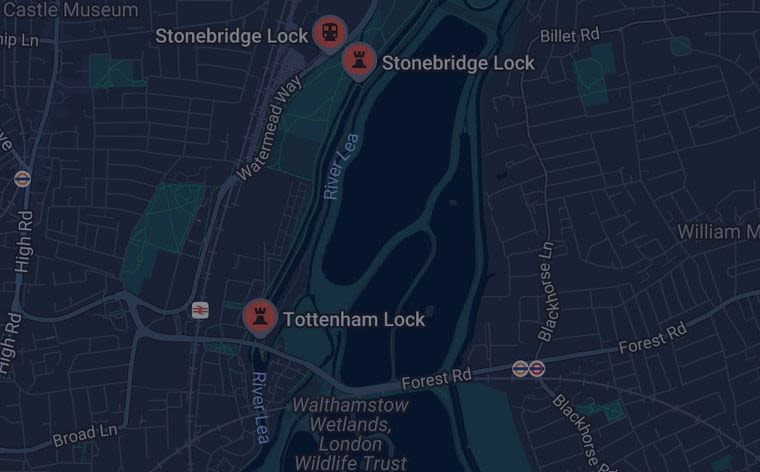
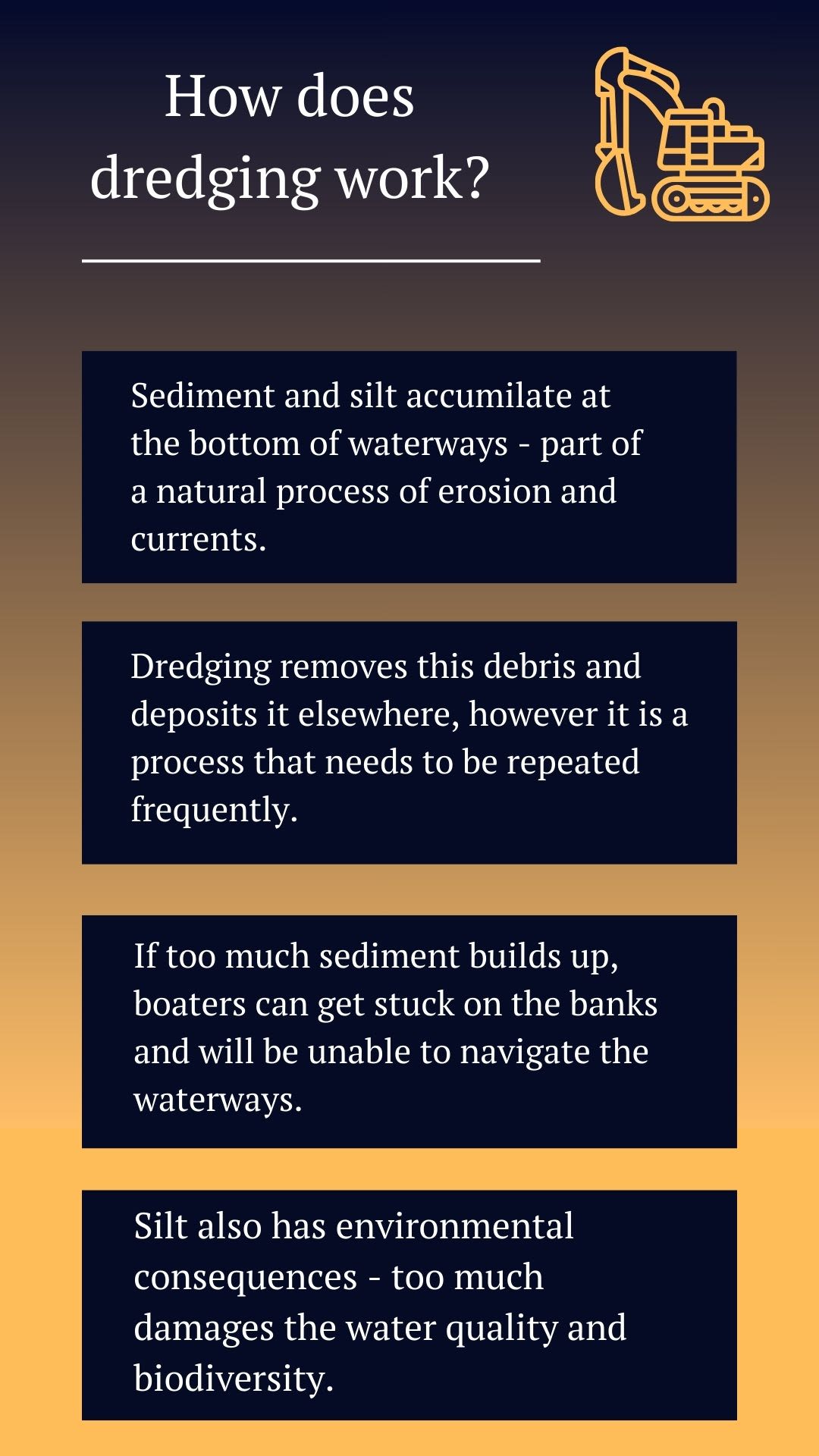
Óscar says, describing a stretch of the Lee River where water levels often dip below two metres. The lack of dredging in this area – a process which removes sediment from the bottom of the riverbank – has meant that boaters often become beached and stranded.
Having been stuck and rescued multiple times, he believes the CRT’s commitment to delaying maintenance has led to parts of the river becoming impassable.
CRT’s head of boating, Matthew Symonds, said that the trust was looking to ‘put additional resources into things such as dredging’, having spent over £60 million in winter maintenance across England and Wales last year.
But Óscar believes the reality looks very different. After five years on the water, he said: “I know exactly every place I can get stuck or beached, which is about a third of the network.
“The area just out of Tottenham Lock that has been accumulating silt for the past three years. It was only a couple of weeks ago that a contractor finally arrived to dredge it.
“It makes the rivers more dangerous and it puts my boat and my child at risk.”


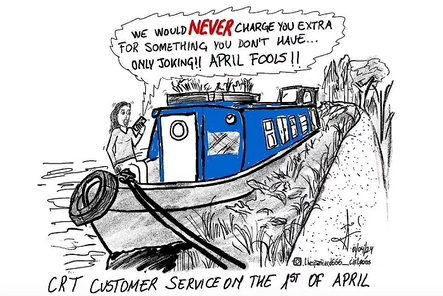

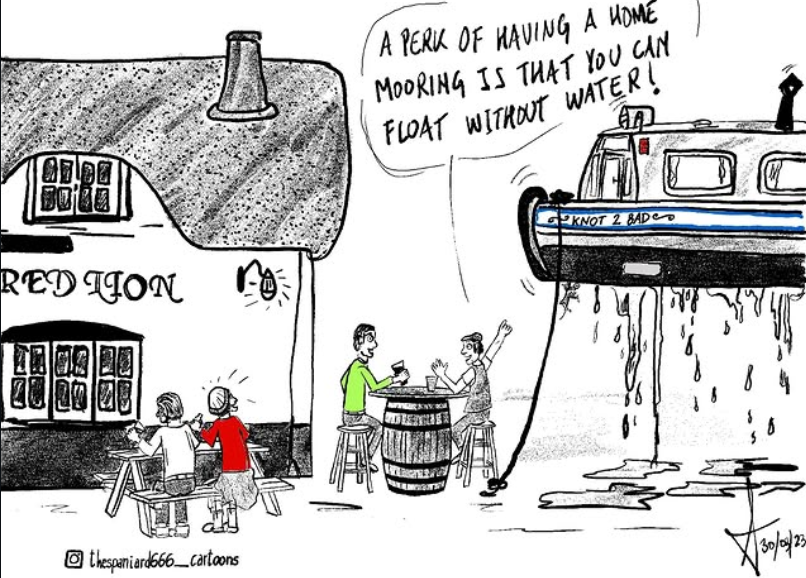

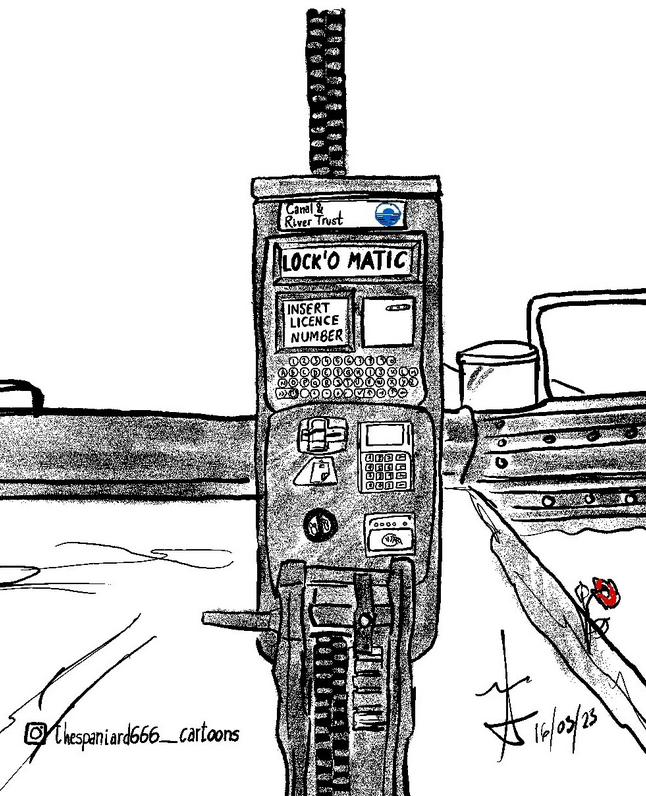

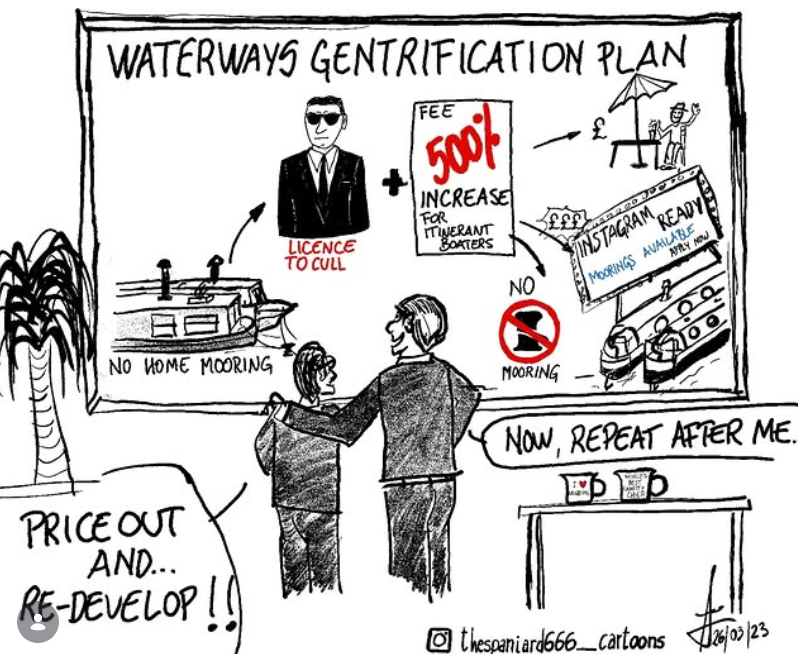

Some of Óscar's political cartoons, depicting his frustrations with the CRT (Credit: @thespaniard666_cartoons)
Some of Óscar's political cartoons, depicting his frustrations with the CRT (Credit: @thespaniard666_cartoons)


The closure of non-essential facilities, including bathrooms and showers, along the entire network has highlighted another point of contention among boaters. The toilets were closed, Symonds said, following a consultation which supposedly found there was no use for them among boaters who had their own facilities. But the CRT had told Óscar that the bathrooms were closed as a result of vandalism and electrical faults, and left boaters who did not have facilities of their own feeling stranded.
Under the CRT’s ‘Plan for Better Boating’, which was implemented last year, Symonds said that other facilities deemed ‘more necessary’, including water tanks and waste disposal, have already received heavy investment (around £4.5 million).
But this all points to wider confusion and dissatisfaction in communications between boaters and the CRT.
Boaters believe that the actions and statements of the organisation do not match up. The trust says otherwise.
As costs rise for continuous cruisers, including a licence surcharge of 25% by 2028, Óscar does not see the money he pays reflected in the wellbeing of his home and the canals.
“When I started boating with the river and canal licence, I was paying about £800 per year. Now it's gone up to £1,400. So it's a continuous cycle of just increasing, increasing, increasing.
“For me it feels like a target, to basically price us out. I believe they want to monetise as much of the canal as they can.”
And perhaps they are.
This year, their 2024/25 annual report highlighted that income from boating and mooring licences reached £55.2 million, up by £3.7 million compared to the previous year.
In an article published last December, Novara Media called the trust ‘a charity run by landlords’, and with home moorings auctioned off to the highest bidder, there are warnings that the system has been skewed to favour the most wealthy.
Symonds maintains that the surcharge is about increased utility. “Continuous cruisers are using the space more, so naturally we think it's reasonable that they pay a proportionate additional charge for that benefit.”
But Jack Saville, press officer at the NBTA, believes there is little evidence to suggest that continuous cruisers actually do use the waterways more than, for example, hire boats.
“It also doesn't really address their real issue, which is that they've got a funding problem,” said Saville, who owns and lives on his narrowboat.
“Any time that CRT are confronted with their failings in managing the canals or the fact they've sold off a lot of their maintenance staff and now have to outsource it at massive costs, they point to the slightly increased number of cruisers and say, well, that's the problem. And then they pursue policies that make it harder to live on the canals.”

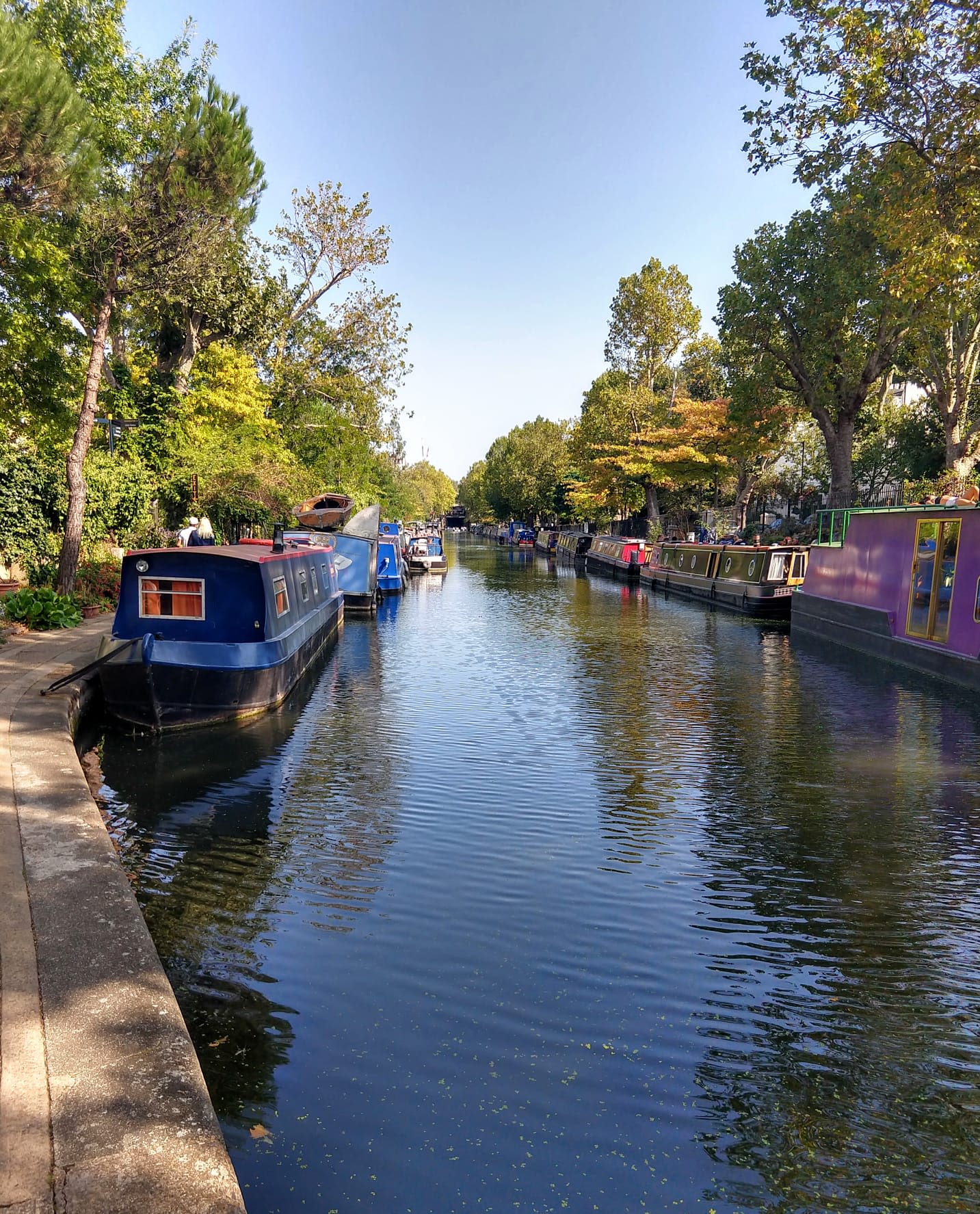
Network of boaters at Regent's Canal
Network of boaters at Regent's Canal

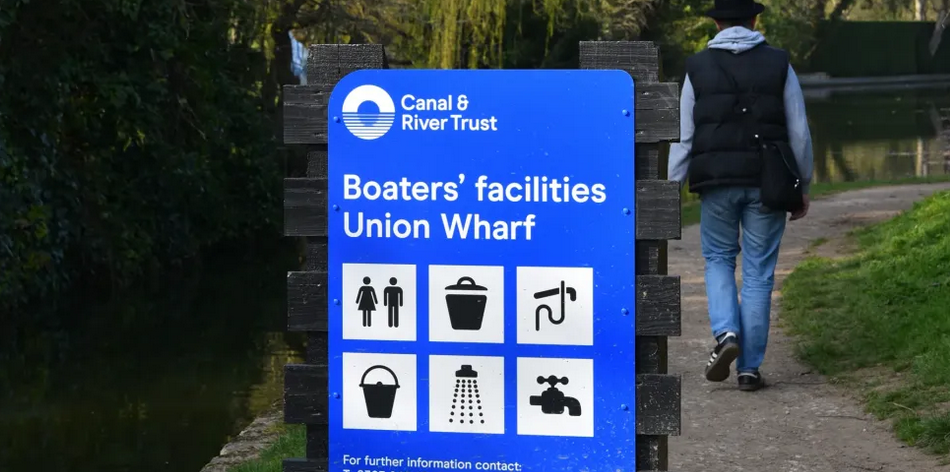
One of the facility points provided by the CRT: now the bathroom and showers pictured are no longer available (Credit: NBTA)
One of the facility points provided by the CRT: now the bathroom and showers pictured are no longer available (Credit: NBTA)

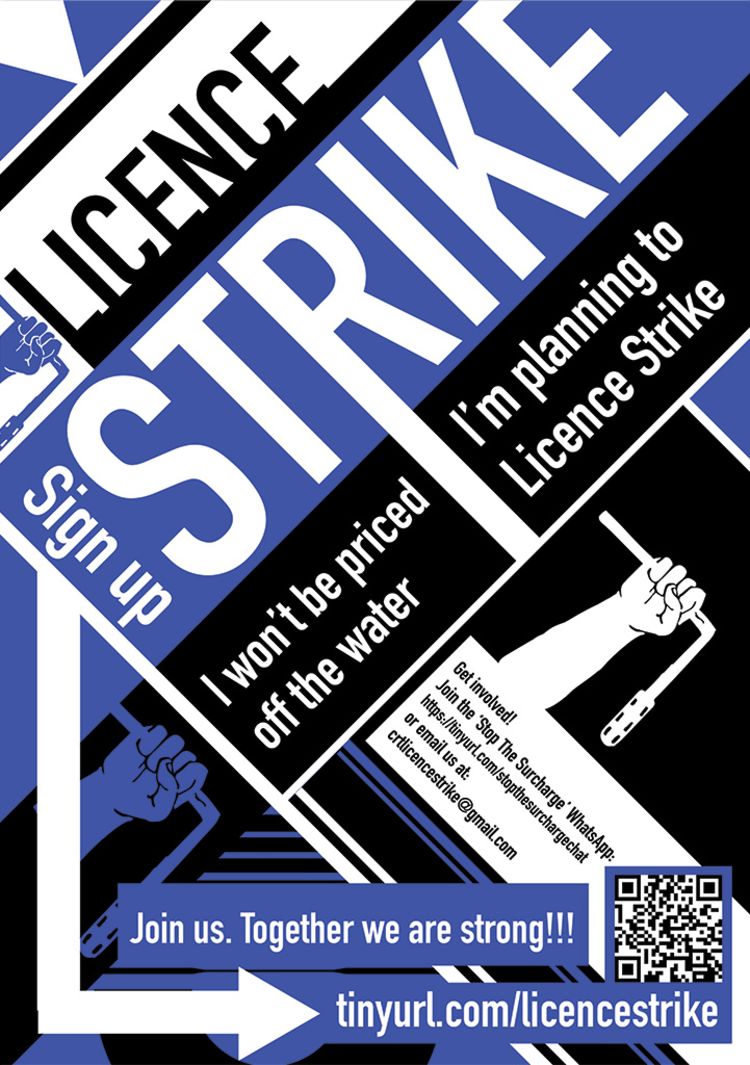
A protest poster from the NBTA, campaigning against the licence hike. (Credit: NBTA)
A protest poster from the NBTA, campaigning against the licence hike. (Credit: NBTA)

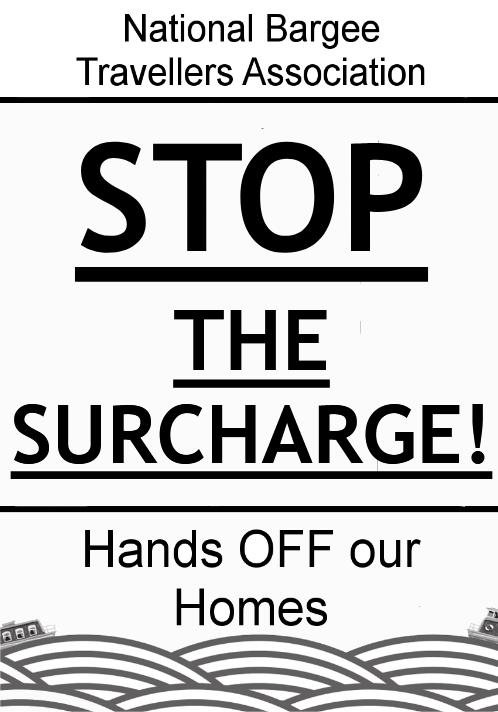
A placard template provided by the NBTA, advocating the end to the surcharge on continuous cruisers
A placard template provided by the NBTA, advocating the end to the surcharge on continuous cruisers

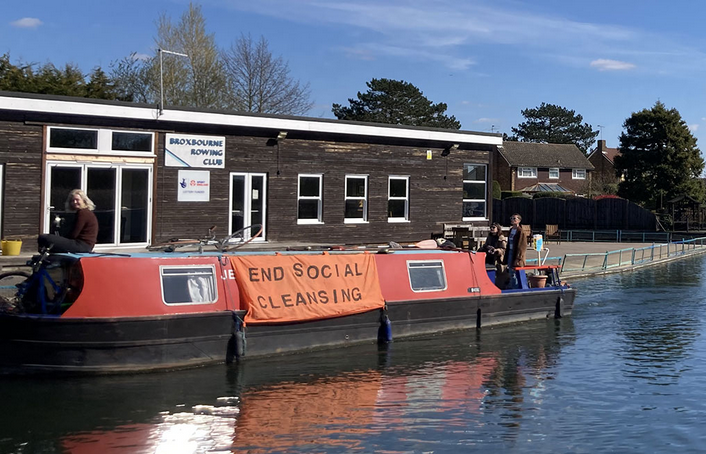
A bargee protest against the CRT (Credit: NBTA)
A bargee protest against the CRT (Credit: NBTA)
“For me it feels like a target, to basically price us out. I believe they want to monetise as much of the canal as they can.”

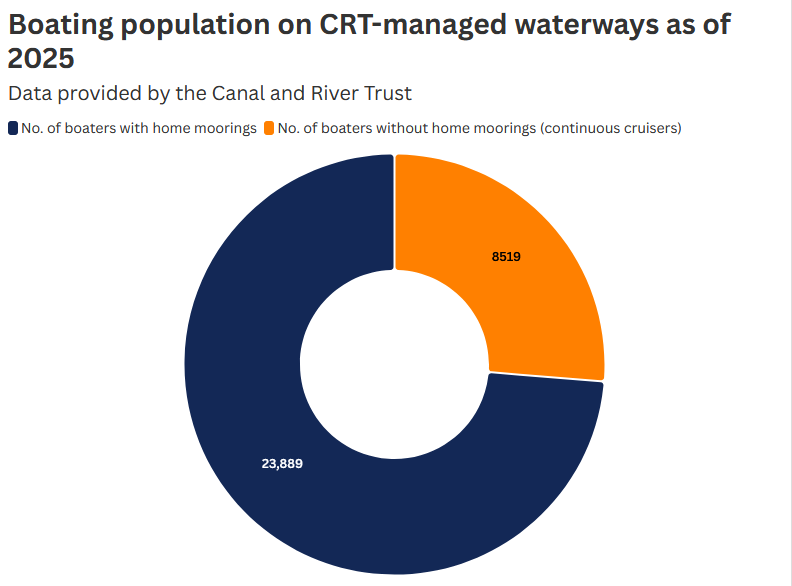
And contradictions continue to lie at the heart of these claims. As Jack acknowledged, the numbers of continuous cruisers have increased over the past few years (around 2.5% according to CRT’s 2025 annual report). Yet, across the entirety of the UK, the CRT oversees around 8,500 continuous cruisers. In London, that number tops just below 2,000.
“If you think of any council area in London, you'll have upwards of 60,000 people. The fact that there are around 2,000 people that move around and live on boats, it's not a large number to manage.”

Recently, the CRT released a Licence Review Commission outlining 36 recommendations for the trust to implement. From the 82 page report, Jack highlighted a couple that have concerned boaters in particular:




He believes that the ethical and privacy implications of the first recommendation should make it ‘impossible’ to implement, especially on a GDPR level.
Even Óscar labelled it as more of a threat, rather than a reality. “I think they resent not having the same powers that other authorities have.”
Symonds assured, “I think there is potentially a role for understanding boat movement generally and tracking it, but I don't think that really requires a tracker on individual boats.”
As for the second recommendation, he added: "The term ‘reasonable force’ needs to be quantified in the sense to stop people getting in the way of us when we've gone through a proper, thorough legal process to remove a boat.”
But again, Jack highlights that the use of reasonable force from a designated charity - even from the view point of evictions - brings in serious concerns about the potential abuse and unnecessary expansion of powers. Citing past issues with enforcement officers and the fact that the CRT already has powers to fine, restrict licences, evict boaters, and repossess their boats, Jack questions the motivations of the trust.
As the CRT intends to proceed with “all recommendations as a package”, with a consultation pending, there is an increasing possibility that these recommendations may become reality.
Overall the feeling for Jack and Óscar is one of exhaustion and frustration.
Jack said: "We're not asking for special treatment. We think people should pay their licences, and people should move in accordance with the law as it stands.
“And we'd like CRT to leave us alone to do that.”
For Óscar, it would take a lot from the CRT to make him leave his floating home. His connection to his neighbours, the nature and wildlife around him, and the nomadic lifestyle of his boat means that for as long as he can, he will stay.
In a final statement, CRT said:
While the NBTA promotes one viewpoint it would be inaccurate to suggest it is representative of the wider boating community, either in London or elsewhere on our charity’s 2,000 mile network.
The Commission’s Report is the start of a process of working with boaters to create a more transparent, fairer, and sustainable approach for all. Generally, the Commission’s report and recommendations have had a positive response; both boaters who’ve contacted us directly and the conversations on social media.
"We're not asking for special treatment.
We think people should pay their licences, and people should move in accordance with the law as it stands.
And we'd like CRT to leave us alone to do that.”
 Built with Shorthand