
The 'sharenting' boundary
When family life becomes public content, where does sharing end and a child's privacy begin?
A snippet from Georgina's Instagram (@georginaclh)
A snippet from Georgina's Instagram (@georginaclh)
Georgina apologises for the delay before the interview begins. She is gently rocking her baby, and the day has gotten away from her.
She is 29, a content creator and a mother, and she speaks about posting online with a kind of certainty that suggests this decision was made long ago. Her content is full of the textures of early motherhood: advice for surviving the night with a newborn, reflections on birth, the practicalities of family life. But for all the domestic intimacy of that world, there is a hard boundary running through it. Her children's faces are not shown, their birthdays are not shared, their surnames are limited, and no personal details will ever appear online. "It's our responsibility too, right?" she says. "We're their parents, so no one else is going to do it."
That sense of responsibility branches into the much wider debate around sharenting: the practice of sharing children's lives online. In the more extreme world of family vlogging, that conversation is already well-established. But what happens in the softer, more ordinary world of short-form motherhood content?
Scrolling through social media, you will find a corner of motherhood that looks warm and inviting (see right): school runs, matching outfits, softly lit kitchens, and family holidays. Children are stitched into the rhythm of everyday content. For many parents, this kind of posting is not unusual or inherently problematic. Social media can, and has been, a place to document milestones, make the isolating parts of parenthood feel less lonely, and build a community.
Research suggests motherhood content can be genuinely helpful for new and expectant parents, particularly as a source of advice, reassurance and community. A 2023 systematic review found that parents often turn to influencers and bloggers for emotional support, shared experience and help making sense of their identity in early parenthood.
But because of the permanence of public posting now, a family photo no longer exists only in an album or a private group chat; it becomes part of a personal brand and a source of income- pictures frozen in the algorithm.
Not every parent who posts is acting irresponsibly, but because children are included in public-facing content, questions of privacy, consent, and long-term harm become harder to avoid.
What is sharenting?
Before deciding where the line should be, it helps to define the term itself. Dr Claire Bessant, Associate Professor of Law at Northumbria University, researches children's privacy and family privacy in the digital age. She says sharenting is broad, covering not just influencers but ordinary parents sharing ordinary photos, videos or information about their children online.
“Sharenting is probably best described in broad terms as parents sharing photos, videos or information online”
Why parents share
Dr Bessant is careful not to reduce the issue to a simple moral divide. Parents share for all sorts of reasons, whether it be to record family life, stay connected, seek support, or make everyday experiences of parenting feel less isolating. For some, especially those navigating children's additional needs, posting online can offer access to advice and community that may not exist elsewhere.
The issue seemingly cannot be boiled down to a simple divide between good and bad parents. The act of sharing can be practical, well-intentioned and emotional. However, the question is what happens when those motivations meet the permanence and incentives of social media.
The stats and the risks
A 2025 study of 10 British motherhood influencers found that children appeared in 74.5% of more than 5,000 Instagram posts, while almost 46% of posts featuring children were sponsored. The authors say this indicates that children's images are frequently used for financial gain.
The same study also found that children were often identifiable. Across the sample, most child faces were shown in full: 5,868 full faces compared with 1,589 partial faces and 912 hidden or blurred faces. Personal data appeared in 37.6% of posts featuring children, including names in 30.4%. Just as strikingly, the study found that posts featuring children did not receive more likes than posts without them.
The researchers say the risks of sharenting go far beyond a child simply appearing online. They point to concerns including images being misused, information reaching predators, digital kidnapping, commercial monitoring, unlawful use of children's images to sell products, and future bullying or harassment. They also stress that once this material is online, it can be extremely difficult to remove because of the permanence of digital footprints.
Where one creator draws the line
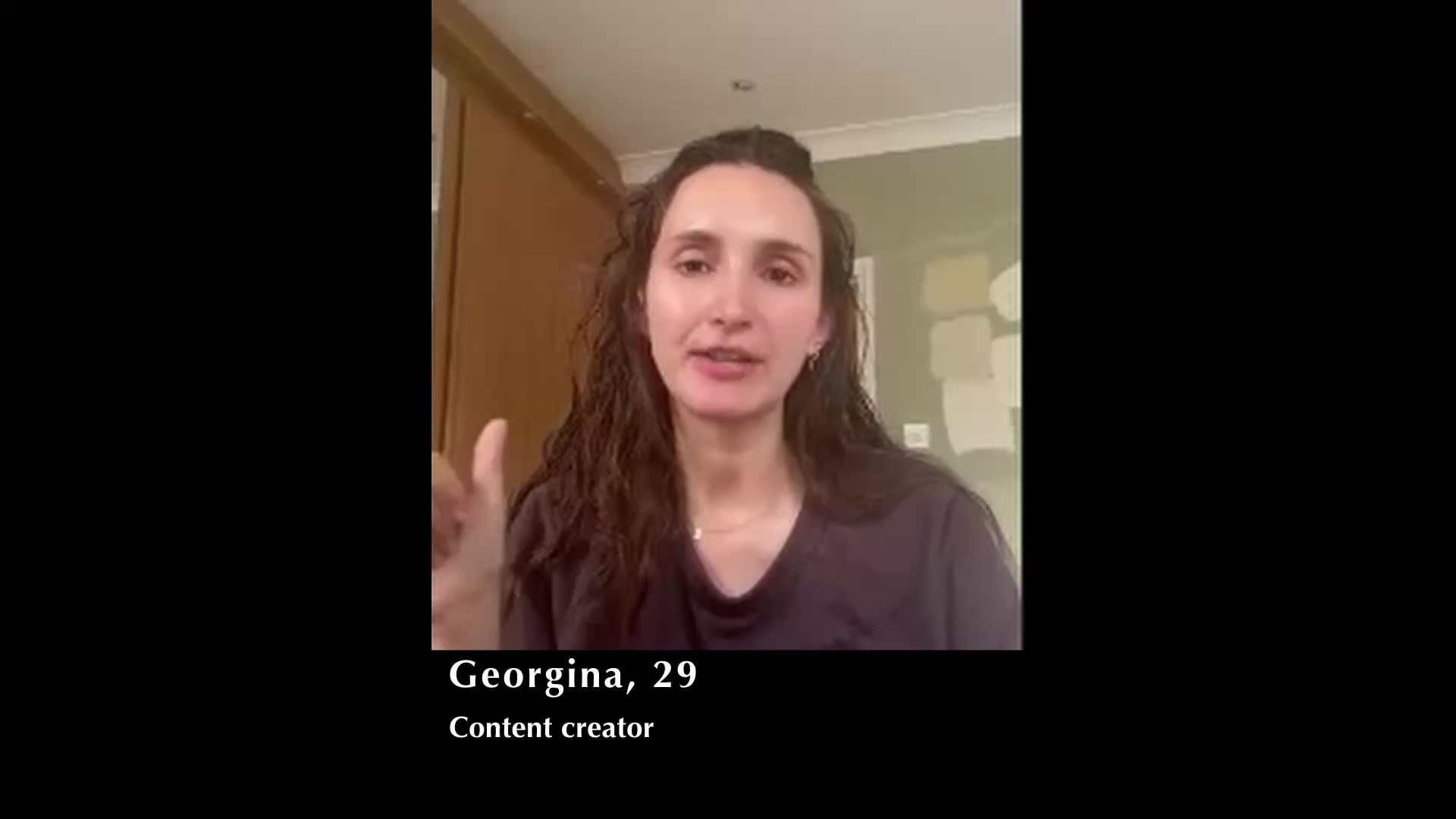
For Georgina, posting about motherhood is primarily about connection. She describes it as giving her a "sense of community", adding that it allows her to connect with a much wider circle of people than she would otherwise meet in day-to-day life.
But along with that comes a strict boundary. Georgina says she and her husband had decided early on not to show their children's faces online, even before she began posting more publicly. At first, she was not even sure whether she would share them at all, not even hands or partial images, but they eventually settled on a strict rule of never including faces.
She said that the boundary has only become firmer as she has learned more about internet safety. "I've shared less personal information as I've learned more about security," she said, explaining that she tries not to reveal details such as birthdays, surnames, school identifiers or anything else that could make her children easier to identify.
Georgina mentioned that her father had informed her about cyber safety from a very young age, which carried into adulthood. Her line has been drawn: her children must be fully clothed, and she does not show their faces or clear identifying features. She avoids sharing anything intimate, humiliating or too personal. Even when speaking about her eldest child's health, she stops short of disclosing details she believes would belong to her child in the future, not to her audience in the present.
Photo by Isabella van der Putten
Photo by Isabella van der Putten
Georgina also drew a distinction between short-form content and long-form family vlogging. She said YouTube-style content can allow creators to "delve a bit deeper", spending longer on one moment or scene, whereas short-form content tends to feel more surface-level.
For her, that makes it somewhat easier to protect her children's privacy on platforms like Instagram and TikTok. But her answer was not absolute- she noted that she also knows people on YouTube whose children barely appear at all, suggesting that the issue is less about the platform alone than about the choices parents make within it.
The pressure to share more
If Georgina's rules are firm, the pressure around them is real. She says content featuring children tends to attract more opportunities from brands, particularly in sectors such as kids' fashion and toys, where marketers often want a recognisable family image rather than motherhood in the abstract.
"Oh, 100%," she said when asked if she feels pressure from followers, brands or the industry. She adds that it is rare to find brands willing to work with parents who do not show their children's faces, which means creators who draw that line may lose out on collaborations.
Georgina is not alone in that. Another mother and content creator, Shelby Taylor, says she has missed out on partnerships because she refuses to include her baby in content. For Taylor, motherhood can still be shared effectively without making a child publicly identifiable.
What should parents think about before posting?
Bessant's advice is very practical: if a child is old enough, ask them. If they are too young, ask different questions instead. Does their face need to be shown? Does the post reveal anything potentially embarrassing or intimate? How might they feel about it in the future?
The 2025 study ends on a firmer note than much of the influencer conversation does. Its authors argue that current UK protections remain minimal, potentially leaving children vulnerable to exploitation, and they call for stronger regulation.
Georgina's answer is simpler: share motherhood, yes. But some things, she suggests, should still belong to the child.
 Built with Shorthand