
The witching hour of Gen Z: exploring the renaissance of English folklore and Paganism
Folklore, myths, and legends are rich tapestries in England’s legacy that have been observed for hundreds of years and passed down through a lens of wisdom.
But why are today’s youngsters fascinated by this? As modern Britain wrestles with political division, economic instability, and questions around identity, folklore offers a comforting thread of community and meaning.
I
Folklore
A broad collection of beliefs, customs, traditions, superstitions, and stories that have been passed down orally from generation to generation.
Myths
Ancestral stories, often involving gods, supernatural beings, or heroes, that explain natural phenomena, cultural beliefs, or aspects of human existence through symbolic narratives.
Legends
Legends typically have a connection to a particular place and are traditionally believed to have historical truth, even if they have been exaggerated over time.
Storytelling
Storytelling is the creative way people share myths, legends, and folklore through performance and writing.
When old stories start speaking again
Folklore practices dating back centuries are once again resonating with a generation eager to reconnect with ancestral knowledge and reclaim a sense of power.
The most liberal generation our history has ever witnessed is at the forefront of reviving traditional folklore rituals observed by their ancestors, in a rebellion that’s deeply rooted in anti-establishment sentiment. This movement prides itself through a slower way of life, embracing nature, and admiring the long forgotten heritage and communities of the country.
By becoming a member of a virtual community, people can adopt a sense of belonging, and traditions can now be preserved via a digital footprint.
Now inactive on X, an account named #folklorethursday has gained 55,000 followers since it launched in 2015, and was a key network for people to share myths and art for educational purposes.
As a result of ongoing public interest in esotericism, University of Exeter was the first university in the UK to start an MA in Magic and Occult Science in 2024.
Tradition, rewritten for the algorithm
Gen Zs makes up the bulk of TikTok’s demographic as one of the most consumed social destinations. This provides folklore content creators with the perfect platform to share their work.
Michaela, a Gen Z folklore content creator, who posts under the handle @michaela.ssepuya on TikTok and has 5,475 followers, said she realised that England’s folk culture didn’t receive as much mainstream recognition and wanted to change that.
"It reminds us of the rhythms of nature and can encourage the protection of ecosystems, something Gen Z audiences are passionate about”
Michaela added: “I think there are a lot of younger people that are hesitant to engage with national pride because of our country’s colonial past. But I think English folklore offers an alternative. It's more inclusive and I think it can make some people feel more of a connection to their home regardless of where their ancestors came from.”
The National Folklore Survey for England
Launched in January 2025 as a cultural research project, the National Folklore Survey for England is a study led by academics at Sheffield Hallam University, University of Hertfordshire, and Chapman University in the US. It’s led by Dr David Clarke, who is also a member of the Centre of Contemporary Legend at Sheffield Hallam University. In fact, the University of Hertfordshire is the only institute in the UK that offers an MA in Folklore Studies.
The survey aims to collect data from 2,000 people and to understand how contemporary English folklore is celebrated in a multicultural society, at a time marked by fragmented identities among communities and individuals in England. Another goal is to challenge damaging and negative stereotypes of Englishness that far-right political groups have tried to tie to the nation.
According to some of the research’s latest findings, 90% of participants knew of Robin Hood and a further two thirds were familiar with St George. 1 in 3 people in England believe in ghosts and the supernatural and 27% believe that black cats are lucky.
Morris dancer and author Dr Sophie Parkes-Nield is the postdoctoral researcher of the National Folklore Survey of England.
"We're treating our online communications as a way of furthering our understanding of how people are working with folklore beyond academia"
From May Day to the Brits: Morris dancing
Video taken by Antonia Vlad
Video taken by Antonia Vlad
Morris dancing is a traditional folk dance from England that began in rural communities around the 15th century. It usually takes place on the first May Bank Holiday and is heavily associated with May Day, also known as Beltane, a Celtic festival that marks the beginning of summer.
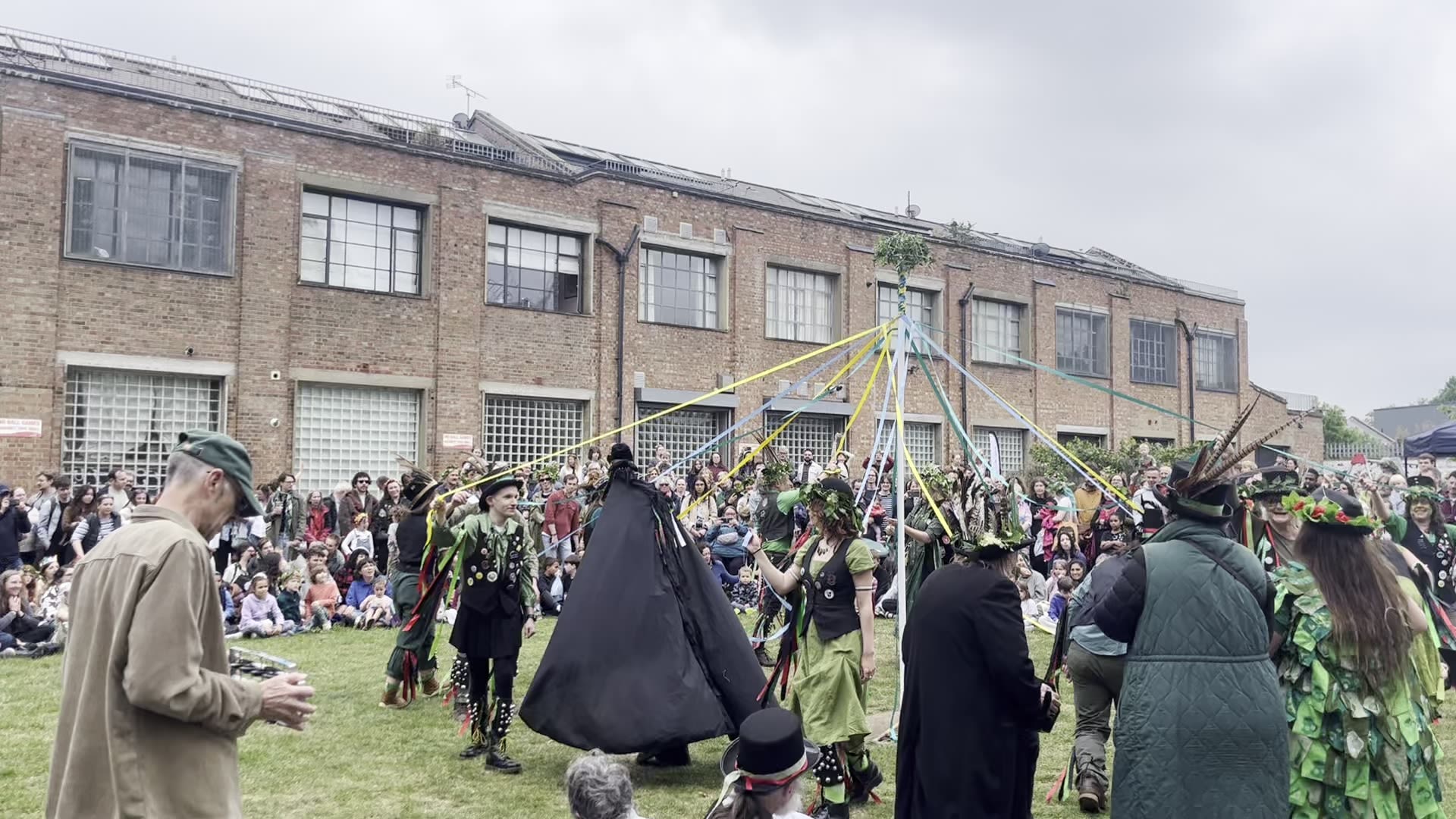
On 4 May at the Brixton Windmill, Morris dance group The Tatterjacks put on a show for us. The audience was made up of all ages. A Maypole was also present. Video taken by Antonia Vlad
On 4 May at the Brixton Windmill, Morris dance group The Tatterjacks put on a show for us. The audience was made up of all ages. A Maypole was also present. Video taken by Antonia Vlad
Traditionally, the activity was predominantly male-led and was recorded as an important part of village festivals, danced by tradesmen. However, female participants are now engaging in the tradition, encouraging inclusivity across all genders and abilities.
Boss Morris, a female Morris dance group that has Gen Z members, performed at the 2023 Brit Awards, proving that younger people are connecting with contemporary folk culture
The otherworldly significance of Glastonbury
At the heart of English mysticism we find the Glastonbury Tor, with its heavy links to the legend of King Arthur and the Isle of Avalon. Located in Somerset, the place of pilgrimage is believed to be the place where King Arthur was taken to be healed and allegedly buried.
English folklorists suggest that the Tor is also a portal to the Underworld and a gateway to Annwn - a fairy realm.
Glastonbury town feels like a fairytale realm - a place where the ordinary world is out of reach.
Folklore in art
Photo taken by Antonia Vlad
Photo taken by Antonia Vlad
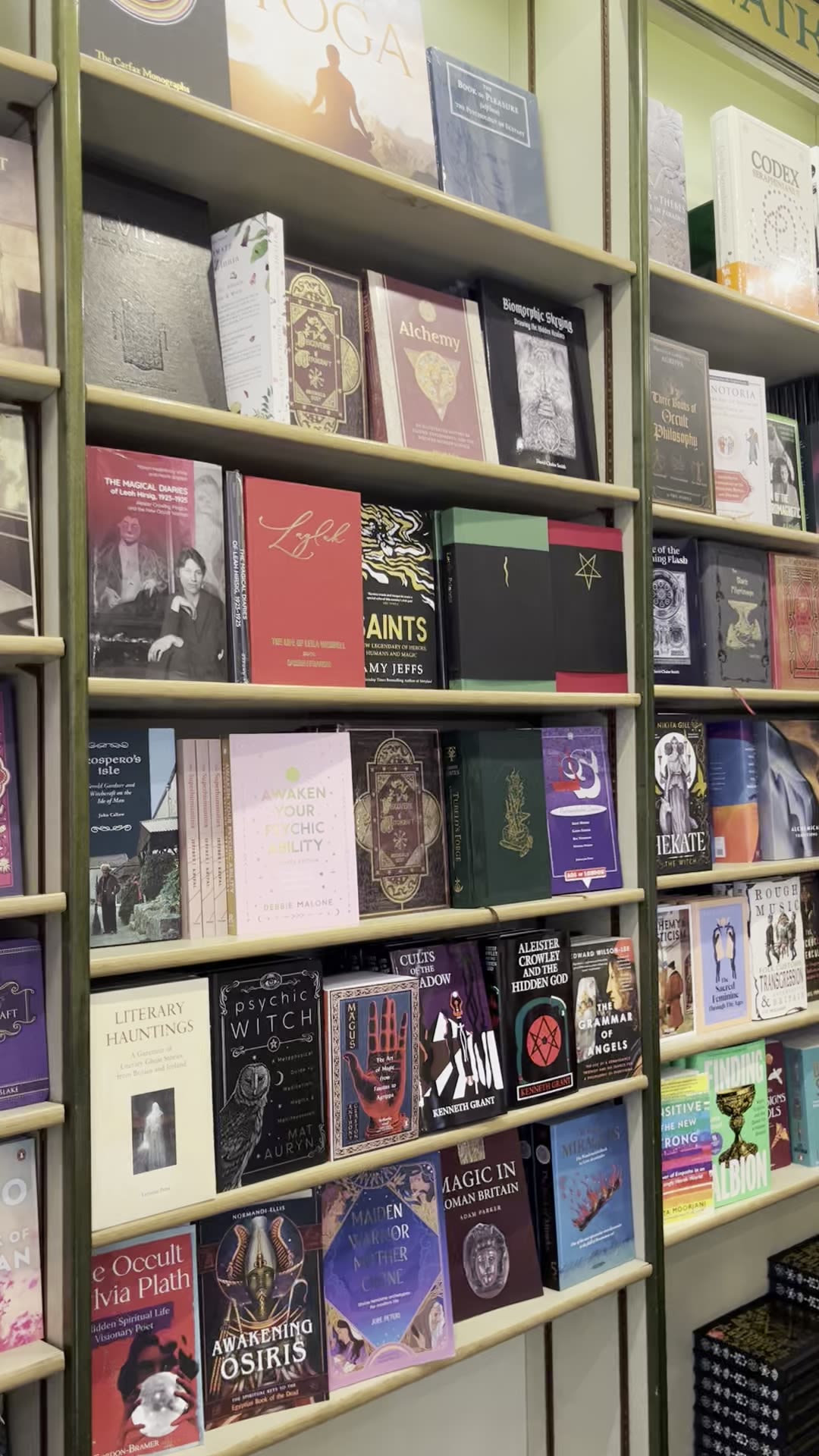
Watkins Books in London houses hundreds of books about magic, astrology, folktales, and all things esoteric and strange. Photo taken by Antonia Vlad
Watkins Books in London houses hundreds of books about magic, astrology, folktales, and all things esoteric and strange. Photo taken by Antonia Vlad
Finding Albion: Myth, Folklore and the Quest for a Hidden Britain is a new book by writer and broadcaster Zakia Sewell, released in March this year.
The book touches on all aspects of British folklore, as well as contemporary celebrations, from Celtic seasonal rites and Glastonbury Tor to the summertime Notting Hill Carnival - uncovering the multiplicity of Britain. Singer Florence Welch, better known as Florence + The Machine, said:
“I’ve been waiting for a book like this”
Video taken by Antonia Vlad
Video taken by Antonia Vlad
Storyteller Jason Buck spoke to me about the importance of storytelling in cultivating a community, which is what folklore is all about.
His approach champions methods of traditional and contemporary motifs. On Facebook, he has grown his audience to an astounding 10,000 followers.
He recently performed at the Beltain Celtic Fire Festival at Butser Ancient Farm in Hampshire, a celebration that welcomes the start of summer.
What is Paganism and Wicca?
The 2021 Census found that around 74,000 people in England and Wales identified as Pagan, up from roughly 57,000 in 2011 - an increase of about 30%. Higher concentrations of people identifying as Pagan were recorded in areas such as Cornwall and Somerset.
Wicca, a religion that falls under the wider umbrella of Paganism, draws inspiration from pre-Christian traditions across Europe, North Africa and West Asia. It follows nature-based rituals, the cycles of the moon, and the Wheel of the Year, also known as the Eight Sabbats, which includes celebrations of the equinoxes and solstices.
In recent years, trends such as WitchTok on TikTok and ‘Etsy witch’ have gained popularity online, even Vogue wrote an article about this.
This is my video explainer of Wicca
On Instagram, #witchesofinstagram has over 10 million posts
A history of Paganism in Britain
During the Middle Ages, Paganism was framed as a force of evil and the Christian church sought to eradicate any beliefs associated with it.
Pagans were often put in the same category as heretics, people who went against the accepted religious teachings of the time. Witchcraft was punishable by death in England under laws introduced by Parliament in the 16th century, beginning with the Witchcraft Act 1542.
Paganism during the Victorian era was mainly a revival of interest in ancient religions, folklore, and occultism. By then, Britain had stopped prosecuting witches, but the belief in magic and the supernatural were still alive. Séances and ouija boards became fashionable around this era too.
The Fraudulent Mediums Act 1951 replaced older witchcraft laws by targeting fraudulent practices instead of witchcraft itself, helping reduce legal stigma around modern paganism.
With its individualistic belief systems that suit everyone, emphasis on female empowerment, and LGBTQ+ inclusion, it’s no wonder that Paganism, including Wicca, is gaining popularity amongst Gen Z and Millenials.
When ancient religion becomes modern resistance
Gen Z is increasingly drawn to paganism because of its perception as a more liberal and flexible belief system. As traditional structures and organised religion are weakening, many young people seek acceptance and inclusivity through alternative spiritual practices.
From a political standpoint, such beliefs can sometimes be interpreted as a form of resistance to established institutions, although this is not universally the case. Many pagan traditions also differ from monotheistic religions in that they often involve polytheistic, or nature-based frameworks, rather than focusing on a single, typically male, deity.
 Built with Shorthand