
Thousands of tonnes of plastic waste leave London ports each year
most goes directly to Türkiye
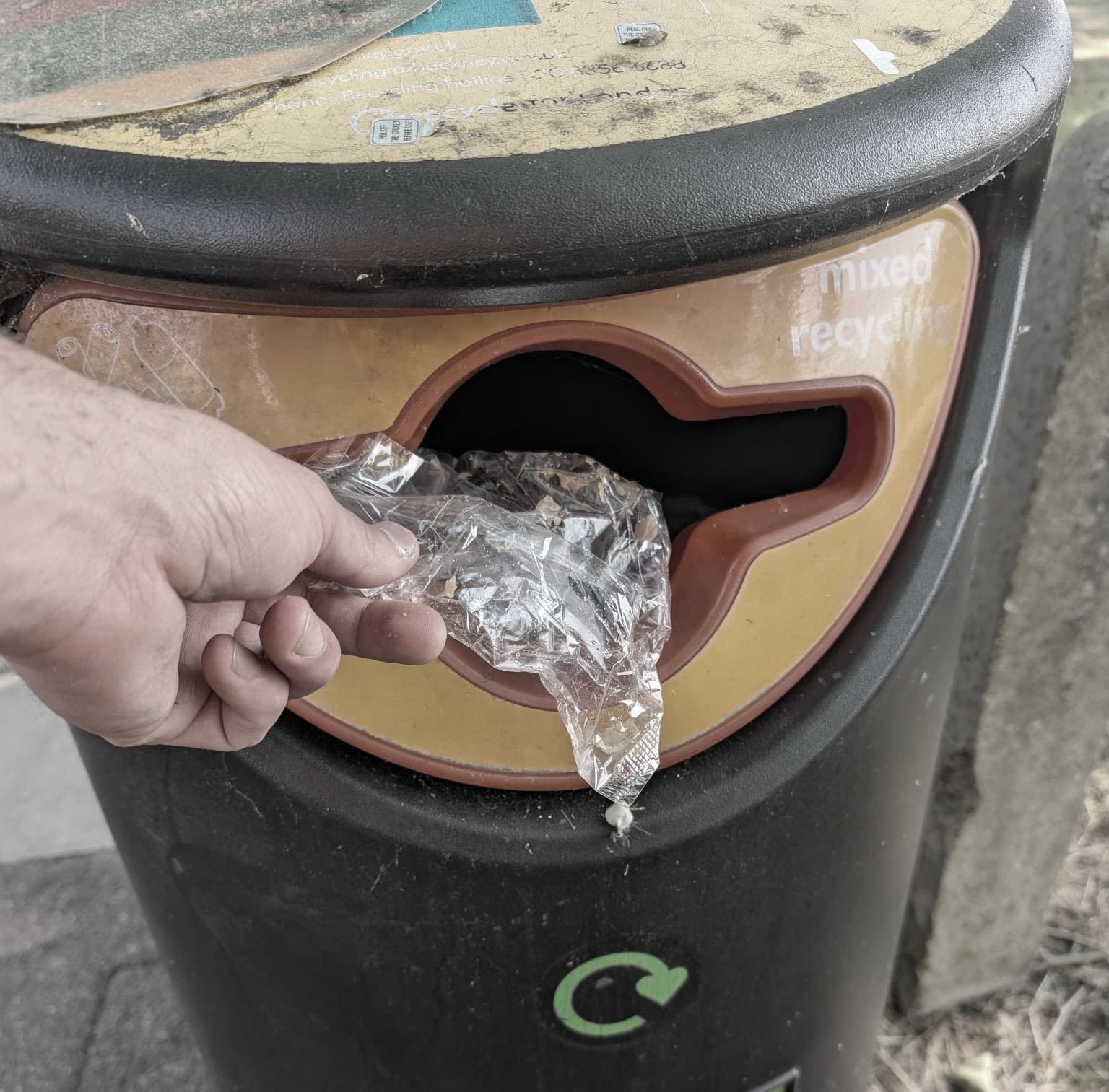

Increasingly vast amounts of plastic waste is exported from London ports each year, with the majority destined for Türkiye, official data shows.
An analysis of UK trade figures shows exports declared as ‘waste, parings and scrap, of plastics’ from four main London ports – Gateway, Thamesport, Purfleet and Tilbury – have increased more than ten-fold since 2020, reaching 137,000 tons in 2024, 54% of which was destined directly for Türkiye.
Imported plastic waste is reported to choke recycling infrastructure in recipient low-income countries like Türkiye, leading to high levels of mismanaged plastic waste with severe impacts on human and environmental health, in a global trade described as ‘waste colonialism’.
A spokesperson for Greenpeace Türkiye said: “What you place in a recycling bin in London might not be recycled at all—it could be shipped thousands of miles away, burned in an open field in Adana, Türkiye and inhaled by children who live nearby”.

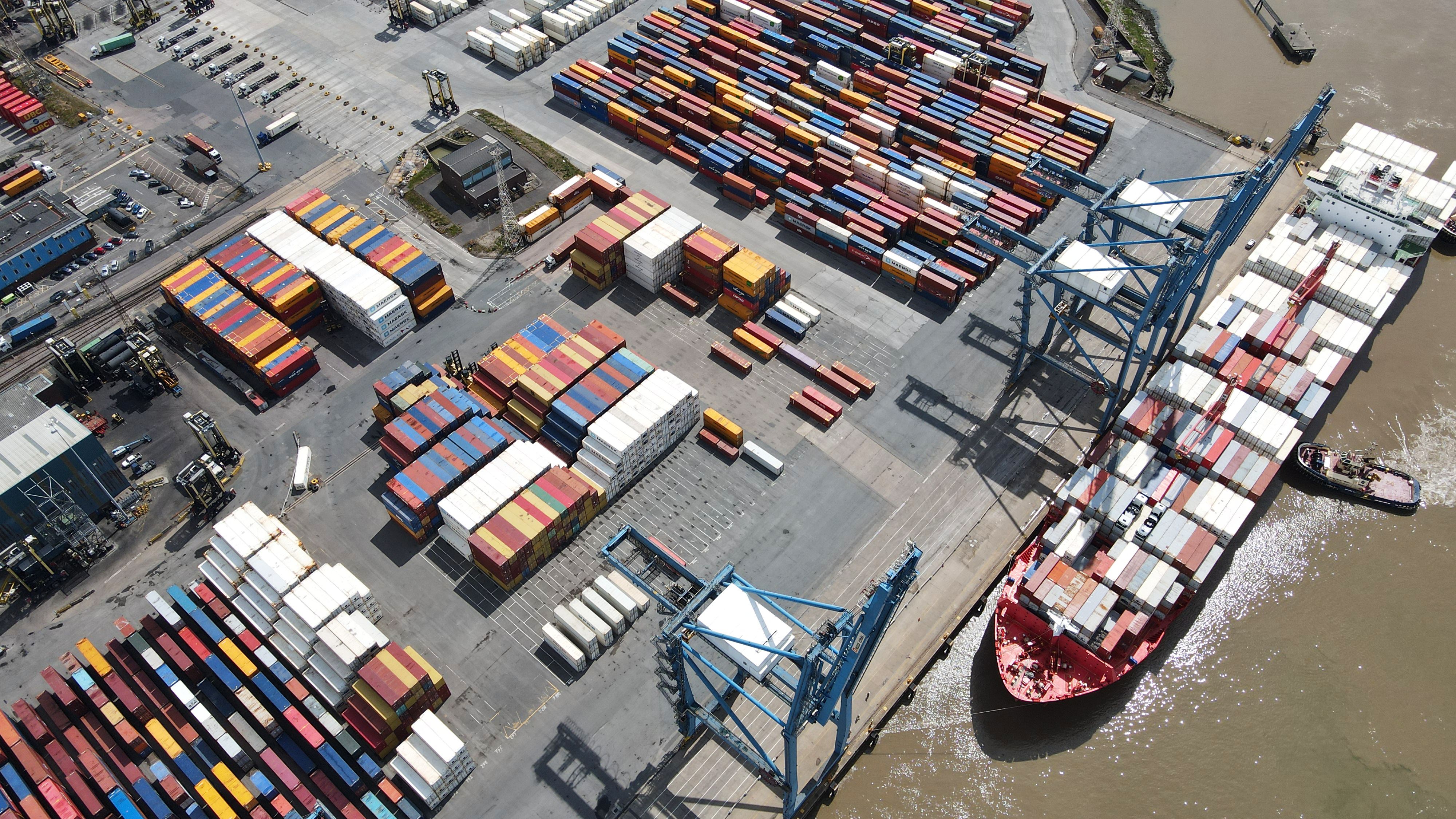
The role of London ports in the UK's plastic waste export problem
Exports of plastic waste from London’s four main ports have increased substantially since 2020, totalling 137,000 tons last year.
Credit: Author
By comparison, that’s over ten times the weight of London’s Shard skyscraper.
London exports mirror a resurgence in total UK plastic waste exports after falling to a low in 2020, with London ports accounting for a growing proportion of this total; from 2.4% in 2020, to almost 23% in 2024.
The data suggests that London ports are playing a key role in a resurgence of UK plastic waste exports.
A report by the Environmental Investigation Agency (EIA) says the UK has a serious plastic waste export problem due to high levels of waste generation, underinvestment in domestic recycling infrastructure and historically weak quality control measures for exported waste.
An Environment Agency spokesperson said: “Waste and recycling must be properly managed, whether processed at home or abroad, and we work closely with the waste industry and local authorities to safeguard the environment."
Sorting facilities capture some of the plastic waste generated domestically for recycling in the UK.
When contacted, Veolia, who run operate a large Materials Recovery Facility in Southwark and processing facility in Rainham, said 80% of processed plastic material remained in the UK, the rest staying within the EU.
But the country’s already insufficient recycling capacity is reported to have shrunk in recent years, with industry suggesting that this is in part due to the comparatively cheap costs of exporting.
According to the National Packaging Waste database, 49% of waste plastic collected in the UK last year was exported.
‘Waste colonialism’
Discussion of the market forces influencing plastic waste exports can distract from the moral responsibilities of wealthier countries to process their own plastic waste.
Plastic recycling is an energy intensive, polluting and dangerous process, involving the melting and pelletizing of materials derived mainly from fossil fuels and containing a cocktail of hazardous chemical additives.
Campaigners argue exports to lower-income countries, especially in the Global South, are offloading the responsibility of the treatment of this waste onto countries less well-equipped, leading to much of this waste being dumped or burned, and wreaking havoc on human and environmental health.
A report by the Environmental Investigation Agency (EIA) details the dynamics of the global plastic waste trade.
Lauren Weir, senior campaigner at the EIA said: “Even if the waste exported is managed in a legitimate recycling facility that is able to conduct recycling in an environmentally sound manner […] it’s high-income countries taking up the very limited recycling capacity available in recipient countries in addition to taking up their own.”
Lauren Weir, Senior Ocean Campaigner EIA.
Lauren Weir, Senior Ocean Campaigner EIA.
Exports also enable wealthy nations to keep their carbon and plastic footprints low and maintain the impression that they’re progressing towards their net-zero targets.
Externalising waste problems in this way has been labelled ‘waste colonialism’, and many organisations have called for a ban on plastic waste exports.
In 2026, a European Commission ban on plastic waste exports to non-OECD countries will come into effect in an attempt to restrict transboundary shipments from the EU to countries like Malaysia, Vietnam and Indonesia, where the effects of plastic waste from the global North are widespread but under-reported.
An established UN treaty brought plastic waste within scope of its waste shipment regulations in 2021, but a lack of enforcement powers is failing to inhibit a burgeoning illegal plastic waste trade.
The UK is not bound by the EU ban and despite being the one of the world’s largest plastic waste exporters, in 2023 the UK government rejected both committee and independently-commissioned recommendations to ban plastic waste exports.
At the time of writing, the latest trade figures show that the UK has already exported over 41,000 tons of plastic waste to non-OECD countries since the beginning of this year, the largest three destinations being Malaysia, Indonesia and India.
Of the four London ports analysed, only one port has contributed to non-OECD exports this year: London Gateway.
It accounts for almost 40% of the 41,000 tonnes already exported to non-OECD countries from the UK in 2025.
Türkiye is the however the largest destination for UK and EU plastic waste, unprotected by the UN treaty due to its OECD status.
In 2024, almost half of all UK plastic waste exports to Türkiye passed through London Gateway.
London Gateway has been contacted for comment.
UK plastic waste contaminates Türkiye
After China announced a ban on plastic waste imports in 2017, countries including the UK that had previously relied heavily on Chinese imports scrambled to establish new destinations for their plastic waste, turning predominantly to Türkiye and the Global South.
Türkiye’s recycling sector expanded rapidly under this flood of waste plastic, with reprocessing plants concentrated in Istanbul, as well as Adana and its surrounding neighbourhoods in Seyhan district.
167 licensed plants operated in Adana by 2022, many of which are located in residential areas, close to medical clinics, schools, and parks.
A 2022 Human Rights Watch report detailed the deleterious health impacts on plant workers exposed to harmful chemicals emitted during the recycling process in Adana.
It found that many plant workers – some of whom are children - are underpaid and working in poor conditions with limited protection.
The report claims that, in addition to the licenced recycling plants, there are many more unlicensed plants operating without monitoring or inspection.
Pollutants emitted from the recycling process put workers and nearby residents in low-income and migrant communities ‘at risk of developing significant life-long health conditions, including cancer and reproductive system harms’.
Greenpeace Türkiye said: “People living near recycling facilities report persistent coughing, nausea, skin irritation, and breathing problems.
“The report highlights systemic failures in environmental monitoring and enforcement, amounting to a serious violation of human rights.”
Uncontrolled imports of plastic waste, much of which is low quality, contaminated and unrecyclable to begin with, crowd up domestic capacity, reducing the country’s ability to recycle its own waste and contributing to persistent illegal disposal.
A recent investigation by campaign group Everyday Plastic and the EIA tracked soft plastics collected for recycling in UK supermarkets to Türkiye.
Reports suggest only about one-third of imported plastic waste in Türkiye is reprocessed into raw material; the rest is burned or buried.
A 2021 Greenpeace report investigated the environmental consequences of this disposal, finding land around Adana and other recycling areas to be heavily contaminated with toxic organic chemicals, metals and metalloids caused by the burning and dumping of plastic.
These substances are among the most toxic known to humans and are linked to cancer, hormonal disorders, immune system suppression, and reproductive harm.
Greenpeace Türkiye said: “This is not just environmental degradation—it is a form of toxic inequality.
“The people affected by these processes are paying the price for a broken global waste system, one that allows high-income countries to export their pollution to communities with the least power to resist it.”

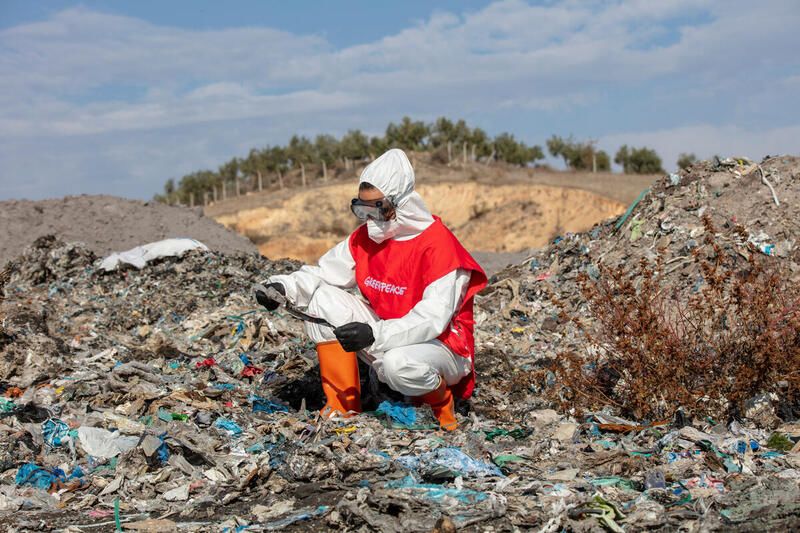
The trouble with plastic
The plastic waste trade linking waste in London with human and environmental harm in Türkiye is underwritten by a troubling reality; the majority of plastic produced is never recycled.
A 2022 OECD report suggests that only 9% of plastic produced is successfully recycled; the bulk of it ending up in landfill, incinerated or leaking into the environment.
Whilst a lot of recyclable plastic is lost through mismanagement in the waste stream, the truth is some types of plastic are still not recyclable at all.
Of those that are, the cheap production of virgin plastics still economically outcompetes the comparatively costly, and ultimately less effective process of recycling.
Extensive research by the Centre for Climate Integrity also claims that the assumed recyclability of many plastics is itself the product of a successful decades-long campaign of deception orchestrated by the petrochemical industry, with the limits of plastic recycling known for over 50 years.
Global virgin plastic production doubled from 234 to 460 million tonnes between 2000 and 2019, and 2022 OECD estimates predict these figures to balloon to 736 million tonnes by 2040.
Recycled plastics are expected to comprise only 6% of this total.
All eyes are on the UN Global Plastics Treaty, a legally-binding international agreement seeking to prevent the harmful impacts of plastics from source to disposal, which is expected to conclude and be implemented later this year.
However, some campaigners say what’s needed is not just solutions to plastic waste, but a global disentanglement from plastic itself; a material relationship rooted in overconsumption and driven by the enduring extraction of fossil fuels.
Greenpeace Türkiye said: “Recycling is not a solution; It’s often a smokescreen for overproduction.
“We need to drastically reduce plastic at the source.
“Choose reuse, demand system change, and hold brands and governments accountable.”
 Built with Shorthand