
Unwrapping the truth: The bittersweet world of cacao and chocolate
Chocolate dominates global culture but the history behind its production is not as sweet as it seems


Many of us consume the familiar comfort of chocolate without a second thought, but behind every bite lies a complex story of global trade, cacao origins, and a growing push for sustainability.
Globally, we consume around 7 million tonnes of chocolate a year making chocolate a multi-billion dollar industry worth over $130 billion as of 2024, but the chocolate making process is mostly misunderstood - from the origins of cocoa to the impacts of its production.
The Ivory Coast, the world's largest cacao producer, has lost 94% of its forests since 1980 – with cacao farming believed to account for nearly a third of that deforestation. Despite being the driver of a booming global market, the average farmer in the Ivory Coast earns less than £2 a day, according to Fairtrade.

Turning a cacao bean into a chocolate bar is a complex, precise process, and one that can take years.
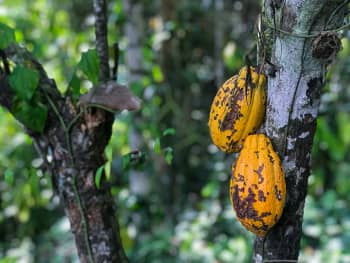
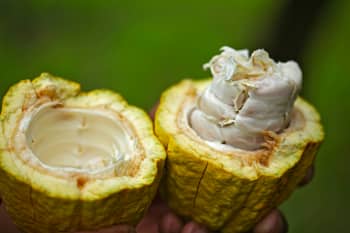
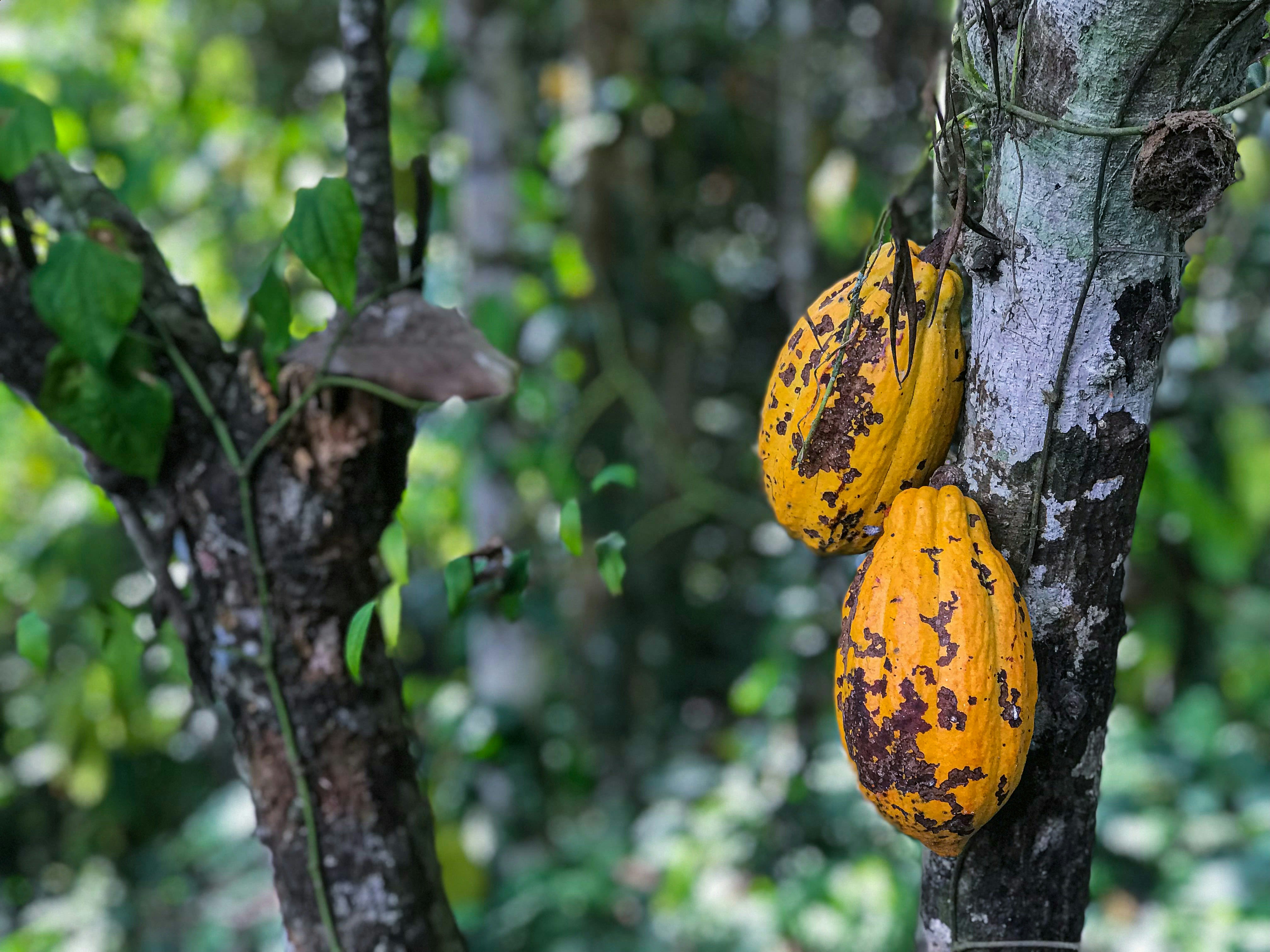
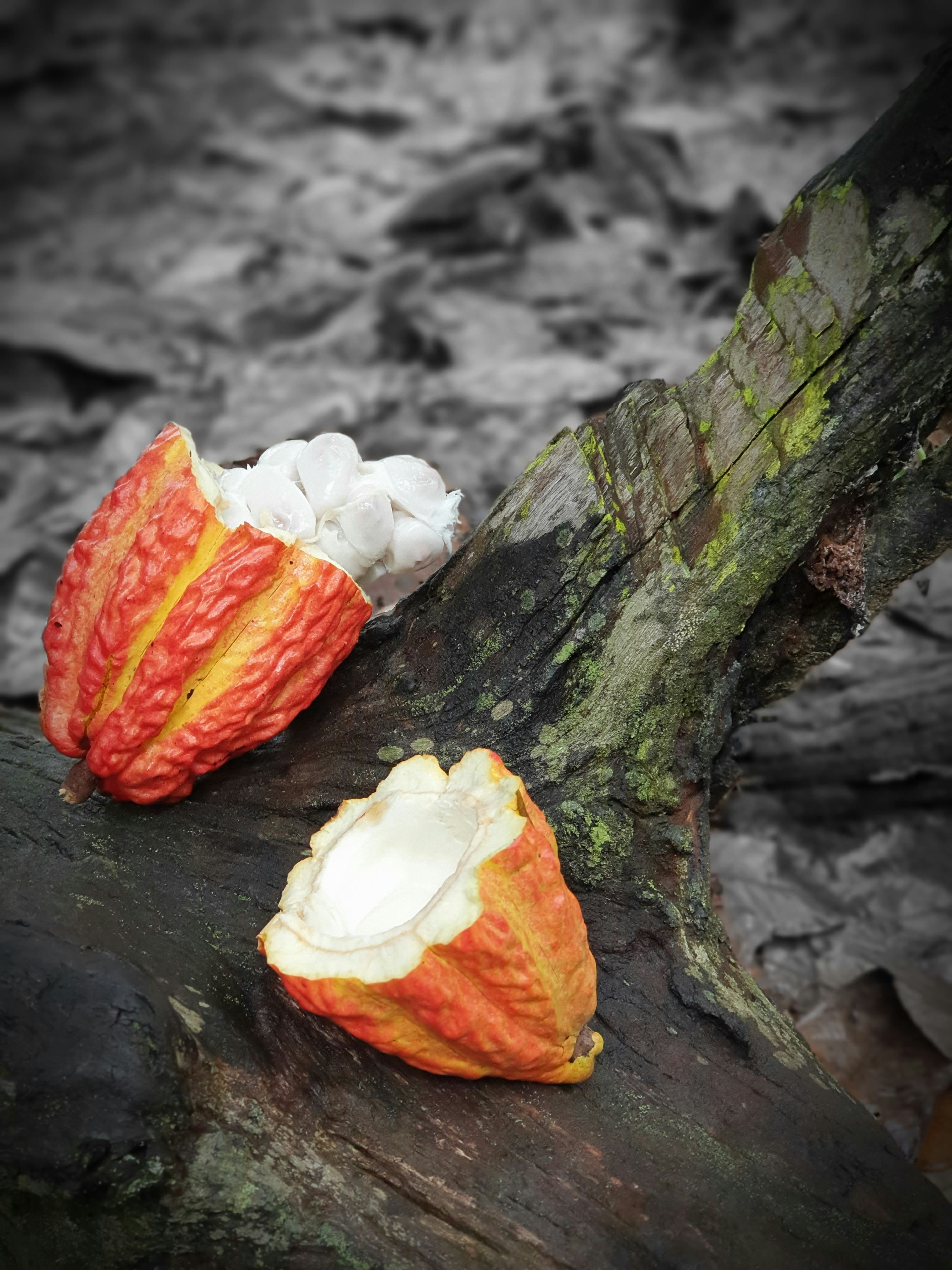
Once planted, a cacao tree can take up to seven years to bear fruit, with each tree producing 20-30 pods per year and each pod containing 20 to 50 seeds.
After being harvested, the seeds are fermented for about a week and then dried for another five to seven days, transforming them into what we recognise as cacao beans.
At this stage, the beans are weighed, packed and shipped to chocolate manufacturers where the chocolate making process begins.
The beans are first roasted to bring out its natural flavours before being winnowed - cracked open and stripped of their shells - to produce cacao nibs.
These nibs are ground into a thick paste known as cocoa mass which is further refined through conching: a process of continuous mixing, heating and aerating - sometimes for several days - in order to develop a smooth texture and rich flavour.
The next step is putting the cocoa mass through a hydraulic press which separates the fat (cocoa butter) from the solids (cocoa powder).
Each type of chocolate has varying proportions of these, with the percentage on chocolate packaging determined by how much of its weight comes from cocoa mass and/or butter.
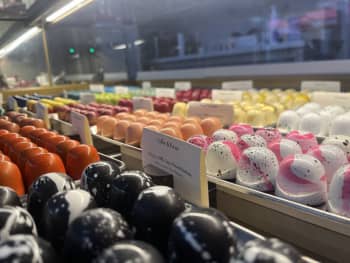
- White chocolate contains cocoa butter combined with sugar, milk and sometimes vanilla with it usually being about 20-40% cocoa.
- Milk chocolate blends cocoa mass, cocoa butter, sugar and milk, landing in the mid range of 40-70%.
- Dark chocolate is made primarily with cocoa mass and butter, with little to no milk or sugar added, clocking it in at 70% or above.



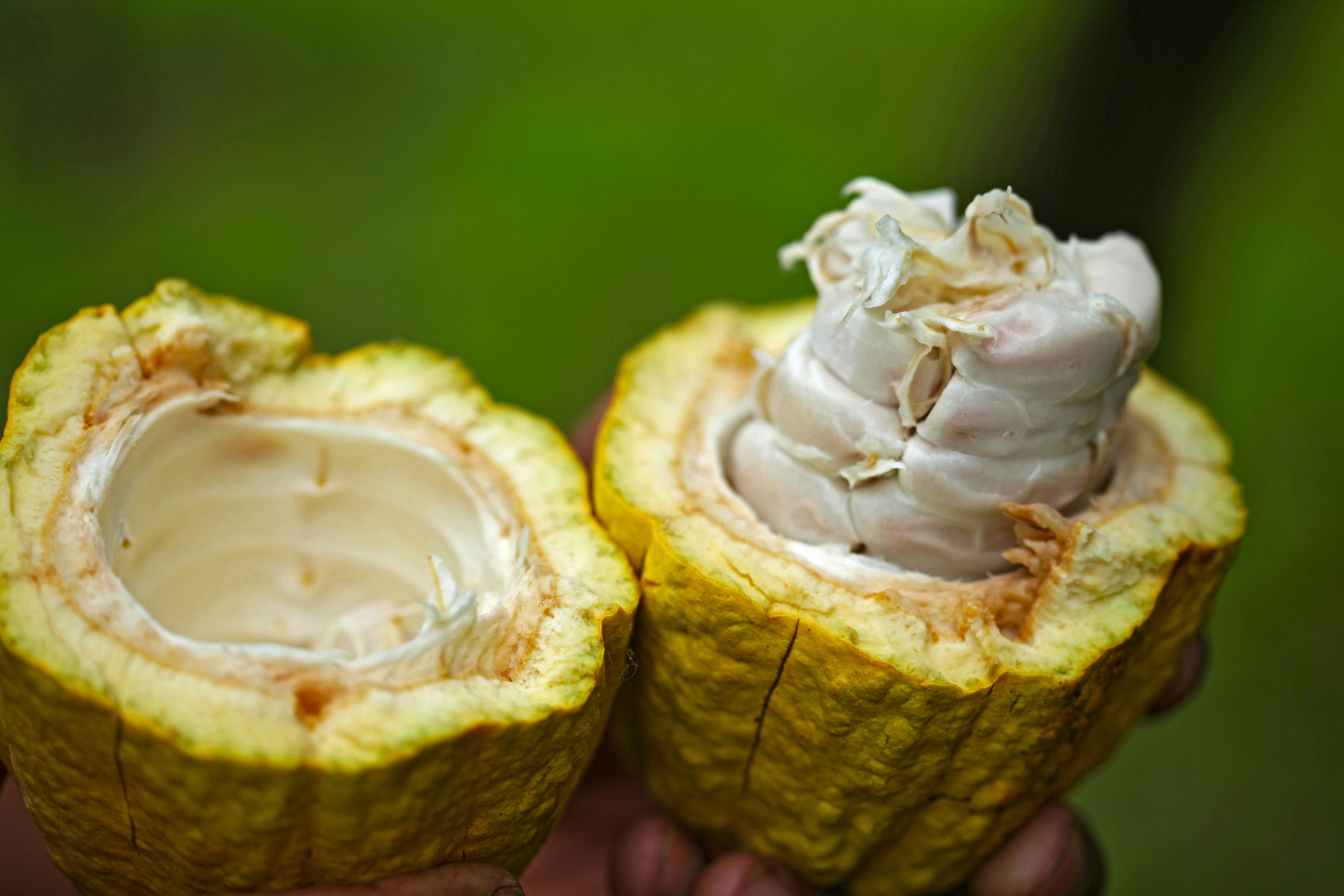

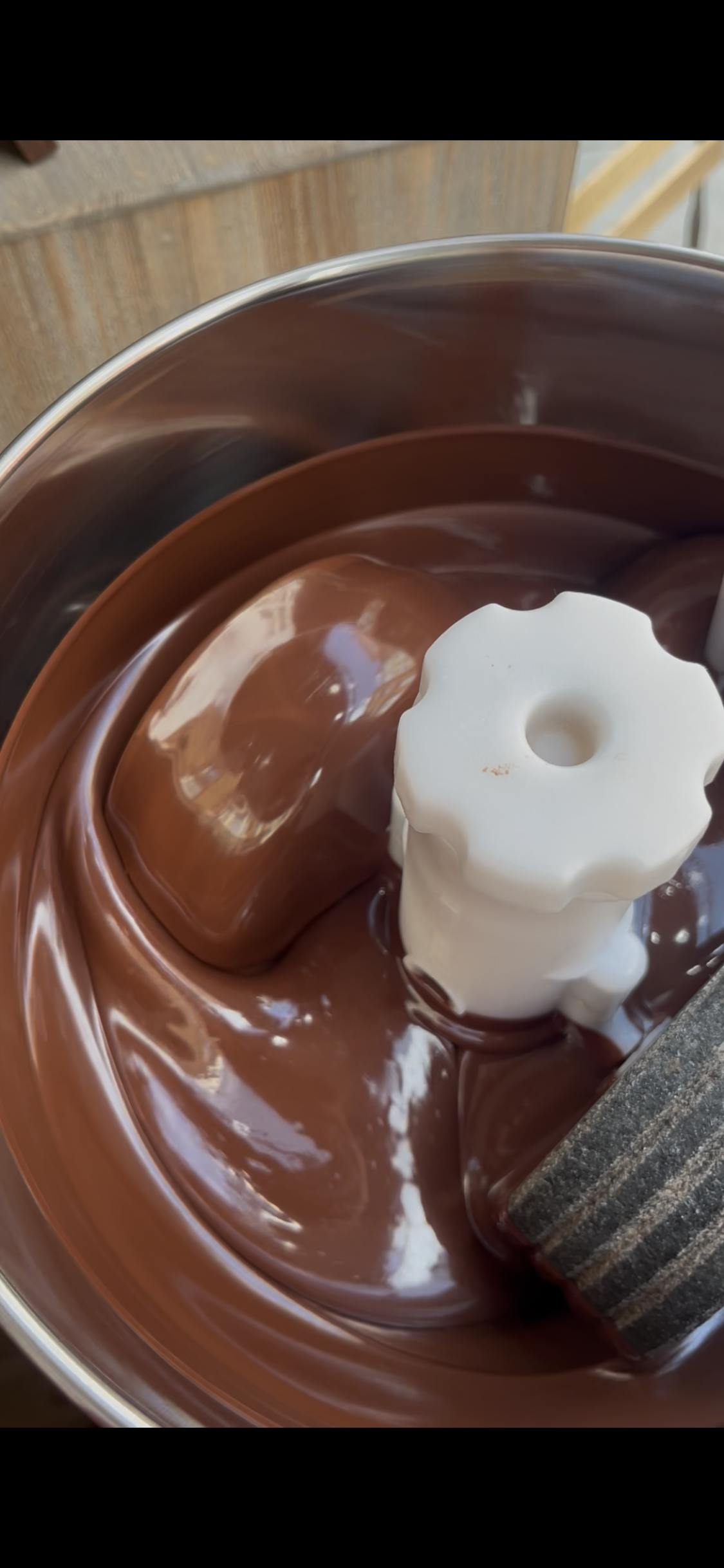
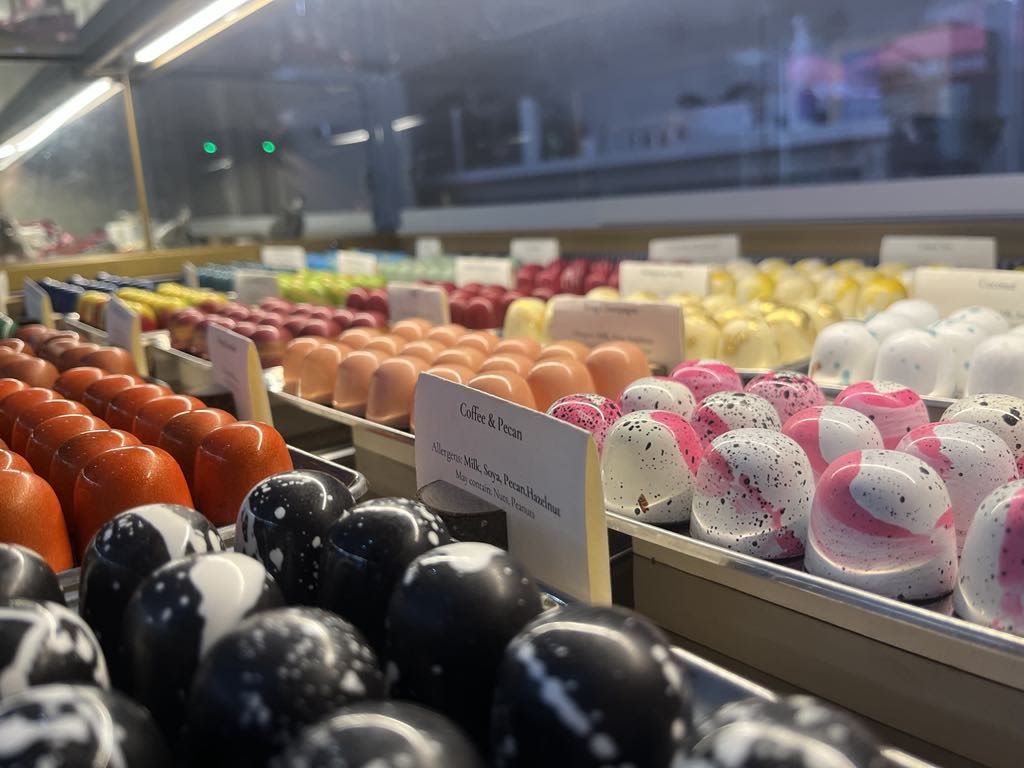
However, the early form of chocolate was vastly different and it has taken chocolate thousands of years to take the form we recognise today.
Archaeologist Katie Sampeck, Global Professor of Historical Archaeology at the University of Reading, is leading a British Academy-funded project that follows chocolate’s transformation from its origins in ancient South America to the billion-dollar industry it is today.
She said: "Chocolate is something we consume today that is entirely a heritage of indigenous creation, creativity and technology.
"The basics of what we do have not changed since the 1300s and 1400s, and it's really intellectual property that's indigenous that we're enjoying."

Credit: Larry Garcia
Credit: Larry Garcia
The Mayo-Chinchipe Region
The first known use of cacao dates back to around 3000 BC in part of what is now Ecuador, where people consumed it as a fermented drink made from the fruit’s pulp — nothing like the hot chocolate we know today.
Mesoamerican Civilisations
Over the next 2,000 years, the use of cacao spread across Central America and southern Mexico with spouted cacao pots becoming common in both elite and everyday households.
The Mayan World
During the height of the Mayan civilisation (200–900 AD), cacao was so prized that it was used as currency and offered as tributes to lords.
8,000 beans were called a xiquipil in Nahuat (central Mexican) dialect and pik in Mayan dialect, and three xiquipils equalled one carga worth 15 pesos, although currency conversion rates varied wildly over time.
Colonial Shifts
In the 16th century, El Salvador was home to one of the largest dedicated cacao farms, producing 34kg per year — comparable to smaller modern farms.
Sampeck notes that these plantations were far more biodiverse than today’s monocultures, often interplanting cacao with vanilla vines and annatto trees.
Izalcos & ‘Chikolatl’
Although cacao had long been consumed, the word chocolate didn’t appear until the 16th century. The Pipil people of the Izalcos region (modern El Salvador and Guatemala) called their cacao drink chikolatl, meaning “beaten drink”, and it even appeared as 'chocolat' in some manuscripts.
Sampeck explains: “As the market shifts, this product becomes so dominant — but it’s a bit like a brand. I think of it like Buffalo wings.”
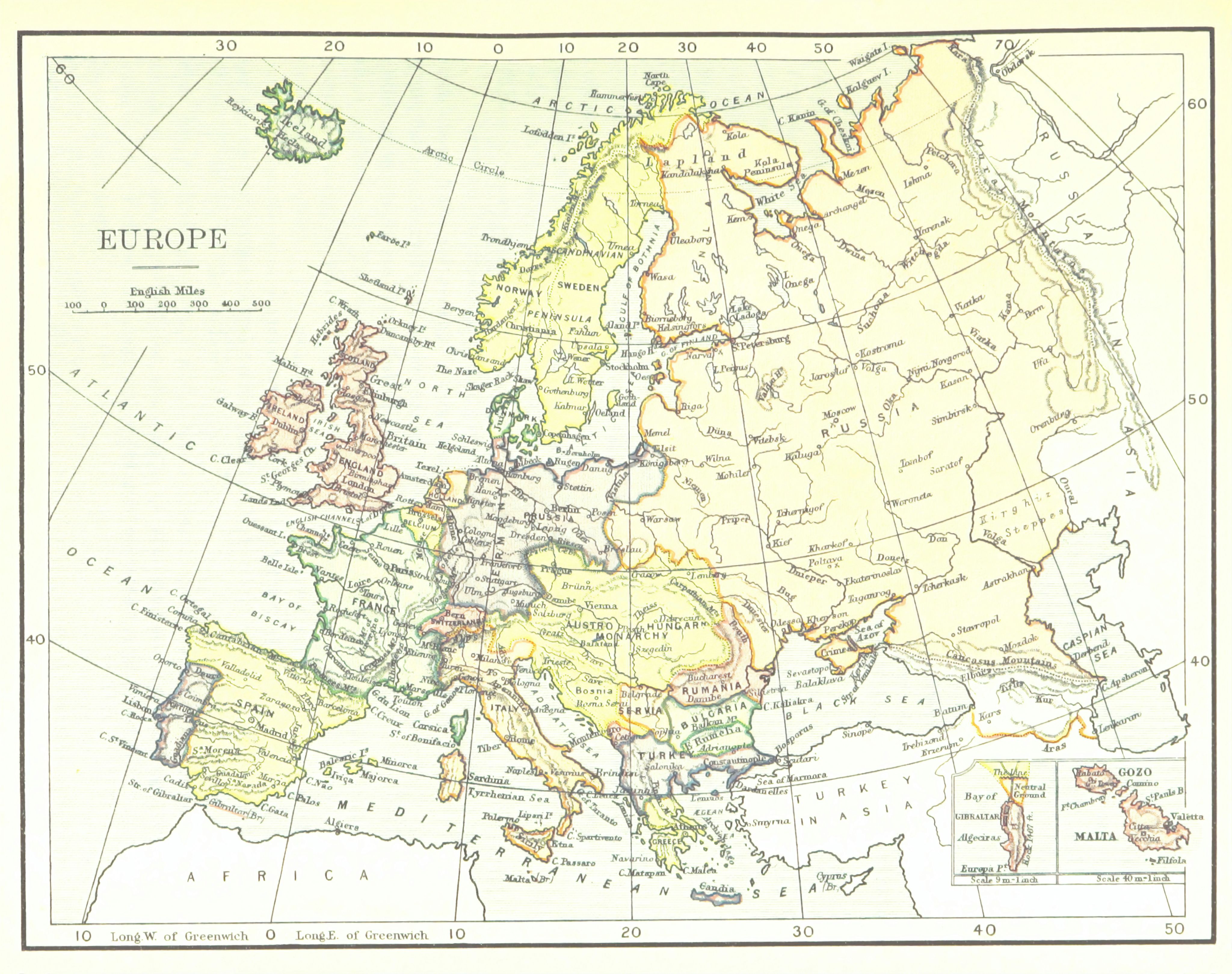
Map credit: Europeana
Once the Spanish brought cacao over to Europe they added sugar and spices and by the 17th century, the drink became fashionable amongst the elites in Spain, France and Italy.
In 1820, fearing the collapse of the Portuguese empire, King João VI ordered cacao trees from Brazil to be planted in São Tomé and Príncipe, helping to establish cacao cultivation in Africa.
In 1828, Coenraad Johannes van Houten, a Dutch chemist, invented the process of turning cacao beans into powder — laying the groundwork for industrial chocolate production.
Soon after, Fry & Sons in Bristol combined cocoa powder, butter, and sugar to create the first moulded chocolate bar.

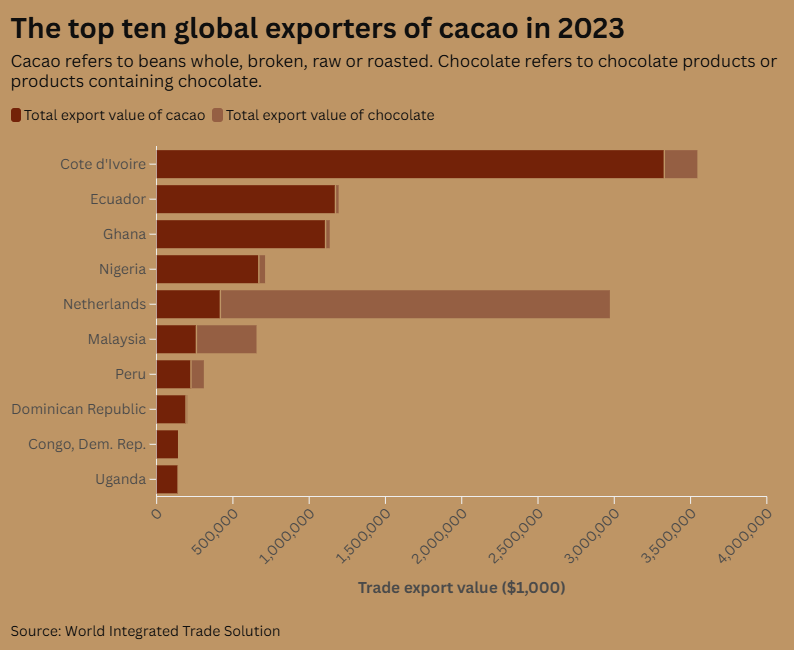
Today, Africa dominates cacao production, with Côte d’Ivoire and Ghana together supplying around 50% of the world’s cacao.
In 2023, Cote d'Ivoire exported over $3.33 billion worth of cacao, compared to Ecuador’s $1.17 billion and Ghana's $1.11 billion, and yet Europe’s profits from finished chocolate are far more.
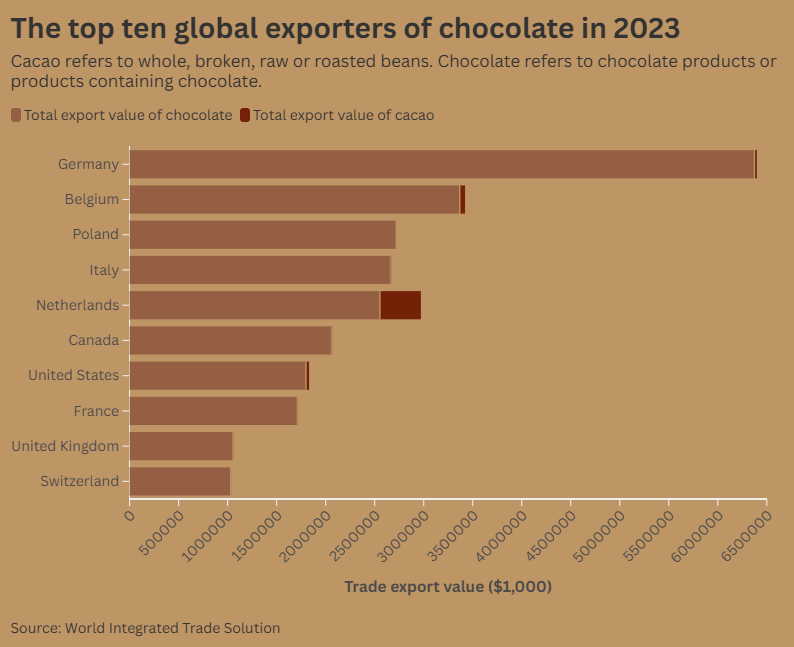
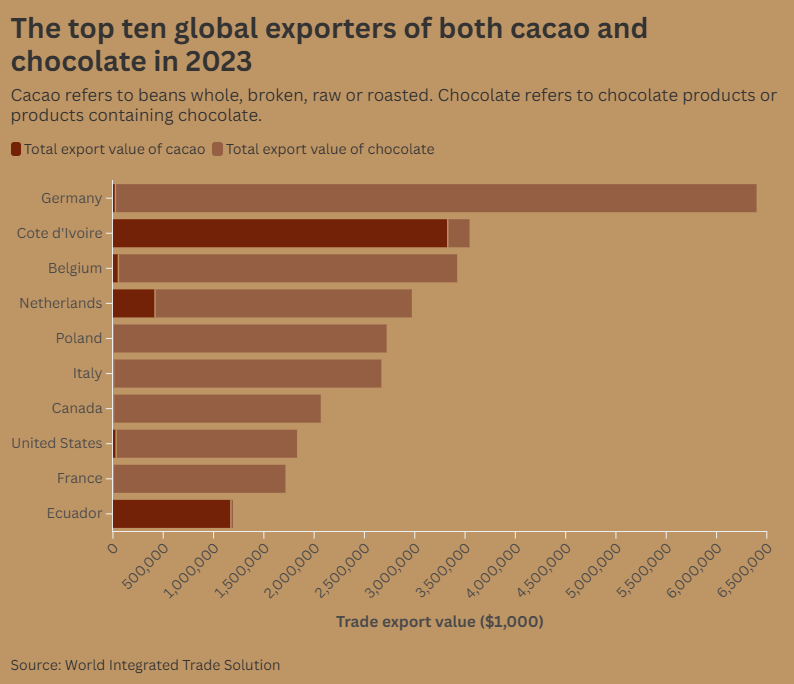
For example, Germany exported nearly $6.5 billion worth of chocolate and cacao combined in 2023 — but only $24 million of that was raw cacao, whereas the Netherlands exported $417 million in cacao, yet grows none of its own.
Only two cacao-growing nations appear in the top ten chocolate exporters: Côte d’Ivoire (around $200 million) and Ecuador (around $20 million).
Even in the USA, where cacao can only be grown in Hawaii, the export value of cacao is just $31.5 million.
These figures highlight a stark disparity in the chocolate supply chain, with value concentrated far from where production begins.
While the Global South grows the cacao, it’s the Global North — where chocolate is processed, packaged and branded — that captures the lion’s share of its value.
Katie Sampeck said: "There are completely parallels between the colonial system that chocolate was involved in in the 16th and 17th centuries and the chocolate supply chain of today.
"There's a critical issue of losing biodiversity and making cacao production a much more fragile and unpredictable system."
She added: "What I was so impressed by in the Rio Ceniza [region in El Salvador and Guatemala] was that, despite the terrible things they were going through, the farmers still had access to wealth.
"I think we can look at the past and see what did work and what failed and take that forward into the challenges we face today.
"So alternative payment systems for farmers have a lot of promise."
Sampeck has found that farmers in Rio Ceniza were paid a regular rate that wasn't determined by yield or the produce itself.
Instead the regular income was with the intention of sustaining the cacao farming communities by giving them enough wealth to access to basic resources of healthcare and education.

Credit: Aaron Edwards
Credit: Aaron Edwards

Credit: Aaron Edwards
Credit: Aaron Edwards

Credit: Aaron Edwards
Credit: Aaron Edwards
The economic disparity in the chocolate industry has been present for a number of years, with global climate issues affecting things like cacao yields and adding an extra strain for farmers.
Fairtrade estimates that the average cocoa farmer earns just 6% of the final value of a chocolate bar, which works out to be less than a liveable income.
With farms threatened by climate change and younger generations turning away from farming, the sustainability of the industry is at a growing risk.
On top of that, the industry is still plagued by issues concerning child labour, but this is where sustainability initiatives like Fairtrade and Rainforest Alliance step in to try to address the issues in the industry.
These initiatives aim to promote and defend the rights of farmers and companies by introducing fair prices for products and measures for environmental protection, as well as supporting farmers with living incomes and better terms of trade.
"I truly believe that the farmers are the rockstars. Without them we wouldn't have anything."
Jay Kang, co-founder of Belmont Estates Chocolate, founder of Cocoa Kisaan and chocolatier at Adam Handling Chocolate Shop Credit: Aaron Edwards
Jay Kang, co-founder of Belmont Estates Chocolate, founder of Cocoa Kisaan and chocolatier at Adam Handling Chocolate Shop Credit: Aaron Edwards
Paul Stradling, Head Chocolatier at Adam Handling Chocolate Shop Credit: Aaron Edwards
Paul Stradling, Head Chocolatier at Adam Handling Chocolate Shop Credit: Aaron Edwards
"[Fairtrade] is a benchmark, but its not the be all and end all."
Paul Stradling Credit: Aaron Edwards
Paul Stradling Credit: Aaron Edwards
A spokesperson for Rainforest Alliance said: "By choosing Rainforest Alliance Certified chocolate, consumers help drive more value back to farmers, securing a future for both people and planet."
"Certified cocoa also helps reduce child labour risks by addressing root causes like poverty, lack of education, and gender inequality.
They added: "Through initiatives like tree planting, financial and technical support for climate-smart farming and income diversification programs, we're helping thousands of farmers to improve productivity and earning potential."
As part of their Living Income Strategy, Fairtrade introduced Living Income Reference Prices (LIRPs) in 2018 as a way to measure the price a farmer should receive for their crop in order to earn a living income.
In Ghana and Ivory Coast respectively, the LIRP set by Fairtrade is $2.68 per kg and $2.80 per kg of cocoa.
However, in Ghana and Ivory Coast the minimum farm gate prices (the fee a farmer receives for the raw product) set by the governments exceeds Fairtrade's LIRP, at about $3 per kg and $3.65 per kg respectively.
International civil society Solidaridad's mission is to ensure sustainability and good practice across various supply chains and have been openly critical of Fairtrade's current LIRPs.
They believe that the fact that the farmgate prices of cocoa in Ghana and Ivory Coast are now exceeding Fairtrade LIRPs suggests Fairtrade isn't keeping up and needs to evolve beyond minimum pricing, and to push harder for systemic change across the supply chain.

Credit: Aaron Edwards
Credit: Aaron Edwards
Fairtrade were contacted for comment.
However, with awareness growing regarding malpractice in the manufacturing process and discrepancies in the supply chain, significant change relies on consumer choices.
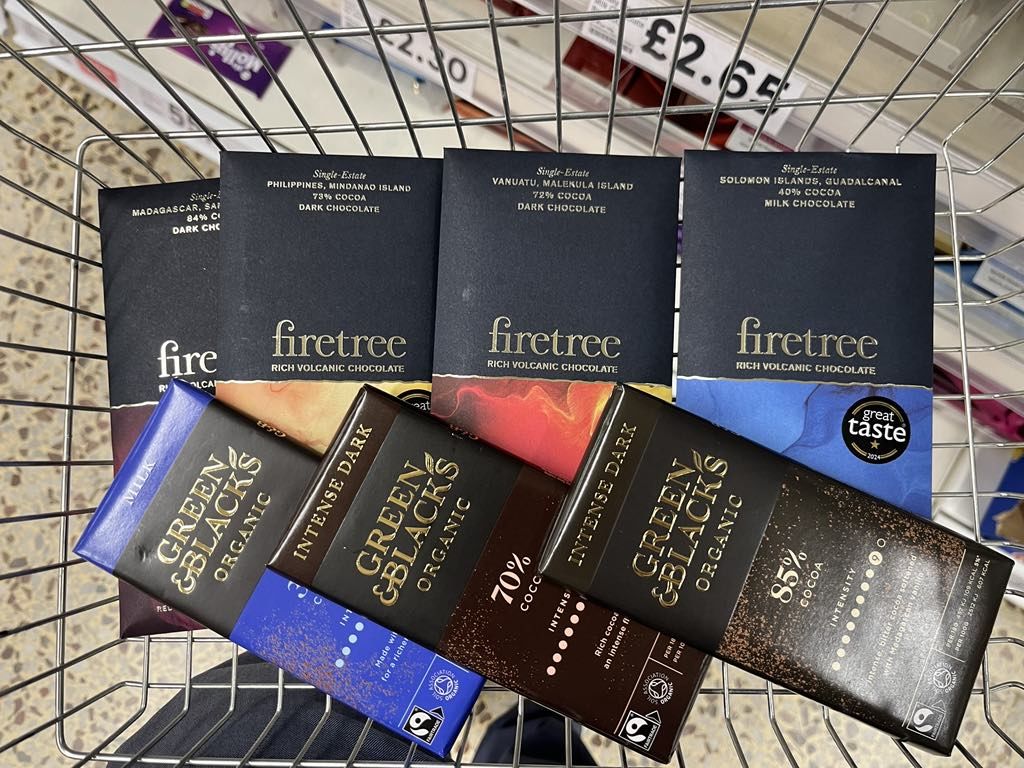
The team at Adam Handling have urged the public to be more aware of the chocolate they are consuming and to shop in places that prioritise single-origin, sustainable chocolate.
Jay Kang Credit: Aaron Edwards
Jay Kang Credit: Aaron Edwards
"[With single-origin chocolate] you're getting to taste what that country represents."
By being able to trace where the chocolate is originating from, customers are able to choose chocolate that adheres to ethical practices throughout the entire process.
Single-origin chocolate also allows the farmers to keep a consistent income with steady demand compared to the unpredictable variations of blended or mixed-origin chocolate.
Paul Stradling Credit: Aaron Edwards
Paul Stradling Credit: Aaron Edwards
Stradling believes that the onus for changing perceptions and understandings on chocolate falls to artisan chocolatiers and craft chocolate shops.
With greater transparency and better general knowledge around sourcing, customers will be able to choose more sustainable and ethical chocolate, that may even taste better.
 Built with Shorthand